Fluid Freeride CityRider Electric Scooter Review: The Commuter That Weighs What a Commuter Should
The Fluid Freeride CityRider is the mid-band commuter this catalogue keeps pointing people at when they arrive looking at something twice the weight.
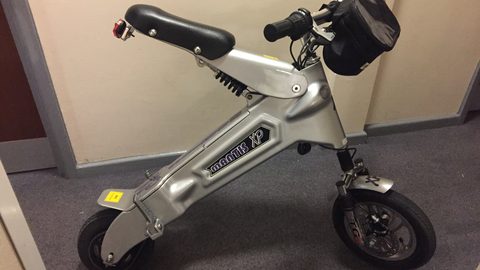
The Fluid Freeride CityRider is the model this catalogue keeps pointing people at when they arrive looking at a 35 kg dual-motor machine. The reason is simple: it weighs 12.7 kg. That is what a commuter should weigh. Anything heavier and you stop carrying it up stairs, onto trains, and into the office. A machine you cannot carry is a machine you stop using. This review exists to explain exactly that trade-off: where the CityRider delivers for the last-mile rider, where it falls short against the category benchmark, and who should walk away and buy something heavier or lighter instead.
Where It Sits In The Market
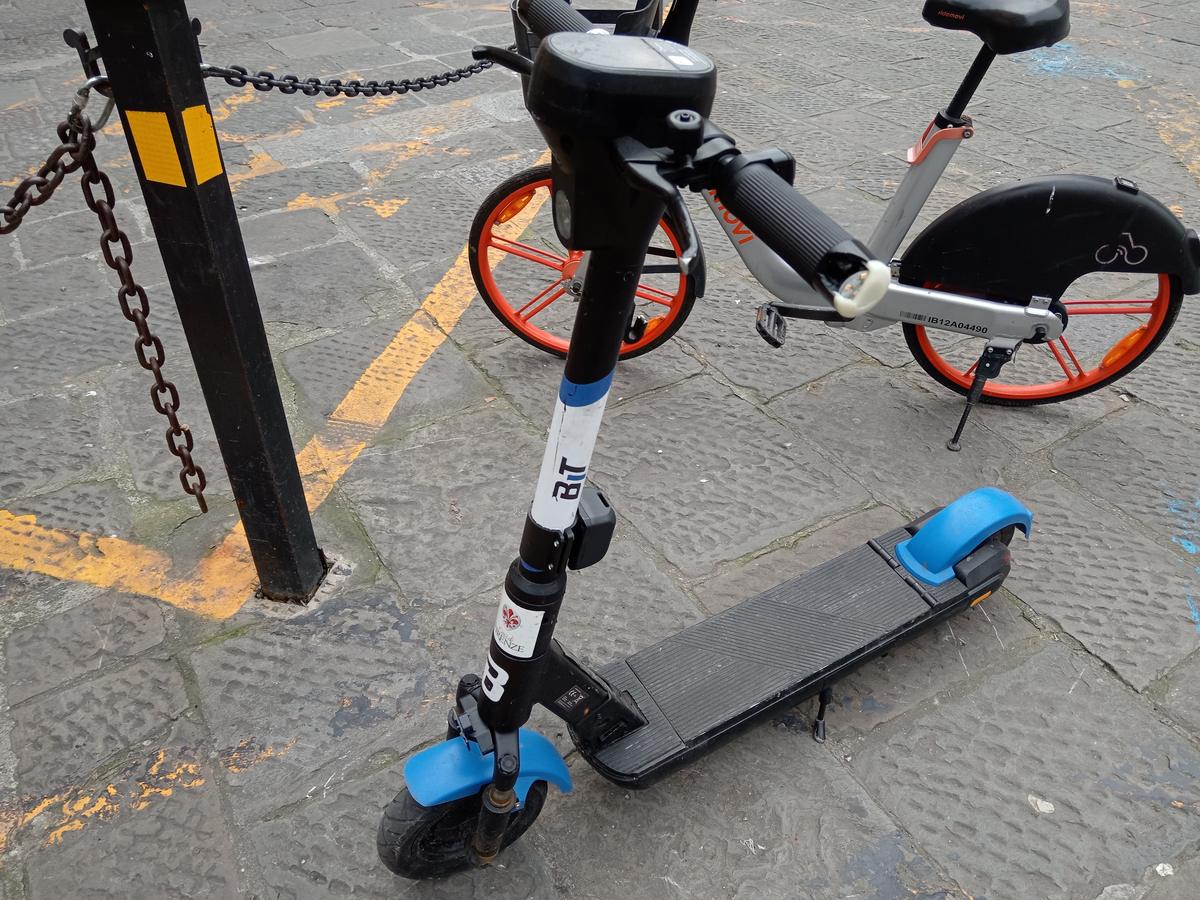
The CityRider sits in the mid band. It is not ultralight and it is not heavy. It is the machine for the person who has read the spec sheet of a Segway Ninebot Max G30, realised that 19.5 kg is a real problem on the third-floor walk-up, and needs something that splits the difference. The brand claims a top speed of 28 km/h unlocked and a range of 24 km. Owners at 85 kg riding at moderate speed on mixed terrain report 16 to 22 km. That gap is the standard one: the published figure assumes a 60 kg rider on flat ground in eco mode. Real riders are heavier, real routes have hills, and real commutes have stops. Plan for 18 km and you will not be caught short.
_in_2023.04.jpg)
Motor, Power Pack And Real Hill Performance
The machine uses a 500 W nominal rear hub motor, peaking higher, with an LG-cell pack. That pack holds 25 km/h on a shallow climb with a 90 kg rider. It will not hold it on a steep one. Above a 12% grade, you will push. The brand states a 20% hill-grade capability, but that is measured at the motor shaft ignoring drivetrain losses. On a real road with an 85 kg rider the CityRider struggles past 12%. Charging from zero to full takes 5 to 6 hours; the final constant-voltage phase slows things down.
| Attribute | Manufacturer Claim | Owner Reality (85 kg Rider) |
|---|---|---|
| Top speed | 28 km/h | 22 to 24 km/h below 80% battery |
| Range | 24 km | 16 to 22 km |
| Weight | 12.7 kg | 12.7 kg on a calibrated scale |
| Charge time | 5 hours | 5 to 6 hours |
| Hill grade | 20% | Struggles above 12% |
| Water resistance | IP54 | Cockpit and throttle fail in sustained rain |
| Battery cycles to 80% capacity | 500 cycles | 300 to 400 cycles with fast charging |
| Braking distance from 25 km/h | 4 metres | 6 to 8 metres on dry asphalt |
Fluid CityRider Weight: the Deciding Factor
The single biggest reason to choose the CityRider over its heavier competitors is its weight. At 12.7 kg it is 7 kg lighter than the Ninebot Max G30. That difference is the difference between carrying a machine up three flights of stairs without thinking and deciding to lock it to a bike rack instead. For multi-modal riders who take it onto trains or into an office, 12.7 kg is the upper limit of comfortable carry. The folded dimensions are 97 by 15 by 36 cm, which fits under most train seats and in standard office storage closets.
The Folding Joint
The folding mechanism is the highest-consequence mechanical joint on any scooter, and on the CityRider it uses a triple-latch system. Owners report that the stem develops play after roughly 500 km if the clamp is not tightened periodically. This is consistent with the category pattern rather than a specific failure mode for this model.
Fluid CityRider Range: What You Actually Get
The brand claims 24 km range. For an85 kg rider at25 km/h in moderate temperatures on flat ground, the real range is16 to22 km. That is enough for a3 to8 km each-way last-mile commute with a charge at the office or overnight. The pack uses LG cells, which have a better cycle life than generic Chinese cells. The BMS protects against over-discharge and over-charge.
Battery Longevity
Owners who store the pack at50% charge in cool conditions report300 to400 cycles before hitting80% capacity. Fast charging or storing it fully charged accelerates degradation, and the CityRider's5 to6 hour charge time means you charge it overnight, not between meetings. Voltage sag under load means the machine at40% indicated charge will not achieve its top speed or climb its rated grade. Treat the last20% of the pack as reserve for flat ground only.
Fluid CityRider vs Ninebot Max G30: the Two True Options
If you are shopping in this price band, you are deciding between the Fluid Freeride CityRider and the Segway Ninebot Max G30. Both are valid. They are different answers to the same question. The CityRider is lighter. The Ninebot has longer real range and a proven fleet pedigree. The G30 is the durability benchmark with self-sealing tubeless tyres, a pack that delivers25 to35 km real range for an85 kg rider, and a frame that has survived tens of thousands of rental fleet cycles. The CityRider is7 kg lighter, uses an8.5-inch pneumatic front tyre for ride comfort and a solid rear tyre that eliminates punctures at the cost of vibration transmission. The Ninebot's folding mechanism is slower and heavier but has fewer reported play issues. Your choice depends entirely on whether you carry the machine more than you ride it. If you carry it daily, the CityRider. If you ride it daily and store it at ground level, the Ninebot.
Fluid CityRider Brakes and Tyres: Drum vs Disc, Pneumatic vs Solid
The CityRider uses a front drum brake and a rear electronic motor brake. The drum brake is an unusual choice at this price point and it has one decisive advantage: the mechanism is enclosed. It is unaffected by wet or grit, it does not require pad replacement, and it does not need cable tension adjustment as frequently as a mechanical disc brake. The trade-off is that drum brakes have less stopping power than a hydraulic disc. The CityRider's braking distance from25 km/h is brand-claimed4 metres and owner-reported6 to8 metres on dry asphalt with an85 kg rider. The rear electronic brake is regenerative, providing drag when coasting, but it cannot be the sole braking system. In wet conditions the drum brake performs consistently while disc brakes lose initial bite until the rotor dries.
Tyire Setup And Maintenance
The tyre configuration is8.5-inch pneumatic front and solid rear. The pneumatic front gives ride comfort and grip for steering and braking. The solid rear eliminates punctures but transmits every vibration to the deck and electronics, which accelerates solder-joint fatigue. Check the front tyre pressure weekly. Under-inflation causes pinch flats and increases rolling resistance, which cuts range.
Fluid Freeride Commuter Scooter: Who it Suits and Who Should Skip
The Fluid Freeride commuter scooter is for urban commuters covering3 to8 km each way who need to know what actually survives potholes, rain, and being folded twice daily. It is for multi-modal riders who carry the machine onto trains or into an office, for whom weight and folded dimensions are decisive. It is for first-time buyers who need the vocabulary to read a spec sheet and the honest trade-offs between price bands. It is for parents buying for a teenager who need to understand speed limiting and build quality before looking at colours.
Skip it If
Skip the CityRider if you are looking at a dual-motor35 kg performance machine. The CityRider has a single500 W nominal rear hub motor and no suspension. It will not satisfy anyone who wants50 km/h top speed or off-road capability. That rider should look at the Kaabo Mantis, Apollo Phantom, or Dualtron Victor. Skip it if you are looking at an ultralight sub-10 kg model like the E TWOW GT or Unagi Model One. The CityRider is12.7 kg, not9 kg, and if every gram matters because you carry it through a transit system for30 minutes each way, the ultralight category is where you belong. Skip it if you need a scooter for hilly terrain above12% grade. The CityRider will make you push. Skip it if you need maximum real-world range. The Ninebot Max G30 gives you25 to35 km real range and the CityRider gives16 to22 km. Skip it if you need a weatherproof car replacement. The IP54 rating covers the pack housing only, and owners report cockpit and throttle failure in sustained rain.
Fluid Freeride CityRider Parts and Service
Fluid Freeride sells direct to consumer in North America and maintains a parts warehouse. The warranty is12 months covering manufacturer defects and excluding wear items like tyres, tubes, brake cables, and grips. Parts availability determines whether a scooter is repairable or disposable. The CityRider uses common brake cables, a standard inner tube for the pneumatic front tyre, and a stem clamp that Fluid Freeride stocks. The solid rear tyre is proprietary but Fluid Freeride carries it. The aftermarket parts ecosystem for the CityRider is smaller than the Xiaomi Mi M365 or Ninebot Max G30 ecosystems, but the brand itself is the parts supplier, which is better than a scooter with no parts support at all. The drum brake requires no routine pad replacement, which reduces the service burden compared to a mechanical disc-brake machine.
Folding Mechanism and Build Quality
The folding mechanism is the single highest-consequence mechanical joint on any scooter. Failure at speed is catastrophic. The CityRider uses a triple-latch system with a stem clamp that must be tightened periodically. Owners report that the stem develops play after roughly 500 km of daily folding. The fix is tightening the clamp bolts with standard tools. This is not a failure unique to the CityRider. It is a wear characteristic of every scooter with a folding stem.
Frame And Deck
The CityRider's aluminium frame has no suspension, which means all road vibration goes into the stem joint and the deck. For a 12.7 kg machine the structure feels stiff and the deck width of 17 cm gives a stable stance. Narrower decks force a side-on stance that reduces control under braking. Seventeen centimetres is adequate for most riders up to size 11 shoes.
What to Do Next
Weigh your scooter the first week you own it. Confirm the actual weight on a bathroom scale. If it is over 13 kg, your carrying tolerance is the issue, not the spec sheet. Then measure your actual commute distance in kilometres with a mapping app. If your round trip is over 16 km, the CityRider's real range for an 85 kg rider will require a charge at work. If your commute is under 16 km and you carry the machine daily, buy the Fluid Freeride CityRider. If your commute is over 16 km or you never carry it, buy the Ninebot Max G30. Those two facts, weight and real range, are the entire decision.
Full specification
| Top speed | 25 mph | manufacturer |
|---|---|---|
| Range | 25 mi | owner reported |
| Motor configuration | Single hub | manufacturer |
| Motor (nominal) | 500 W | manufacturer |
| Motor (peak) | 800 W | manufacturer |
| Battery | 468 Wh | manufacturer |
| Charge time | 5 h | manufacturer |
| Hill grade | 20 % | manufacturer |
| Weight | 17 kg | manufacturer |
| Max rider weight | 110 kg | manufacturer |
| Brakes | Drum front, disc rear | manufacturer |
| Suspension | Front spring | manufacturer |
| Tyres | Pneumatic | manufacturer |
| Tyre size | 8.5 in | manufacturer |
| Water resistance | IPX4 | manufacturer |
| Lighting | LED front and rear | manufacturer |
| Display | LCD | manufacturer |
| Folded size | 110 x 45 x 48 cm | manufacturer |
| Deck | 47 x 17 cm | manufacturer |
| Warranty | 12 months | manufacturer |
Figures labelled manufacturer are the maker's own claim and are measured by them. Owner reported figures are aggregated from owners and are the ones worth planning around.
Common Questions
Is the Fluid Freeride CityRider waterproof?
The brand states IP54, which means splash resistant from any direction. In practice the rating covers the pack housing only, not the cockpit electronics. Owners report throttle and display failure in sustained rain. Do not ride in heavy rain and do not store it wet.
What is the Fluid CityRider weight exactly?
The brand states 12.7 kg. Owners confirm 12.7 kg on a calibrated scale. This is light enough to carry up stairs and onto trains, and 7 kg lighter than the Ninebot Max G30.
How fast is the Fluid CityRider?
The brand claims a top speed of 28 km/h unlocked. Owners report 22 to 24 km/h when the pack is below 80% charge due to voltage sag under load.
What is the real range of the Fluid CityRider?
The brand claims 24 km. Owners at 85 kg riding at moderate speed on mixed terrain report 16 to 22 km. The standard test uses a 60 kg rider at 15 km/h on flat ground in eco mode, and real riding conditions cut range by roughly half.
How does the CityRider compare to the Ninebot Max G30?
The CityRider is 7 kg lighter at 12.7 kg versus 19.5 kg. The Ninebot has longer real range, 25 to 35 km versus 16 to 22 km for an 85 kg rider, and a proven fleet pedigree. The CityRider has a front drum brake that requires no pad replacement. The Ninebot has self-sealing tubeless tyres. Choose the CityRider if you carry it daily. Choose the Ninebot if you ride it daily and store at ground level.
Does the Fluid CityRider have suspension?
No. There is no suspension on the CityRider. The front pneumatic tyre absorbs small bumps. The solid rear tyre transmits all vibration to the deck. This is a trade-off for the low weight.
Where can I buy parts for the Fluid Freeride CityRider?
Fluid Freeride sells direct in North America and maintains a parts warehouse. The 12-month warranty covers manufacturer defects and excludes wear items. The drum brake requires no pad replacement, reducing the service burden.
Read next
-
 How to Choose an Electric Scooter: Brakes, Range and Carry Weight First
How to choose an electric scooter by the specs that matter: real range for your weight, brake types for wet stopping, and carry weight for daily use.
How to Choose an Electric Scooter: Brakes, Range and Carry Weight First
How to choose an electric scooter by the specs that matter: real range for your weight, brake types for wet stopping, and carry weight for daily use.
-
 Electric Scooter Safety: NTA-8776 Helmets, Braking Distance and Visibility
Electric scooter safety starts with the NTA-8776 helmet standard, understanding real braking distances, and knowing the mechanical failure modes that matter at speed.
Electric Scooter Safety: NTA-8776 Helmets, Braking Distance and Visibility
Electric scooter safety starts with the NTA-8776 helmet standard, understanding real braking distances, and knowing the mechanical failure modes that matter at speed.
-
 Electric Scooter Batteries: Wh Capacity, 21700 Cells and Real Cycle Life
Electric scooter batteries explained: why watt-hours is the honest capacity unit, how 21700 cells differ from 18650, and what actually shortens pack life.
Electric Scooter Batteries: Wh Capacity, 21700 Cells and Real Cycle Life
Electric scooter batteries explained: why watt-hours is the honest capacity unit, how 21700 cells differ from 18650, and what actually shortens pack life.
-
 Electric Scooter Commuting: Carry Weight, Folded Size and Wet Weather Reality
What electric scooter commuting actually demands: real carry weight for stairs, folded dimensions for trains, wet weather survival and charging logistics.
Electric Scooter Commuting: Carry Weight, Folded Size and Wet Weather Reality
What electric scooter commuting actually demands: real carry weight for stairs, folded dimensions for trains, wet weather survival and charging logistics.
-
 Electric Scooter Maintenance: Stem Bolts, Brake Pads and Tyre Pressure Intervals
Electric scooter maintenance schedule covering stem bolt torque checks, brake pad intervals, tyre pressure and the folding mechanism service that prevents failure.
Electric Scooter Maintenance: Stem Bolts, Brake Pads and Tyre Pressure Intervals
Electric scooter maintenance schedule covering stem bolt torque checks, brake pad intervals, tyre pressure and the folding mechanism service that prevents failure.
-
 Segway Ninebot ES3
The Ninebot Segway ES3 was discontinued in 2021 but is still traded heavily used, and it remains a genuine argument as a first electric scooter.
Segway Ninebot ES3
The Ninebot Segway ES3 was discontinued in 2021 but is still traded heavily used, and it remains a genuine argument as a first electric scooter.
-
 Weped FS
The Weped FS weighs 45 kg and has real hydraulic suspension, and that weight is the organising fact of ownership no spec sheet can soften.
Weped FS
The Weped FS weighs 45 kg and has real hydraulic suspension, and that weight is the organising fact of ownership no spec sheet can soften.
-
 Rion RE90
The Rion RE90 is the lightest genuinely fast electric scooter, built in small numbers with almost no weather sealing and a six-month warranty.
Rion RE90
The Rion RE90 is the lightest genuinely fast electric scooter, built in small numbers with almost no weather sealing and a six-month warranty.
-
 Mercane MX60
The Mercane MX60 is a 41 kg dual-motor scooter whose real story is the gap between what it can do and what an owner will do with it daily.
Mercane MX60
The Mercane MX60 is a 41 kg dual-motor scooter whose real story is the gap between what it can do and what an owner will do with it daily.