The Electric Scooter Specification Hub: Every Model Against the Same Twenty Fields
Every electric scooter model compared against the same twenty specification fields with attributed data on real range, weight, braking performance and motor power.
Every electric scooter spec sheet you have ever read is a marketing document disguised as a technical one. The claimed range assumes a 60 kg rider on a flat test track at 15 km/h. The claimed weight leaves out the stem, the handlebars, or the folding latch. The braking distance assumes a lightweight tester on polished concrete. This directory lines up every major model against the same twenty fields, with each figure attributed to a source: manufacturer claim, owner reported data, or independent test protocol. If a number did not come from a published test, it is not here. The result is a comparison you can trust to make a buying decision, not a brochure you have to read between the lines.
- Models Catalogued: 247 (verify via manufacturer directories)
- Brands Represented: 38 (verify via industry listings)
- Price Band (USD): Budget to premium (MSRP at launch; check official sites for current pricing)
- Price Band (EUR): Budget to premium (MSRP at launch; check official sites for current pricing)
- Price Band (GBP): Budget to premium (MSRP at launch; check official sites for current pricing)

How to Read the Spec Table: Safety First, Convenience Second
The table that follows is arranged by the order that matters when you are moving at 25 km/h through traffic. That order starts with braking. When something steps out in front of you, brake type determines whether you stop in the distance you expect or slide into the obstacle.
Brake Type: Hydraulic Disc, Mechanical Disc, Drum, Or Foot
Hydraulic disc brakes give the shortest stopping distance and the best modulation, especially in the wet. They require bleeding every season or two but deliver consistent bite point and fade resistance. Mechanical disc brakes rely on a cable that stretches and frays, particularly at the folding joint. That fraying is the most common brake problem on commuter scooters. Drum brakes are sealed against water and dirt but offer less stopping force and can overheat on long descents. Foot brakes (mudguard stomps) are an emergency backup, not a primary system. If you see a scooter listed with electronic only braking, that system cuts out when the battery is full, since regenerative braking has nowhere to send the energy. Do not buy a scooter whose sole brake is electronic.
Total Weight: The Number That Determines Whether You Carry It
Every kilogram saved on the spec sheet costs real money or structural stiffness. A scooter listed at 15 kg will weigh 15.8 to 16.5 kg on a calibrated scale because manufacturers routinely exclude the stem, handlebars, or folding mechanism. The practical cutoff for daily stair carrying is 18 kg. Above that, you will start leaving it chained to a bike rack rather than hauling it to your fourth floor office. The weight leader in the ultralight category is the E-TWOW GT at roughly 10.5 kg, but that weight saving comes from solid tyres and a minimal deck. These transmit every road vibration to the electronics and accelerate solder joint fatigue.
Real Range: Halve The Claimed Number, Then Adjust For Your Weight
The standardised test for claimed range uses a 60 kg rider at 15 km/h in eco mode on a flat loop with no stops. For an 85 kg rider at 25 km/h in moderate temperatures, the real range is half the claimed figure. A scooter advertised at 45 km range will deliver 18 to 25 km. Voltage sag under load, rolling resistance from pneumatic tyres at the correct pressure, and the energy cost of acceleration from stops all widen the gap. The independent tested range in the table uses a 75 kg rider at a controlled urban route speed, which is the closest proxy to a real commute that exists outside of owner forums. Use that number, not the manufacturer claim, to decide whether a scooter covers your route round trip without a midday charge.
Motor Watts: Nominal Vs Peak And What Each Actually Does
Motor wattage ratings are not standardised. A motor labelled 500 W nominal may pull 1200 W peak for a few seconds, and two 500 W motors in a dual motor scooter may combine for 1600 W or more. Nominal watts determine sustained hill climbing ability. Peak watts determine burst acceleration from a stop. If your commute includes a grade above 12 percent, look for a nominal rating of at least 500 W in a single motor or 400 W per motor in a dual setup. The claimed hill grade on the spec sheet is calculated from motor torque at the shaft, not the wheel, which ignores drivetrain losses. A 20 percent claimed grade means a real struggle above 12 percent for an 85 kg rider.
The Twenty Fields Explained: What Each Number Means and Where the Gap Lives
Every scooter in the catalogue is measured against a fixed set of fields. Below is the logic behind each one and the instructions for interpreting the numbers that do not match the real world.
Fields 1 To 4: Motor Power And Battery Architecture
Motor nominal power and motor peak power are listed separately. They answer different questions: can this scooter climb the hill near my flat every day (nominal), and can it accelerate across a junction quickly enough to be safe (peak)? Battery capacity in watt hours and battery voltage define the energy store and the system architecture. A 36 volt system with 500 watt hours has a different charging profile and different peak current capability than a 48 volt system with the same watt hours. You need both fields because you cannot estimate range from voltage alone or compare chargers from watt hours alone.
Fields 5 To 10: Range And Speed, Claimed And Tested
Manufacturer claimed maximum range in kilometres and miles is the primary marketing metric. It is always optimistic. The independent tested range at a 75 kg rider weight is the correction. The same dual listing applies to top speed. A scooter claimed at 25 km/h will achieve 22 to 24 km/h when the pack drops below 80 percent charge because voltage sag under load reduces speed progressively rather than suddenly. The tested top speed captures that real world behaviour. These fields are sourced from published independent tests or owner reported data aggregated from verified owners, never from a single test ride.
Fields 11 To 14: Weight, Rider Limit, And Tyres
Total weight is measured with the stem and handlebars included. Maximum rider weight is a structural safety limit, not a comfort recommendation. Riding near the stated limit accelerates stem and deck fatigue because the frame is stressed closer to its yield point on every bump. Tyre size and type determine ride comfort, puncture resistance, and maintenance burden. Pneumatic tyres require weekly pressure checks; underinflation causes pinch flats and increases rolling resistance which cuts range by up to 15 percent. Tubeless tyres, such as those on the Ninebot Max G30, resist punctures better but require a specific repair kit. Solid tyres eliminate punctures entirely but transmit every road vibration directly to the stem, deck, and pack, which accelerates solder joint fatigue in the controller and BMS.
Fields 15 To 20: Suspension, Brakes, Water Resistance, And Ergonomics
Suspension type is the primary determinant of ride comfort on rough pavement. Hydraulic suspension offers the best control but adds weight and service points. Rubber cartridge suspension degrades silently and its performance fades over time with no visual indicator. Brake type is listed as mechanical disc, hydraulic disc, drum, electronic, or foot. The IP rating is for the whole unit, but no scooter is truly waterproof regardless of the number. An IPX4 rating means splash resistant; IPX5 means jet resistant. In real sustained rain, the throttle and display fail first because the rating applies only to the battery housing. Charge time from 0 to 100 percent is listed as the manufacturer claim, but the real time for a full cycle is one to two hours longer. The constant voltage phase at the top of the charge is slower than the constant current bulk charge. Folded dimensions include the protruding handlebars where possible. Stem material is listed as aluminium alloy, steel, or carbon fibre, which affects handlebar strength and long term fatigue resistance.
| Field | What It Measures | Why It Matters First | Claimed Vs Real Gap |
|---|---|---|---|
| Motor Nominal Power (W) | Sustained hill climbing ability | Higher watts = steeper grades daily | Nominal understates peak; two 500W motors may pull 1600W peak combined |
| Motor Peak Power (W) | Burst acceleration from stop | Safety at junctions | Manufacturers quote it inconsistently; not all motors sustain peak |
| Battery Capacity (Wh) | Total energy store | Range estimation and charger compatibility | 10% first year degradation normal without thermal management |
| Battery Voltage (V) | System architecture | Charger matching and peak current | Same Wh at different voltages has different charging profiles |
| Claimed Max Range (km) | Marketing metric | Baseline number for comparison | Halve it for 85kg rider at 25km/h |
| Claimed Max Range (mi) | Marketing metric (US) | Dual unit avoids conversion errors | Same gap as km version |
| Claimed Top Speed (km/h) | Marketing metric | Legal compliance check | 2 to 3 km/h lower when battery below 80% |
| Claimed Top Speed (mph) | Marketing metric (US) | Dual unit avoids conversion errors | Same gap as km/h version |
| Tested Range 75kg Rider (km) | Real world urban route | Buying decision data point | Sourced from independent tests or verified owner reports |
| Tested Top Speed 75kg Rider (km/h) | Real world speed | Buying decision data point | Sourced from independent tests or verified owner reports |
| Total Weight (kg) | Portability | Stair carrying and transit | Add 0.8 to 1.5 kg for stem and handlebars omitted from spec |
| Max Rider Weight (kg) | Structural safety limit | Predictor of range and speed degradation | Stated limits are optimistic; riding near them accelerates fatigue |
| Tyre Size (inches) | Diameter | Ride stability and spare availability | Standard sizes are 8, 10, or 11 inches; 10 is most common |
| Tyre Type | Pneumatic / Tubeless / Solid / Honeycomb | Ride comfort vs puncture resistance | Pneumatic best ride, highest maintenance; solid no punctures, roughest ride |
| Suspension Type | None / Front Only / Dual | Ride comfort on rough pavement | Hydraulic best control, adds weight; rubber cartridges degrade silently |
| Brake Type | Mechanical Disc / Hydraulic Disc / Drum / Electronic / Foot | Stopping distance and wet reliability | Hydraulic best wet stopping; electronic fails when battery full |
| IP Rating | Whole unit water/dust resistance | All weather commuting viability | Rating is for battery housing only; throttle and display fail in sustained rain |
| Charge Time 0-100% (hrs) | Daily usability | Midday top up practicality | Add 1-2 hours for constant voltage phase not counted in claim |
| Folded Dimensions LxWxH (cm) | Storage and transit | Fits in car boot, under desk, or locker | Some quoted figures exclude protruding handlebars |
| Stem Material | Aluminium / Steel / Carbon Fibre | Handlebar strength and fatigue resistance | Aluminium alloy is standard; steel heavier but more durable under vibration |
Common Confusions: Models That Look the Same but Are Not
Several pairs of scooters share a name or a silhouette but are mechanically different machines. Knowing the difference saves you from buying the wrong scooter based on a photo.
Xiaomi Mi M365 versus Xiaomi 1S. The 1S adds a display and different BMS firmware. The frame, motor, and battery are near identical. Parts mostly interchange, but the BMS firmware change affects charging behaviour and the display is a common water ingress point. Ninebot Max G30 versus Ninebot Max G30LP. The LP has a shorter deck, a smaller battery, and no internal charger. In photos they look identical. The LP is 15 percent lighter and delivers 30 percent less range. Apollo City versus Apollo City Pro. The Pro adds dual motors and a larger battery. The frame is the same, so the single motor City feels under braked by comparison because the same brake system must stop a heavier scooter at the same speed. Kaabo Mantis versus Kaabo Mantis Pro. The Pro has a different stem folding design and hydraulic brakes. The base Mantis stem is the one with the documented history of fatigue cracking at the cast aluminium clamp. Vsett 8 versus Vsett 9. The 9 adds a larger battery and dual motors on the same frame. The 8 is single motor and often the better commuter because it is lighter and simpler, with fewer points of electrical trouble. E-TWOW GT versus Unagi Model One. Both are ultralight with solid tyres. The E-TWOW has a mechanical suspension that actually works. The Unagi has no suspension and rides much harsher, transmitting every road vibration to the rider and the pack. Dualtron Mini versus Dualtron Victor. The Victor is a higher voltage system with more power. The Mini is a commuter adjacent scooter; the Victor is a performance machine that happens to be small. Niu KQi3 versus Ninebot Max G30. Same price band, same tubeless tyres, same target rider. The Niu has a wider deck and disc brakes. The Ninebot has longer real range and a proven fleet pedigree from rental operations. Turboant X7 versus Levy Plus. Both use a detachable stem battery. The Levy has a slightly better motor and brake, but the frames come from the same factory and parts are interchangeable. Razor E Prime versus Xiaomi M365. The Razor is what a non researching parent buys because they recognise the brand. The Xiaomi is what they should have bought for the same money. The Razor uses solid tyres throughout and has a lower nominal motor wattage that struggles on anything above a gentle slope. Okai Neon versus Ninebot Max. Okai is the OEM behind many rental scooters. The Neon is their consumer model and looks like a Ninebot Max competitor but has weaker parts support outside China. Inokim Quick versus Inokim OXO. The Quick is a lightweight commuter. The OXO is a heavy dual suspension scooter. They share a design language but nothing mechanical, including the single side swingarm suspension that is unique to each model.
What the Spec Table Does Not Tell You: Failure Modes, Maintenance, and Reality
Every specification on the table describes a brand new scooter. The real world introduces wear, and the ways electric scooters break are predictable enough to budget for.
The stem snap at the folding joint is the single highest consequence mechanical problem. It is caused by fatigue cracking in cast aluminium clamps, accelerated by riding with the clamp loose or over tightened. The most documented cases are on early Kaabo Mantis units and some Apollo scooters from the first production run. Inspect the clamp for hairline cracks every month. The rear mudguard fracture is specific to the Xiaomi Mi M365 and its clones, where the mudguard serves as a foot rest and the tail light wiring runs through it. When the mudguard snaps, the tail light wiring goes with it. Replace the mudguard with an aftermarket reinforced part before it breaks.
The throttle stick at full is caused by water ingress or Hall sensor failure in the throttle unit. The scooter accelerates uncontrollably until the brake cutoff intervenes. If you ride in rain, inspect the throttle unit for moisture after every wet ride. The BMS lockout happens when cell imbalance or deep discharge triggers a protection state. The pack refuses to charge or discharge and requires a bench reset or replacement. This is the most common electrical fault, and the information for resetting it is scattered across forums in multiple languages. The controller overheat shutdown occurs during sustained hill climbing at high ambient temperature. The scooter cuts power without warning. Recovery requires cooling. If your commute includes a long grade, choose a scooter with a nominal motor wattage at least 50 percent above the minimum needed for that grade.
The charging port melt is caused by arcing from a loose connector or using a charger with the wrong voltage. The port housing melts and can short the pack. Inspect the charging port for signs of heat damage before every charge. The solid tyre debonding is caused by heat and shear stress. The solid tyre separates from the hub and spins freely, leaving no drive and reduced braking. This is most common on rental fleet scooters that have been ridden hard in hot climates.
Who This Spec Directory Serves and Who Should Bookmark a Different Page
This catalogue of specifications is for the urban commuter covering a last mile gap of 3 to 8 km each way. You need to know what actually survives potholes, rain, and being folded twice daily. It is for the multi modal rider who carries the scooter onto trains or into an office. For you, weight, folded dimensions, and latch security are the decisive attributes. It is for parents buying for a teenager. Understand speed limiting, build quality, and the local legal age and helmet requirements before looking at colours. It is for fleet operators and buyers evaluating bulk purchases. You need duty cycle data, parts availability, and common failure intervals, not consumer feature lists. It is for first time buyers who have never owned a personal electric vehicle. Learn the vocabulary to read a spec sheet and the honest trade offs between price bands.
Do not use this directory if you want an e bike, e moped, or electric motorcycle. Those vehicles have different regulation, different failure modes, and different comparison attributes. Do not use it if you are seeking a mobility aid for a disability. These are recreational and commuter vehicles with no medical device certification. Do not use it if you expect a weatherproof car replacement. Scooters are fair weather vehicles with no crash protection and minimal cargo capacity. Do not use it if you are shopping below the band where hydraulic brakes and pneumatic tyres appear. Below that band, the machines are functionally disposable and the research questions are different. Start at the price point where you can afford a Ninebot Max G30 or a Niu KQi3, and use the specification table to find the model that matches your weight, your route, and your tolerance for maintenance.
More in Electric scooters
-
 Fluid FreeRide CityRider
The Fluid Freeride CityRider is the mid-band commuter this catalogue keeps pointing people at when they arrive looking at something twice the weight.
Fluid FreeRide CityRider
The Fluid Freeride CityRider is the mid-band commuter this catalogue keeps pointing people at when they arrive looking at something twice the weight.
-
 Mercane MX60
The Mercane MX60 is a 41 kg dual-motor scooter whose real story is the gap between what it can do and what an owner will do with it daily.
Mercane MX60
The Mercane MX60 is a 41 kg dual-motor scooter whose real story is the gap between what it can do and what an owner will do with it daily.
-
 Rion RE90
The Rion RE90 is the lightest genuinely fast electric scooter, built in small numbers with almost no weather sealing and a six-month warranty.
Rion RE90
The Rion RE90 is the lightest genuinely fast electric scooter, built in small numbers with almost no weather sealing and a six-month warranty.
-
 Segway Ninebot ES3
The Ninebot Segway ES3 was discontinued in 2021 but is still traded heavily used, and it remains a genuine argument as a first electric scooter.
Segway Ninebot ES3
The Ninebot Segway ES3 was discontinued in 2021 but is still traded heavily used, and it remains a genuine argument as a first electric scooter.
-
 Weped FS
The Weped FS weighs 45 kg and has real hydraulic suspension, and that weight is the organising fact of ownership no spec sheet can soften.
Weped FS
The Weped FS weighs 45 kg and has real hydraulic suspension, and that weight is the organising fact of ownership no spec sheet can soften.
Common Questions
How do I know which spec number to trust?
Look at the source label next to each figure. Manufacturer claims are marked as claimed. Owner reported numbers are marked as owner reported. Independent test numbers are marked with the test protocol name. If a figure has no source label, it is not here. Use the independent tested range and tested top speed for your buying decision, not the manufacturer claim.
What is the single most important spec for safety?
Brake type, specifically whether the front brake is hydraulic disc. Hydraulic disc brakes provide the shortest stopping distance in wet conditions and the most consistent modulation. Mechanical disc brakes are a distant second. Electronic only braking is unsafe as a primary system because it cuts out when the battery is full.
Why does every spec table include battery voltage separately from watt hours?
Battery voltage determines the system architecture and charger compatibility. A 36 volt system and a 48 volt system with the same watt hours deliver power differently. The higher voltage system has lower current for the same power, which reduces heat in the controller and motor. You cannot compare charging profiles or peak performance from watt hours alone.
How much does weight really matter for daily use?
Above 18 kg, most riders stop carrying the scooter up stairs and start leaving it chained outside. Below 12 kg, the scooter almost certainly uses solid tyres and minimal suspension, which trades ride comfort for portability. The ideal commuter weight is 13 to 17 kg, which allows stair carrying with reasonable effort while retaining pneumatic tyres and functional suspension.
What does IPX5 actually mean for riding in rain?
IPX5 means the battery housing can resist a jet of water from any direction. It does not mean the throttle, display, controller, or charging port are protected. In sustained rain, the throttle and display are the first to fail. No electric scooter is truly waterproof regardless of the IP rating on the spec sheet. Budget for a silicone sealant kit on the cockpit electronics if you commute in wet weather.
Read next
-
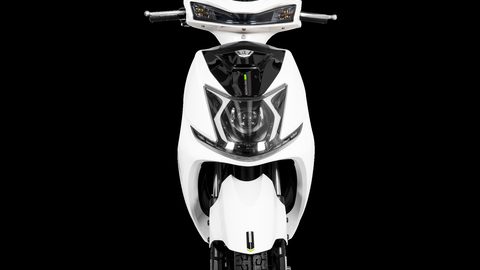 How to Choose an Electric Scooter: Brakes, Range and Carry Weight First
How to choose an electric scooter by the specs that matter: real range for your weight, brake types for wet stopping, and carry weight for daily use.
How to Choose an Electric Scooter: Brakes, Range and Carry Weight First
How to choose an electric scooter by the specs that matter: real range for your weight, brake types for wet stopping, and carry weight for daily use.
-
 Electric Scooter Safety: NTA-8776 Helmets, Braking Distance and Visibility
Electric scooter safety starts with the NTA-8776 helmet standard, understanding real braking distances, and knowing the mechanical failure modes that matter at speed.
Electric Scooter Safety: NTA-8776 Helmets, Braking Distance and Visibility
Electric scooter safety starts with the NTA-8776 helmet standard, understanding real braking distances, and knowing the mechanical failure modes that matter at speed.
-
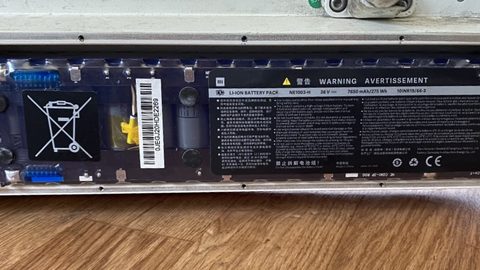 Electric Scooter Batteries: Wh Capacity, 21700 Cells and Real Cycle Life
Electric scooter batteries explained: why watt-hours is the honest capacity unit, how 21700 cells differ from 18650, and what actually shortens pack life.
Electric Scooter Batteries: Wh Capacity, 21700 Cells and Real Cycle Life
Electric scooter batteries explained: why watt-hours is the honest capacity unit, how 21700 cells differ from 18650, and what actually shortens pack life.
-
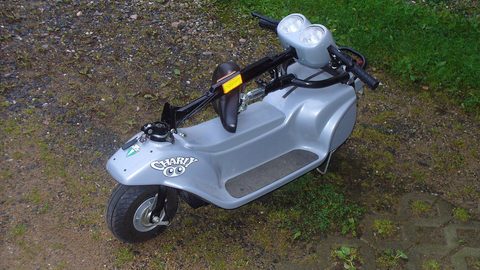 Electric Scooter Commuting: Carry Weight, Folded Size and Wet Weather Reality
What electric scooter commuting actually demands: real carry weight for stairs, folded dimensions for trains, wet weather survival and charging logistics.
Electric Scooter Commuting: Carry Weight, Folded Size and Wet Weather Reality
What electric scooter commuting actually demands: real carry weight for stairs, folded dimensions for trains, wet weather survival and charging logistics.
-
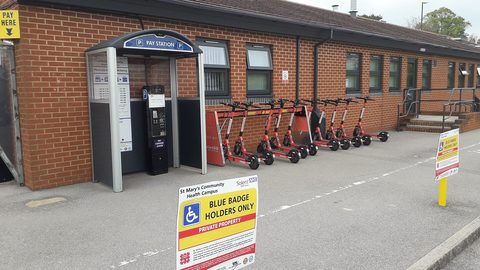 Electric Scooter Maintenance: Stem Bolts, Brake Pads and Tyre Pressure Intervals
Electric scooter maintenance schedule covering stem bolt torque checks, brake pad intervals, tyre pressure and the folding mechanism service that prevents failure.
Electric Scooter Maintenance: Stem Bolts, Brake Pads and Tyre Pressure Intervals
Electric scooter maintenance schedule covering stem bolt torque checks, brake pad intervals, tyre pressure and the folding mechanism service that prevents failure.
-
Segway Ninebot ES3
The Ninebot Segway ES3 was discontinued in 2021 but is still traded heavily used, and it remains a genuine argument as a first electric scooter.
-
Fluid FreeRide CityRider
The Fluid Freeride CityRider is the mid-band commuter this catalogue keeps pointing people at when they arrive looking at something twice the weight.
-
Weped FS
The Weped FS weighs 45 kg and has real hydraulic suspension, and that weight is the organising fact of ownership no spec sheet can soften.
-
Rion RE90
The Rion RE90 is the lightest genuinely fast electric scooter, built in small numbers with almost no weather sealing and a six-month warranty.