The Electric Scooter Ownership Hub: Buying, Owning, and Maintaining Your Scooter
The central hub for electric scooter ownership, routing you to guides on buying used, test riding, and warranty claims based on what you need to do next.
Start Here: What This Ownership Guide Cluster Does
Most buyers make the expensive decisions in the wrong order. They pick a model before they know their local legality, they trust the claimed range figure, and they learn the real maintenance schedule only after the stem starts wobbling. This hub routes you to the specific guide that matches what you are trying to do right now: buy new, buy used, evaluate a test ride, or make a warranty claim. The full electric scooter ownership guide cluster gives the prospective buyer and new owner a checklist they can act on before and after purchase. Each section below names the decision you are facing and points you to the child page that answers it. Read the one that fits your stage, not all of them.


- What This Cluster Covers: The complete ownership lifecycle: purchase decision, pre-ride checks, routine maintenance, battery care, warranty claims, and disposal. One hub page routing to seven child guides.
- What It Does Not Cover: Seated e-mopeds, e-bikes, electric motorcycles, mobility aids for disability, or budget-friendly toys. Those are different vehicle categories with different regulations and failure modes.
- Who Should Use This Hub: Urban commuters replacing public transport for trips under 10 km, fleet operators evaluating total cost of ownership, enthusiast modifiers, parents buying for a teenager, and multi-modal commuters who carry a scooter onto trains.
- Who Should Skip: Anyone seeking a seated e-moped, e-bike, or electric motorcycle. Anyone wanting a mobility aid for disability. Anyone expecting a toy under $200 that will last.
- One Question This Page Answers: What is the complete lifecycle of electric scooter ownership, from purchase decision through maintenance to warranty claims, and which specific guides answer each stage?
Buying An Electric Scooter: New vs. Used vs. Test Ride
You are choosing between three entry points. Each has a separate guide because the failure modes, the documents you need, and the questions you ask the seller are different.
Buying New
Your main risk is buying a model that does not fit your real weight, your real commute, or your real storage space. The buying an electric scooter guide starts with a self-qualification step: measure your mass with a full backpack, measure your longest regular trip, and measure the space where the folded scooter will live. Then it matches those numbers against the attributes that predict real-world performance: independent range at 75 kg, actual weighed mass, and folded dimensions that include the protruding handlebars. The guide walks you through the four specifications that matter most: energy capacity in watt-hours, tyre type (pneumatic, tubeless, or solid), brake type (hydraulic disc is the minimum for any scooter above 25 km/h), and ingress protection rating. Do not trust the claimed range figure. It is 1.8 to 2.5 times the real range a 75 kg rider gets at 25 km/h. The guide explains how to read the specification table in the order the fields matter, not the order they are printed.
Buying Used
A used scooter can save you money or cost you double in repairs within a month. The used scooter guide covers the pre-purchase inspection: how to check the stem folding mechanism for cracks, how to test the battery management system for cell group imbalance by reading the voltage sag under load, and how to spot a controller that has already overheated. It also explains the warranty transfer policy for each major brand. Some void the warranty on resale entirely. Do not buy a used scooter without a test ride at full charge and again at 30% charge. The difference in power tells you the pack health.
The Test Ride Checklist
A test ride is not a joyride. The electric scooter buying checklist guide gives you a sequence to follow: check tyre pressure before you ride, adjust the brakes so the lever does not bottom out against the handlebar, and test the folding mechanism by pushing the stem forward while standing beside the scooter. If you feel any stem wobble at the joint, walk away. The guide lists the five things to test that most buyers skip: hill-climb angle at 75 kg (ask the seller to let you ride up the steepest local hill), regenerative braking strength at full charge (it should not cut out), the display for delamination, the throttle for erratic response, and the charge port for melting signs.
Scooter Ownership Costs: What You Actually Pay
Most buyers budget for the purchase price and nothing else. The scooter ownership costs guide itemises every expense across the first two years: insurance where it is mandatory (Germany requires a plate, valid March to February; Spain and Italy are moving toward nationwide mandates), replacement inner tubes (the single most common field repair), brake pads (inspect every 300 to 500 km, replace when the friction material drops below 1 mm), and tyre replacement (pneumatic tyres need replacing when tread depth falls below 1 mm or sidewall cracking appears). The guide covers the cost of a helmet that meets the standard required in your jurisdiction. California mandates a helmet for riders under 18, and for all riders on Class 3 scooters; France, Italy, and Spain have national helmet laws. Do not assume your local bike helmet is sufficient. Some jurisdictions require a specific e-scooter helmet standard, and the guide names which ones.
The Biggest Hidden Cost
The biggest hidden cost is pack replacement. A lithium-ion NMC cell loses 30% of its capacity after 300 to 500 full equivalent cycles. That is roughly 12 to 18 months of daily commuting if you drain it to near-zero every day. The guide explains how depth of discharge affects cycle life: charging from 20% to 80% instead of 0% to 100% roughly doubles the number of cycles before capacity drops below 70%. It also covers storage voltage. If you are not riding for more than two weeks, store the pack at 50% to 60% state of charge (36 to 38 V on a 36 V nominal system, 40 to 42 V on a 48 V system) and at a temperature between 10 and 25 °C. Leaving it at full charge for months accelerates cell degradation.
Scooter Maintenance Schedule: What To Do And When
Electric scooters are not set-and-forget devices. The scooter maintenance schedule guide gives you three intervals: before every ride, every week, and every 500 km. The pre-ride check takes 30 seconds. Visually inspect the stem folding mechanism for play or cracks. Check that the safety pin engages fully. Squeeze both brakes to confirm they do not bottom out. Spin each wheel to feel for bearing roughness. The weekly check adds tyre pressure (35 to 50 psi for typical 8.5 to 10 inch pneumatic tyres, adjusted for rider weight) and a torque check on the handlebar clamp bolts (5 to 8 Nm) and axle nuts (35 to 50 Nm). Use medium-strength blue threadlocker on structural fasteners.
The 500 km Service
At 500 km, inspect the brake pads. If the friction material is below 1 mm, replace them. Check the suspension seals for oil leaks if your scooter has hydraulic dampers. Lubricate the throttle pivot and brake lever pivots with dry PTFE spray. Never use petroleum-based lubricants, which attract dirt and degrade rubber seals. The guide covers the specific failure modes that appear at this mileage: controller MOSFET failure from sustained high load on hills, throttle hall sensor failure from water ingress, and the beginning of stem wobble in single-stem scooters with telescopic stems. Stem wobble is a design-inherent problem in that category; it is mitigated but not eliminated by tighter tolerances and dual-clamp designs. The guide names the models with known stem-wobble failure modes (the Vsett 10+ is one) and explains which aftermarket parts can delay it.
Warranty Claims: What Gets Denied And How To Win
Warranty claims for electric scooters are denied more often than they are approved. The warranty claim guide explains why. Water damage is the most common denial, even on scooters rated IPX5 or IPX6. Ingress protection ratings are tested on new units in laboratory conditions. Real-world water ingress occurs through the deck seam, the throttle, and the display within months as seals degrade. No scooter is waterproof, only water-resistant, and every major manufacturer excludes water damage from the coverage. Document the scooter before you ride in wet conditions: photograph the serial number, the deck seam, and the display seal. If you do file a claim, the burden of proof is on you to show that the damage was not caused by water.
BMS Lockout And Stem Failures
The second most common denial is battery management system lockout. The BMS permanently disables the pack after a cell group drops below the low-voltage threshold. This happens when the scooter is stored at low charge for weeks. Manufacturers treat this as user error, not a defect. The guide explains how to prove that the BMS lockout was caused by a defective cell, not by storage neglect: you need a voltage reading from each parallel group, taken within 24 hours of the lockout. The third common denial is stem collar fracture. If the folding collar cracks, the manufacturer will inspect for over-tightening. The torque specification is 5 to 8 Nm, and exceeding it by more than 20% can cause casting defects to propagate. The guide lists which brands honour stem-related claims and which do not.
Which Model Class Fits Your Use Case
The category divides into three tiers, and the wrong tier costs you money or safety. Lightweight commuters such as the Xiaomi Mi M365 and the Ninebot Max G30 are the reference designs for trips under 10 km. They have a vast parts ecosystem, which means you can repair them yourself, but their water resistance is limited and their real-world range at 75 kg is well below the claimed figure. Mid-power commuters such as the Niu KQi3 Max and the Apollo City Pro add tubeless self-sealing tyres, better suspension, and higher IP ratings. The KQi3 Max uses a collar lock with dual safety pins on the stem, a design that reduces but does not eliminate the risk of stem wobble.
High-performance hyperscooters such as the Dualtron Thunder 3, the Kaabo Wolf King GT, and the Segway GT2 are a different vehicle category in terms of weight, braking, and regulation. They exceed the EN 17128:2020 maximum design speed of 25 km/h for category 1 PLEVs and may not be legal on public roads in many jurisdictions. They also require a higher maintenance commitment: dual hydraulic disc brakes, adjustable hydraulic suspension, and controllers that can burn MOSFETs under sustained load. The buying guide includes a self-qualification step that asks whether your commute and storage space require a dual-motor 72 V scooter, or whether a 48 V single-motor commuter would serve you better.
Where To Start
Open the guide that matches your current stage. If you have not bought yet, start with the buying guide and the electric scooter buying checklist. If you already own a scooter and it is not performing as expected, start with the maintenance schedule and the warranty claim guide. Do not read all of them at once. Each guide answers one question completely, and the hub routes you to the one you need now. The single most practical thing you can do today: measure your real commute distance with a GPS app, weigh yourself with your full backpack, and measure the space where you will store the folded scooter. Those three numbers save you from the most common purchasing mistake, buying a scooter that works for someone else.
More in Buying and owning
-
 Buying a used electric scooter
A practical inspection checklist for buying a used electric scooter, focused on battery health assessment, common failure points, and the test ride questions that matter.
Buying a used electric scooter
A practical inspection checklist for buying a used electric scooter, focused on battery health assessment, common failure points, and the test ride questions that matter.
-
 Test ride checklist
A step-by-step test ride checklist for electric scooter buyers, covering throttle response, braking, stem stability, and deck comfort before committing to a purchase.
Test ride checklist
A step-by-step test ride checklist for electric scooter buyers, covering throttle response, braking, stem stability, and deck comfort before committing to a purchase.
-
 Warranty claims
What electric scooter warranties actually cover, the water damage and storage exclusions that void claims, and the correct process for filing a successful warranty claim.
Warranty claims
What electric scooter warranties actually cover, the water damage and storage exclusions that void claims, and the correct process for filing a successful warranty claim.
Common Questions
Is it legal to ride a private electric scooter on public roads in the UK?
No. Private electric scooters are illegal on public roads and pavements in the UK. Rental scooters are legal only in trial areas, and the trial has been extended to 31 May 2026. Riding on private land with landowner permission is the only legal option for private owners. The UK government publishes the current legal status; check that before buying.
What is the real-world range of a typical commuter scooter?
The real-world range for a 75 kg rider at 25 km/h is roughly 40% to 55% of the manufacturer's claimed range. The claimed figure is tested at 15 km/h with a 60 kg rider on flat ground with no stops. The single most useful comparison figure is independent range measured on a standardised urban loop by a third-party tester. The buying guide on this site uses that figure, not the manufacturer's.
How often should I check the tyre pressure on my scooter?
Every 2 to 4 weeks for pneumatic tyres. The correct pressure range for typical 8.5 to 10 inch tyres is 35 to 50 psi, adjusted for rider weight. Running below the minimum pressure is the single most common cause of inner tube pinch flats, which happen when the tyre bottoms out against a kerb or pothole.
Can I ride my scooter in the rain?
You can, but you should not expect the warranty to cover water damage. IP ratings are tested on new units in laboratory conditions. Real-world water ingress occurs through the deck seam, throttle, and display within months as seals degrade. No scooter is waterproof, only water-resistant. If you ride in wet conditions, document the scooter's condition before and after.
How long does an electric scooter battery last before it needs replacing?
A typical lithium-ion NMC battery loses 30% of its capacity after 300 to 500 full equivalent cycles. That is roughly 12 to 18 months of daily commuting if you drain the pack to near-zero every day. Lithium iron phosphate (LFP) batteries last longer, 1000 to 2000 cycles, but are rare in this category. Charging from 20% to 80% instead of 0% to 100% roughly doubles the cycle life.
What is stem wobble and how do I prevent it?
Stem wobble is progressive looseness in the telescopic stem or folding joint that causes front-end instability. It is a design-inherent problem in single-stem scooters with telescopic stems. Prevention starts at purchase: check for play in the folding mechanism before every ride. The Vsett 10+ has a known stem-wobble failure mode. Tightening the clamp bolt to the manufacturer's torque specification (5 to 8 Nm) can delay it, but it does not eliminate it.
What helmet standard do I need for an electric scooter?
It depends on your jurisdiction. California requires a helmet for riders under 18, and for all riders on Class 3 e-scooters capable of more than 15 mph. France, Italy, and Spain have national helmet laws. New York City requires a helmet for all riders. The helmet standard accepted by local authorities varies; the guide on this site lists the specific standards for each jurisdiction. Do not assume your bike helmet is sufficient.
Read next
-
Test ride checklist
A step-by-step test ride checklist for electric scooter buyers, covering throttle response, braking, stem stability, and deck comfort before committing to a purchase.
-
Warranty claims
What electric scooter warranties actually cover, the water damage and storage exclusions that void claims, and the correct process for filing a successful warranty claim.
-
Buying a used electric scooter
A practical inspection checklist for buying a used electric scooter, focused on battery health assessment, common failure points, and the test ride questions that matter.
-
 Long Range Electric Scooters With Owner-Reported Distance at Real Rider Weight
Long-range electric scooters ranked by owner-reported distance at a real rider weight, not the manufacturer's 60 kg eco-mode claim, with battery capacity in watt-hours.
Long Range Electric Scooters With Owner-Reported Distance at Real Rider Weight
Long-range electric scooters ranked by owner-reported distance at a real rider weight, not the manufacturer's 60 kg eco-mode claim, with battery capacity in watt-hours.
-
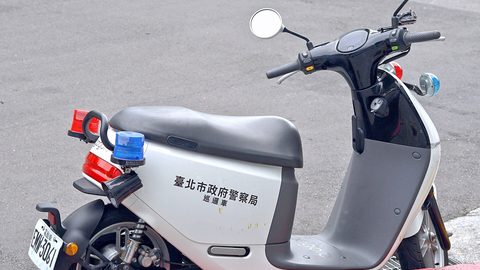 Best Electric Scooters for Adults: Commuter, Heavy Rider and Multi-Modal Picks
The best electric scooter for adults depends entirely on your commute: lightweight folders for train riders, durable tubeless models for daily abuse, and reinforced frames for heavier riders.
Best Electric Scooters for Adults: Commuter, Heavy Rider and Multi-Modal Picks
The best electric scooter for adults depends entirely on your commute: lightweight folders for train riders, durable tubeless models for daily abuse, and reinforced frames for heavier riders.
-
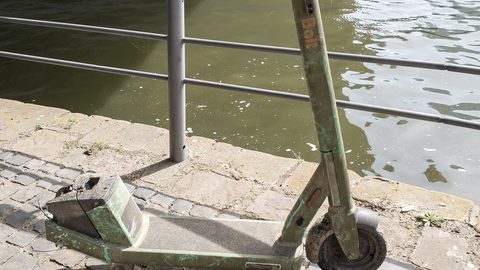 Best Electric Scooter: The Models That Earn Their Spec Sheet in the Real World
The best electric scooter is the one whose real range, brake type, and stem durability match what the spec sheet promises. We compare the models that deliver.
Best Electric Scooter: The Models That Earn Their Spec Sheet in the Real World
The best electric scooter is the one whose real range, brake type, and stem durability match what the spec sheet promises. We compare the models that deliver.
-
 Best Electric Scooter Lights for Actually Seeing the Road at Night
Stock scooter lights are position markers, not headlights. The best electric scooter lights mount securely, survive rain, and project a beam you can actually ride by.
Best Electric Scooter Lights for Actually Seeing the Road at Night
Stock scooter lights are position markers, not headlights. The best electric scooter lights mount securely, survive rain, and project a beam you can actually ride by.