Riding an Electric Scooter at Night with Adequate Lights and Reflective Gear
Ride an electric scooter safely at night with proper lights, reflective gear placement, and speed adjusted to match your headlight beam distance.
Riding an Electric Scooter at Night with Adequate Lights and Reflective Gear
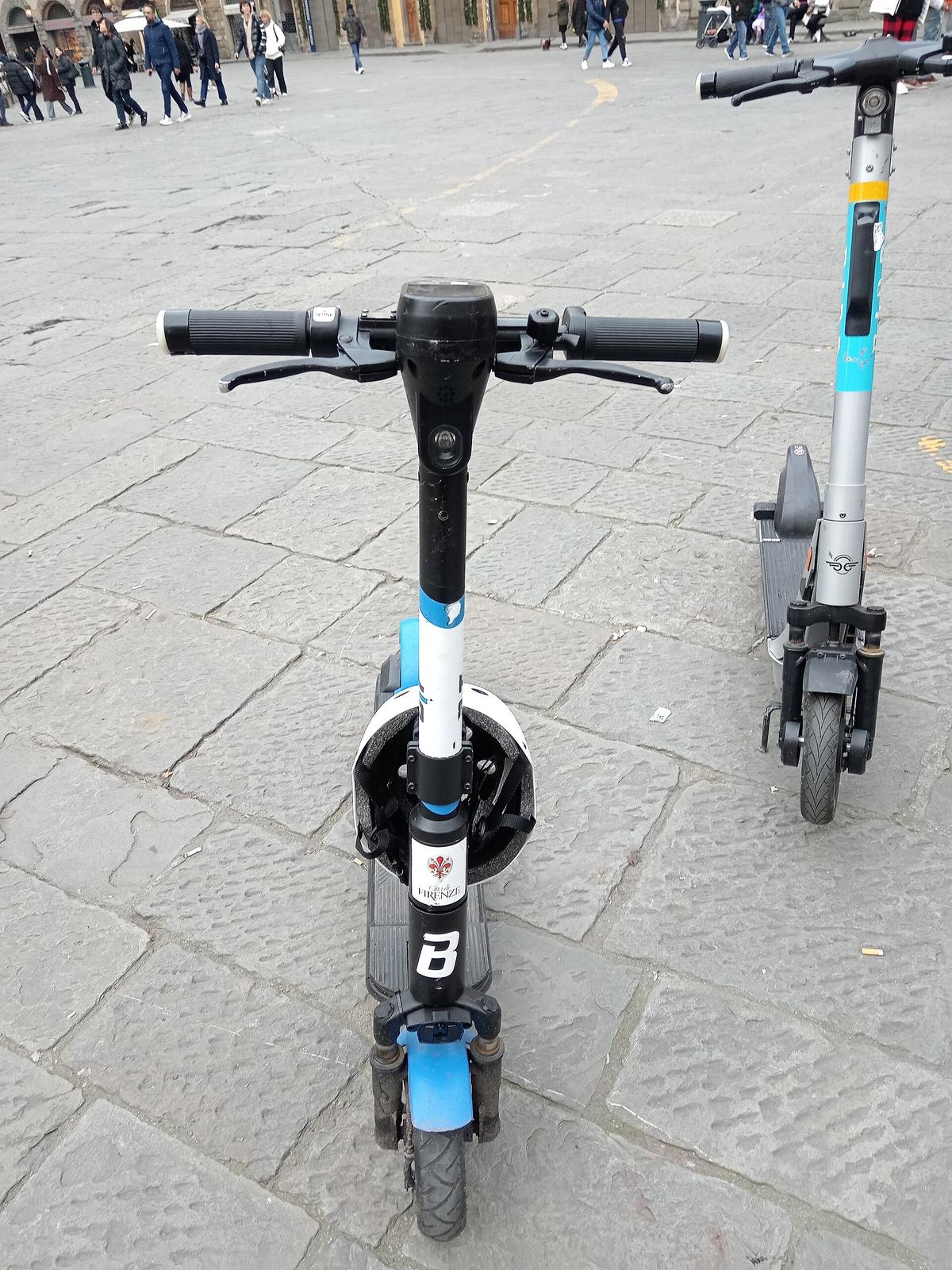
The Ninebot Max G30's headlight puts out 36 lumens. At 15 mph on an unlit path, that beam reaches roughly 6 metres ahead. Your stopping distance from that speed on dry asphalt is 4 to 7 metres. You will hit whatever is in the gap before you see it. Riding an electric scooter at night requires equipment the scooter did not come with and a speed you are not used to riding during the day. Here is the preparation sequence and the technique to make night trips survivable.
_in_2023.02.jpg)
E-Scooter Night Lights Required: Legal Minimums and Why They Are Not Enough
European and National Lighting Standards
The European standard EN 17128:2020 requires a white front light, a red rear light, a red rear reflector, and amber side reflectors or reflective markings on any e-scooter placed on the market. A brake light is optional; if fitted it must be red and activate under braking. UNECE Regulation No. 148 (2019) sets the minimum continuous luminous intensity of the front light at 1.0 candela and the maximum at 2.25 candela. The rear light must be between 0.75 cd and 12 cd. Lights must be between 250 mm and 1500 mm above the ground. Flashing modes are prohibited under UNECE 148 for both front and rear lights.
Germany's StVZO §67 (2017) is stricter: a minimum of 10 lux at 100 metres, an asymmetric dipped beam with a cut-off, a steady red rear light, two yellow side reflectors or a continuous reflective strip per side, and a red rear reflector with a minimum area of 25 cm². France requires a white or yellow steady front light visible from 150 metres, a red steady rear light visible from 150 metres, and an EN 17353 or EN ISO 20471 retroreflective vest outside built-up areas at night. UK rental trial scooters must meet RVLR 1989: a white front light visible from 200 metres, a red rear light visible from 200 metres, a red rear reflector visible from 200 metres, and amber pedal reflectors.
Why Legal Minimums Leave You at Risk
These are the legal floors. They are not adequate for safe riding. The typical integrated headlight on a commuter scooter produces 10 to 150 lumens. The Ninebot Max G30 makes 36 lm. The Xiaomi Mi Electric Scooter 3 makes 20 lm. The Niu KQi3 Max makes 90 lm. None of these will illuminate a pothole, a broken curb, or a pedestrian in dark clothing at a speed that lets you react. The legal standard is designed to make you seen, not to let you see.
Reflective Gear for Scooter Riding: Where to Place It and Why
Reflective material works by returning light to its source. Car headlights, streetlights, and other scooter lights hit the material and bounce back. The placement determines whether a driver sees you in time to stop. Three locations matter most.
Ankles and Lower Legs
Pedal reflectors on a bicycle work because the pedals move. On a scooter, your feet stay on the deck, but your lower legs move with the stem when you steer. Wrap retroreflective tape around your ankles or wear high-top shoes with reflective panels. The motion catches headlights that would otherwise sweep past a static reflector.
High-Visibility Vest
France mandates an EN 17353 or EN ISO 20471 vest outside built-up areas at night. Even where it is not required, a vest identifies you as a person, not a bicycle or a pedestrian. The EN ISO 20471 standard specifies minimum areas of retroreflective material for different risk classes. Class 2 requires at least 0.50 m² of background material and 0.13 m² of retroreflective tape. That is enough to make you recognisable at 200 metres in low beam.
Deck Edges and the Rear Fender
The EN 17128 requirement for side amber reflectors defines the vehicle outline for crossing traffic. Most scooters ship with small plastic reflectors that fall off or lose adhesive in wet conditions. Replace them with adhesive reflective strips on the deck sides and the rear fender. The reflector adhesive failure is a common night-specific failure mode. Check them before every ride.
A helmet reflector is not required by EN 1078, the European helmet standard for e-scooters. Adding one increases your visibility to drivers whose headlights are at the same height as your head. A strip of retroreflective tape on the back of the helmet costs under $5 and takes 30 seconds to apply.
| Model | Headlight Luminous Flux (lm) | Taillight Type | IP Rating |
|---|---|---|---|
| Ninebot Max G30 | 36 | LED, 6 lm | IPX5 body / IPX7 battery |
| Xiaomi Mi Electric Scooter 3 | 20 | LED | IPX5 |
| Niu KQi3 Max | 90 | LED with brake light function | IPX5 |
| Apollo City 2023 | 200 | LED with brake light and turn signals | IP66 |
| Segway GT2 | 900 | LED with brake light and turn signals | IPX4 |
Scooter Night Speed Limit Safety: The 30 Percent Rule and Overdriving Your Headlight
The core concept in night riding is overdriving the headlight. You are riding faster than your beam can reveal obstacles. On an unlit path with a 36-lumen headlight, you cannot see a pothole until you are 6 to 8 metres away. From 25 km/h, your stopping distance on dry asphalt is 4 to 7 metres. On wet asphalt it is 7 to 14 metres. You will hit the pothole before you stop.
The fix is speed reduction. Reduce your daytime pace by 30 percent on unlit routes. If you ride at 20 km/h in daylight, ride at 14 km/h at night on that same path. On lit streets with consistent streetlight coverage, the reduction can be smaller, 10 to 15 percent, because the ambient light extends your effective visibility beyond the headlight beam.
Oncoming glare from car headlights or other scooters momentarily blinds you. When you see headlights approaching, look to the right edge of the path, not at the light. Your eyes recover faster if they are not pointed at the source. Slow down until the glare passes.
Stopping distance at night on wet asphalt is 7 to 14 metres from 25 km/h, according to the ISO 11431:2021 test method. Disc brakes degrade 10 to 25 percent in wet conditions. Drum brakes degrade 30 to 50 percent. Electronic brakes degrade 15 to 30 percent. If your scooter has drum brakes, add another 15 percent to your following distance.
Ninebot Max G30 Headlight Brightness: Why 36 Lumens Is Not Enough and What to Add
The Ninebot Max G30 headlight produces 36 lumens. That is enough for a driver to see you on a lit street. It is not enough for you to see the road surface on an unlit path at any speed above 10 mph. The beam is wide but shallow, with no cut-off to prevent glare for oncoming riders. It is a be-seen light, not a see-by light.
Add a Handlebar-Mounted Light
Add a handlebar-mounted light with at least 200 lumens. The aftermarket mounting standard is a 22.2 mm or 25.4 mm handlebar clamp. Aim the beam at the road 5 to 10 metres ahead, not at the horizon. A light aimed at the horizon will blind oncoming riders and reduce your own depth perception. The beam pattern should be a wide flood, not a narrow spot. A spot beam illuminates a small area far ahead but leaves the edges of the path dark where potholes and debris hide.
Add a Helmet-Mounted Light
A helmet-mounted light is a separate tool. It lets you look through corners. When you turn your head, the light turns with you, illuminating the inside of the turn before the scooter reaches it. The handlebar light stays pointed straight. Together they cover the straight path and the corner without gaps.
Both lights should be USB rechargeable with their own batteries. Drawing power from the scooter's DC output, typically 5V USB or 12V auxiliary, drains the main battery. The drain is small, under 2 percent of battery capacity with lights on at maximum brightness, but it is cumulative on a long ride. A separate light that runs on a 3.7V lithium cell leaves your scooter's range unaffected.
FAQ: Riding an Electric Scooter at Night
EN 17128:2020 makes a brake light optional. If fitted, it must be red and activate under braking. Many scooters, including the Niu KQi3 Max and Apollo City 2023, integrate a brake light into the tail light. A brake light is not required by German StVZO or French regulations, but it improves following-driver reaction time. If your scooter does not have one, add an aftermarket unit that senses deceleration.
IPX4 is the minimum for riding in wet conditions at night. IPX5 or higher is recommended for heavy rain. The Ninebot Max G30 is rated IPX5 for the body and IPX7 for the battery. The Apollo City 2023 is IP66. No scooter is water-proof; warranty claims for water damage are almost universally denied.
No. UNECE Regulation No. 148 (2019) prohibits flashing modes for both front and rear lights on e-scooters. German StVZO requires a steady red rear light. Flashing lights are legal on bicycles in some jurisdictions but not on e-scooters. A steady light is more visible to drivers because it gives them a fixed point to judge distance and speed.
Less than 2 percent. A typical headlight draws 1 to 5 watts, a tail light 0.5 to 2 watts. On a 500 Wh battery, running both lights at maximum brightness for an hour consumes under 7 Wh. The battery range reduction is negligible. The bigger drain is cold weather: battery capacity drops 15 to 25 percent at 0°C versus 20°C for NMC chemistry.
The same as daytime. For 8.5-inch pneumatic tyres, 2.8 to 3.4 bar (40 to 50 psi). For 10-inch pneumatic tyres, 2.4 to 3.1 bar (35 to 45 psi). Underinflation increases the risk of a pinch flat when you hit a pothole you did not see. Check pressure every two weeks or before every ride. Solid tyres increase stopping distance on wet surfaces by 20 to 40 percent, avoid them for night riding if you can.
EN 1078, the European helmet standard for e-scooters, does not require retroreflective elements. Adding a reflective strip to the back of the helmet is cheap and effective. For higher-speed scooting above 25 km/h, use an ECE 22.06 rated helmet. That standard does not require reflectives either, but the helmet itself is safer in a crash.
Headlight wire fatigue at the folding mechanism. The wire bundle that runs through the stem flexes every time you fold the scooter. Over months, the insulation cracks and the wire breaks inside the insulation. The headlight goes out mid-ride. Inspect the wire bundle at the folding joint every month. If you see exposed copper, replace the wire or the light assembly before your next night ride.
Read next
-
 Electric Scooter Riding Skills: Techniques for Commuting, Braking and Hills
Learn fundamental electric scooter riding skills from first-ride stance to emergency braking, with step-by-step guides for rain, night, and hill riding.
Electric Scooter Riding Skills: Techniques for Commuting, Braking and Hills
Learn fundamental electric scooter riding skills from first-ride stance to emergency braking, with step-by-step guides for rain, night, and hill riding.
-
 Long Range Electric Scooters With Owner-Reported Distance at Real Rider Weight
Long-range electric scooters ranked by owner-reported distance at a real rider weight, not the manufacturer's 60 kg eco-mode claim, with battery capacity in watt-hours.
Long Range Electric Scooters With Owner-Reported Distance at Real Rider Weight
Long-range electric scooters ranked by owner-reported distance at a real rider weight, not the manufacturer's 60 kg eco-mode claim, with battery capacity in watt-hours.
-
 Best Electric Scooters for Adults: Commuter, Heavy Rider and Multi-Modal Picks
The best electric scooter for adults depends entirely on your commute: lightweight folders for train riders, durable tubeless models for daily abuse, and reinforced frames for heavier riders.
Best Electric Scooters for Adults: Commuter, Heavy Rider and Multi-Modal Picks
The best electric scooter for adults depends entirely on your commute: lightweight folders for train riders, durable tubeless models for daily abuse, and reinforced frames for heavier riders.
-
 Best Electric Scooter: The Models That Earn Their Spec Sheet in the Real World
The best electric scooter is the one whose real range, brake type, and stem durability match what the spec sheet promises. We compare the models that deliver.
Best Electric Scooter: The Models That Earn Their Spec Sheet in the Real World
The best electric scooter is the one whose real range, brake type, and stem durability match what the spec sheet promises. We compare the models that deliver.
-
 Best Electric Scooter Lights for Actually Seeing the Road at Night
Stock scooter lights are position markers, not headlights. The best electric scooter lights mount securely, survive rain, and project a beam you can actually ride by.
Best Electric Scooter Lights for Actually Seeing the Road at Night
Stock scooter lights are position markers, not headlights. The best electric scooter lights mount securely, survive rain, and project a beam you can actually ride by.