How to Choose an Electric Scooter Lock: D-Locks, Chains and Folding Locks
D-locks, chain locks and folding locks compared for electric scooters: which resists angle grinders, fits the locking points on popular models, and is light enough to carry.
The Best Electric Scooter Lock Must Survive An Angle Grinder For At Least 30 Seconds
An angle grinder cuts a 12 mm hardened steel D-lock shackle in under 30 seconds. That is the benchmark from independent testing by Bennetts BikeSocial (2022). A Sold Secure Diamond-rated chain lock survives that attack for over 60 seconds. It weighs 4 kg. The right electric scooter lock resists an angle grinder long enough to make a thief move on, yet stays light enough to carry in a backpack every day. The core trade-off is angle grinder resistance versus carry weight: a Diamond-rated chain lock at 4 kg protects differently than a 1 kg Diamond-rated D-lock, and the rider's carrying capacity determines which is viable.
Locking Points Are The Weak Link
Electric scooters have specific locking points that make them harder to secure than bicycles. The Ninebot Max G30 and Xiaomi M365 both offer only the stem collar as a pass-through for a lock. That collar can be unbolted with basic tools in under two minutes, so locking through the rear wheel and around the deck stem is the only secure method. On a Kaabo Wolf King GT, the deck anchor is a solid pass-through point. Cable locks are for securing accessories only, never the scooter itself. They are cut in under 10 seconds with hand tools. The independent testing houses Sold Secure (UK), ART (Netherlands), and SSF (Sweden) set the real standards, not manufacturer claims.


Scooter D-Lock Review: What A D-Lock Can And Cannot Do
A D-lock (also called a U-lock) uses a hardened steel shackle, typically 12 mm to 16 mm thick, that slides into a double-bolted crossbar. Sold Secure Powered Cycle Gold requires a minimum of 12 mm hardened boron steel. A Diamond-rated bicycle D-lock exceeds that but adds weight: 1.5 kg to 2.5 kg. The advantage is a high lock-to-weight ratio. A 1.5 kg D-lock resists an angle grinder for roughly 20 to 30 seconds. That deters a casual thief. The disadvantage is the fixed shape. A D-lock cannot wrap around a street sign or bike rack if the scooter is parked against it; you must find a post that fits inside the shackle opening, which on most models is 12 cm to 15 cm wide.
How To Lock A Scooter With A D-Lock
Thread the D-lock through the rear wheel spokes and around the folding stem base or the deck. This secures both the wheel and the frame in one motion. The stem collar vulnerability on the Ninebot Max G30 and Xiaomi M365 means you must lock through the frame itself, not just through the wheel. A D-lock cannot secure the front wheel because the axle is a single bolt on many models and can be removed in moments. The handlebar display and throttle unit are quick-release on most scooters; a D-lock does not protect them. Carry the D-lock on a frame mounting bracket that fits a stem diameter of 30 mm to 50 mm. Some scooter stems, such as those on the Dualtron Thunder and Kaabo Wolf King, exceed 55 mm and will not accept standard brackets.
Scooter Chain Lock: Maximum Resistance At A Weight Cost
A chain lock uses hardened steel links, typically 6 mm to 10 mm in diameter, threaded through a padlock body. Sold Secure Diamond-rated chains use 10 mm hardened boron steel links and weigh 2.5 kg to 4.0 kg for a 1.2 metre length. The angle grinder resistance of a 10 mm chain exceeds 60 seconds because the grinder must cut each link individually; a thief must make multiple cuts to free the scooter. The trade-off is the weight. A 4 kg chain lock adds 20% to the weight of a 20 kg commuter scooter. A commuter carrying the scooter up stairs or onto a train will feel that weight every time.
Using A Chain Lock Correctly
The chain's length, typically 80 cm to 120 cm, lets you wrap it around a fixed object and through the scooter frame. On a Kaabo Wolf King GT, thread the chain through the deck anchor and around a solid post. On a Ninebot Max G30, wrap the chain around the stem base and rear wheel. A chain lock also secures the battery pack on models where the pack is removable and the latch is unsecured, such as the Okai Neon Pro. The disadvantage is storage: a chain does not fit a frame bracket as neatly as a D-lock or folding lock, and it rattles against the stem while riding. Use a chain bag or wrap it around the stem under a bungee. For a fleet operator, a chain lock is the practical choice because it fits multiple scooter shapes and locking points.
Folding Lock For Scooter: The Commuter Compromise
A folding lock is a series of hardened steel links, typically 5 mm to 6 mm thick, that pivot on rivets to form a rigid bar when open and a compact stack when folded. Lengths are 80 cm to 100 cm. Weight is 0.8 kg to 1.8 kg. The angle grinder resistance is lower than a D-lock or chain because the rivet joints are the weak point; Sold Secure updated its testing protocol in 2021 to account for lever attacks on these joints. A folding lock resists an angle grinder for roughly 10 to 15 seconds. That deters a thief with hand tools but not one with power tools.
When A Folding Lock Makes Sense
The advantage is portability. A 1.0 kg folding lock folds to the size of a large phone and mounts on a stem bracket. Choose this lock if you carry the scooter onto public transport and need to keep the lock in a backpack or coat pocket. The locking point is the same as a D-lock: through the rear wheel spokes and around the deck stem. On a Xiaomi M365, the closed frame section behind the stem provides a secure pass-through. The folding lock cannot secure the front wheel or the handlebar display. Use it as a primary lock for short stops in low-theft areas, not overnight parking in a city with high theft rates. In Paris, 7,500 e-scooters were reported stolen in 2022 (Préfecture de Police, 2023). A folding lock alone is insufficient there.
| Lock Type | Weight Range | Angle Grinder Resistance | Best Locking Point | Carry Method |
|---|---|---|---|---|
| D-Lock (U-lock) | 0.9–2.5 kg | 20–30 seconds (12–16 mm shackle) | Rear wheel spoke and deck stem | Frame bracket (stem 30–50 mm) |
| Chain Lock | 1.5–4.0 kg | 60+ seconds (10 mm hardened steel links) | Deck anchor and fixed object | Chain bag or stem wrap |
| Folding Lock | 0.8–1.8 kg | 10–15 seconds (rivet joints weak point) | Rear wheel and stem base | Stem bracket or backpack |
| Disc Brake Alarm Lock | 0.1–0.3 kg | 0 seconds (cut in under 5 seconds with bolt cutters) | Brake rotor only | Pocket or under deck |
| Cable Lock | 0.3–0.6 kg | Under 10 seconds with hand tools | Accessories only (helmet, charger) | Backpack |
Sold Secure Scooter Lock: What The Ratings Mean And Which One Your Insurance Requires
Sold Secure introduced its Powered Cycle (Electric Scooter) category in 2021. The two relevant ratings are Silver and Gold. Silver requires the lock to resist hand tools for a minimum time; Gold requires resistance to power tools, including an angle grinder. A Sold Secure Diamond rating exists for bicycles but exceeds the Powered Cycle Gold standard; a Diamond-rated D-lock or chain lock also covers a scooter. For UK insurance policies from 2022 onward, the lock must be Sold Secure Powered Cycle Silver or Gold for theft cover. Check your specific policy, because requirements change annually.
European Standards And Insurance Rules
The ART standard in the Netherlands uses a 2-star to 5-star rating for two-wheelers; Dutch insurers recommend a 2-star minimum for light electric vehicles. The SSF standard in Sweden classifies scooter locks under SSF 0147. The VdS standard in Germany has no scooter-specific subclass as of 2025. If your insurer requires a lock standard, ask them which body they recognise and which rating they demand. Do not assume a bicycle lock rating transfers to a scooter. A Sold Secure Bicycle Diamond lock will protect a scooter, but the insurer may not list it as acceptable for a scooter policy. Write to the insurer and get a named standard in writing.
What The Test Times Actually Mean
Angle grinder resistance times in the table above are from independent testing houses, not manufacturer claims. Bennetts BikeSocial (2022) tested 12 mm hardened steel D-locks and recorded under 30 seconds to cut. Sold Secure tests locks to its own protocol; the time to cut is not published as a single number, but the pass/fail threshold is set by the standard. A Sold Secure Gold lock must survive a set of attacks that includes an angle grinder. A Diamond-rated lock must survive a longer attack sequence. The real-world time a thief needs depends on the grinder disc quality, the operator's skill, and whether the lock is tensioned or loose. A loose lock can be cut faster because the disc does not bind.
Disc Brake Alarm Lock: A Deterrent, Not A Primary Lock
A disc brake alarm lock fits onto the brake rotor, typically 2.0 mm to 3.0 mm thick. It weighs 0.1 kg to 0.3 kg and emits 110 dB to 120 dB at 30 cm when the scooter is moved. This is enough to attract attention in a public area and deter an opportunistic thief. It is not enough to prevent theft. A disc brake alarm lock can be cut in under 5 seconds with a pair of bolt cutters, and the scooter can be lifted and carried away because the lock does not secure the scooter to a fixed object. Use it as a secondary deterrent alongside a D-lock or chain lock, never as the sole lock. The alarm disc lock is useful for short stops where you can see the scooter, such as outside a café. For overnight parking or high-theft areas, it is insufficient.
GPS Tracker Integration And Manufacturer Immobilisers
Several manufacturers now integrate GPS tracking and app-based locks into their scooters. NIU offers NFC card and app lock plus GPS tracking on its KQi series from 2021. Apollo includes PIN-code lock and GPS tracking on Phantom and City models from 2022. Segway-Ninebot offers NFC access on the MAX G2 and GT series from 2023. Xiaomi and Ninebot have had an app-based digital lock since 2019 that engages motor resistance and triggers an alarm on movement. These features are not a replacement for a physical lock. The app lock prevents the motor from turning, but a thief can still lift the scooter into a van. The GPS tracker, whether factory-installed or aftermarket (Apple AirTag, Tile, Samsung SmartTag), helps locate the scooter after theft but does not prevent it. Hide the tracker in the deck cavity or stem, not in the handlebar area where it is easily found.
What Goes Wrong: The Failure Case
The most common mistake is using a cable lock as the primary lock. A cable lock is cut in under 10 seconds with hand tools and offers no real security. The second most common mistake is locking only through the front wheel, which is secured by a single bolt on many models and can be removed in 30 seconds. The third mistake is leaving the handlebar display and throttle unit unsecured; these are quick-release on most scooters and are the most frequently stolen components. If you park overnight in an area with known theft, remove the display or lock it separately.
Choosing A Lock You Will Actually Use
For a commuter who carries the scooter onto public transport, the lock weight is the binding constraint. A 4 kg chain lock is not viable for a daily carry. The solution is a Sold Secure Gold-rated folding lock at 1.0 kg to 1.8 kg, combined with a disc brake alarm lock for additional deterrence. Park in a visible, well-lit area and lock to a fixed object that cannot be lifted over the scooter. A thief with an angle grinder will target a scooter that takes under 30 seconds to free; a scooter that takes 60 seconds is likely to be passed over for an easier target. The single thing that most often goes wrong is underestimating the time and effort required to lock the scooter properly, which leads to a quick lock that fails.
Common Questions
What is the strongest type of lock for an electric scooter?
A Sold Secure Diamond-rated chain lock with 10 mm hardened steel links offers the highest angle grinder resistance, exceeding 60 seconds. It weighs 2.5 kg to 4.0 kg. A Diamond-rated D-lock is lighter at 1.5 kg to 2.5 kg but resists for 20 to 30 seconds.
Can I use a bicycle lock on my electric scooter?
Yes, if the lock rating meets your insurance requirement. A Sold Secure Bicycle Diamond lock exceeds the Powered Cycle Gold standard for scooters. Check with your insurer whether they accept a bicycle-rated lock for a scooter policy. Some insurers specify the Powered Cycle standard.
Where should I lock my electric scooter?
Thread the lock through the rear wheel spokes and around the deck stem or folding mechanism. On a Ninebot Max G30 or Xiaomi M365, the stem collar is a vulnerable point that can be unbolted, so lock through the frame itself. Never lock only through the wheel or the handlebar stem.
Do I need a lock that meets a specific standard for insurance?
UK insurers from 2022 typically require Sold Secure Powered Cycle Silver or Gold. Dutch insurers recommend ART 2-star minimum. German insurers may require VdS or equivalent. Ask your insurer which body and rating they accept, and get it in writing. Standards change annually.
Read next
-
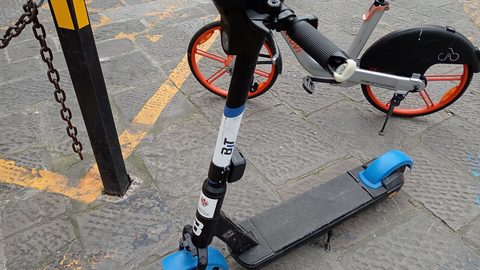 Electric Scooter Accessories: What to Buy and What Solves Which Problem
Which electric scooter accessories solve real problems: a guide to locks, phone mounts, lights and carrying solutions, with what to look for and any legal requirements.
Electric Scooter Accessories: What to Buy and What Solves Which Problem
Which electric scooter accessories solve real problems: a guide to locks, phone mounts, lights and carrying solutions, with what to look for and any legal requirements.
-
 Long Range Electric Scooters With Owner-Reported Distance at Real Rider Weight
Long-range electric scooters ranked by owner-reported distance at a real rider weight, not the manufacturer's 60 kg eco-mode claim, with battery capacity in watt-hours.
Long Range Electric Scooters With Owner-Reported Distance at Real Rider Weight
Long-range electric scooters ranked by owner-reported distance at a real rider weight, not the manufacturer's 60 kg eco-mode claim, with battery capacity in watt-hours.
-
 Best Electric Scooters for Adults: Commuter, Heavy Rider and Multi-Modal Picks
The best electric scooter for adults depends entirely on your commute: lightweight folders for train riders, durable tubeless models for daily abuse, and reinforced frames for heavier riders.
Best Electric Scooters for Adults: Commuter, Heavy Rider and Multi-Modal Picks
The best electric scooter for adults depends entirely on your commute: lightweight folders for train riders, durable tubeless models for daily abuse, and reinforced frames for heavier riders.
-
 Best Electric Scooter: The Models That Earn Their Spec Sheet in the Real World
The best electric scooter is the one whose real range, brake type, and stem durability match what the spec sheet promises. We compare the models that deliver.
Best Electric Scooter: The Models That Earn Their Spec Sheet in the Real World
The best electric scooter is the one whose real range, brake type, and stem durability match what the spec sheet promises. We compare the models that deliver.
-
 Best Electric Scooter Lights for Actually Seeing the Road at Night
Stock scooter lights are position markers, not headlights. The best electric scooter lights mount securely, survive rain, and project a beam you can actually ride by.
Best Electric Scooter Lights for Actually Seeing the Road at Night
Stock scooter lights are position markers, not headlights. The best electric scooter lights mount securely, survive rain, and project a beam you can actually ride by.