What to Check on an Electric Scooter Test Ride Before You Buy
A step-by-step test ride checklist for electric scooter buyers, covering throttle response, braking, stem stability, and deck comfort before committing to a purchase.
Electric Scooter Test Ride Checklist: What To Check Before You Buy
A spec sheet tells you battery size, motor wattage, and claimed range. It cannot tell you how a scooter feels under your weight on a real road. That is why this checklist exists: to expose the gap between marketing and what you actually experience. Close that gap by running a structured sequence of checks before you hand over any money.
Start with static inspection. Then move to low-speed manoeuvring. Then a braking test from 25 km/h on a safe stretch of tarmac. If any check reveals stem play, brake pulsing, or a dead zone in the first part of the twist, reject that unit. No spec sheet can fix a design that does not suit your body and your intended route.
Static Inspection: What To Check Before You Even Ride
Tyre Pressure And Stem Integrity
Before you step on, verify four things that will affect every minute of ownership. First, check tyre pressure. The recommended pressure for a Segway-Ninebot Max G30 is 32-37 psi; for a Xiaomi Mi Electric Scooter 3 it is 40-50 psi. Under-inflated tyres cause pinch flats and reduce range. Bring a gauge or ask the seller to show you the reading.
Second, inspect the stem folding mechanism. The Segway-Ninebot Max G30 folding collar bolt torque specification is 16-18 Nm. If the clamp feels loose or you can detect any movement when you push the handlebars sideways, that unit has a problem. Stem wobble is a known failure mode on single-stem designs like the Vsett 10+, and it worsens over time as the plastic bushings wear.
Folded Size And Real Weight
Third, measure folded dimensions against your storage space. Claimed dimensions often exclude protruding handlebars or brake levers, so the scooter may be 3-8 cm longer than stated. If you carry it onto trains or into a lift, the real folded length is the dimension that matters.
Fourth, weigh the scooter. Manufacturer claimed mass routinely excludes the stem. Bring a luggage scale if portability matters. A scooter that claims 23 kg but weighs 25 kg on your scale changes whether you can carry it up three flights of stairs.
Scooter Test Ride: What To Check At Low Speed
Once you are on the scooter, start at walking pace before you accelerate.
Throttle Response And Motor Type
The first thing to assess is how the scooter responds to the twist. A sine wave motor driver delivers smooth, quiet power from a standstill. A square wave unit produces an audible whine and jerky low-speed response. If the scooter lurches when you barely touch the grip, that is a square wave system, and you will hate it in stop-start traffic.
Deck Width And Handlebar Height
Test the deck width. A narrow deck forces you into a side-by-side stance that reduces control when you brake hard. If your feet do not fit comfortably side by side with a small gap between them, the deck is too narrow for your stance. Deck width is a comfort spec that no brochure communicates honestly.
Check the handlebar height. EN 14619 sets a maximum handlebar height from deck of 1,000 mm. If the bars feel too low or too high after five minutes of riding, your posture will suffer on longer commutes. Adjust if possible; reject if not.
Stem Wobble Check
Listen for stem wobble. On a smooth, flat stretch at about 10 km/h, release your grip briefly. If the handlebars oscillate or you feel a shudder through the stem, the folding joint or telescopic section has play. That play will only increase with mileage.
Testing Scooter Brakes And Acceleration: The 25 Km/H Run
No standardised independent stopping test exists across the e-scooter category. Manufacturer figures are not comparable between brands because each uses a different test protocol. Your own test is the only data point you will get.
Braking Distance And Lever Feel
Find a flat, dry, paved area with no traffic. Accelerate to 25 km/h and apply the brake firmly but not abruptly. The EN 17128 standard specifies a maximum stopping distance of 4.5 m from 25 km/h on a dry road and 7.0 m on a wet one. If the scooter takes noticeably longer, or if the brake lever travels more than 15-20 mm for mechanical disc brakes (5-10 mm for hydraulic) before engaging, the brake system is out of adjustment or undersized for your weight.
Test regenerative slowing separately. At 25 km/h, release the twist and let the motor drag slow you without touching the mechanical brake. If the deceleration is weak or inconsistent, the motor driver or BMS is limiting regen, and you will rely more on the mechanical brake in daily use.
Hill Climb Acceleration
Acceleration test: from a stop, go to full power on a slight uphill (5-10% grade). If the motor cuts out, stutters, or takes more than five seconds to reach 15 km/h, the driver MOSFETs are overheating or the battery is not delivering enough current for your weight. A scooter that fails this hill climb test at 75 kg will struggle on any real-world gradient below 40% battery.
Scooter Deck Comfort Test: Your Stance Matters
The deck is the structural aluminium extrusion that houses the battery and motor control unit. It is rarely user-serviceable. On the test ride, stand in your natural riding position for two minutes. If the deck is so narrow that your heels hang off, or so short that you cannot shift your weight rearward when stopping, the scooter is not right for you.
Check the grip tape or deck pad. If it is worn smooth, or if the material feels slippery with damp shoes, that is a safety issue. A wet deck under braking is a fall waiting to happen.
Test the kickstand. EN 14619 requires that the kickstand retract automatically when the scooter is moved forward. If it does not, you will eventually ride off with it dragging.
New Scooter Inspection Before Buying: What To Verify At The Shop
Before you accept delivery, perform a final inspection.
Brake Wear And Headlight Output
Check the brake pad friction material thickness: minimum 1.0 mm. Check the brake disc thickness: minimum 1.5 mm for a Shimano RT56. If either is below spec, the brake system is worn before you have ridden a kilometre.
Verify the headlight beam. EN 17128 requires a minimum luminous intensity of 10 lux at 10 m. If the beam is dim, misaligned, or flickers, the electrical system may have a poor connection or the LED driver is failing.
Throttle Return And Folding Lock
Test the twist return-to-zero: release the grip and confirm the motor cuts within 1 second. EN 17128 requires this. A sticky twist that does not snap back is a crash risk.
Check the folding mechanism safety pin. It must engage fully and lock. The folding mechanism durability test under EN 14619 is 10,000 cycles, but that is a laboratory test. On a showroom floor, if the pin does not seat with a positive click, the mechanism is out of tolerance.
| Check | What To Look For | Reject If |
|---|---|---|
| Tyre Pressure | 32–50 psi depending on model | Below minimum or unmeasurable |
| Stem Wobble | No oscillation at 10 km/h with hands off | Any oscillation or play at clamp |
| Brake Distance | ≤ 4.5 m from 25 km/h dry | Longer than 5 m or lever touches bar |
| Throttle Response | Smooth, no lurch | Jerky or dead zone at first 10% of travel |
| Deck Width | Feet fit side by side comfortably | Heels hang off or toes overlap |
| Folded Size | Fits your storage space | Exceeds stated dimensions by 3 cm+ |
| Mass | Matches your carrying ability | Differs from claimed by 1 kg+ |
| Hill Climb | Sustains speed on 10% grade at 75 kg | Motor cuts or speed drops below 10 km/h |
Scooter Test Ride: What To Check For Brake Modulation And Emergency Stop
Brake modulation is the ability to apply the brake progressively without locking the wheel. On the test ride, find a straight, clear section of pavement and perform three emergency stops from 25 km/h. Each time, apply the brake as hard as you would in a real emergency.
If the rear wheel locks and skids, the brake lacks modulation. If the front brake grabs and the scooter pitches forward, the brake bias is wrong for your weight. A scooter that pitches forward under hard braking is dangerous: you will go over the handlebars.
Check for brake pulsing. If you feel a vibration through the lever or the deck when slowing, the brake disc is warped or the pads are glazed. Pulsing will not improve with wear; it requires replacement of the disc or pads.
Test the motor cut-off on brake application. EN 17128 requires the motor power to cut within 0.5 seconds of brake actuation. If the motor keeps driving while you brake, the motor controller has a fault that can cause a run-away condition.
Who This Subject Suits And Who Should Skip It
This checklist is for urban commuters replacing public transport or driving for trips under 10 km, who need to know real range at their weight, water resistance, and local legality. It is for fleet operators evaluating total cost of ownership, who need failure rates and repairability data. It is for enthusiasts who need to understand motor driver limits and battery voltage architecture. It is for parents buying for a teenager, who need speed governors and helmet standards. It is for multi-modal commuters who carry the scooter onto trains, who need folded dimensions and actual weighed mass.
Skip this subject if you want a seated electric moped, e-bike, or electric motorcycle: those are different vehicle categories with different regulations and failure modes. Skip if you want a mobility aid for disability: standing scooters are not medical devices and lack the required stability. Skip if you expect a toy that will last at a budget price: the subject here is vehicles, not disposable gadgets.
The single thing that most often goes wrong on a test ride is that buyers skip the stem wobble check. Stem wobble is design-inherent in single-stem scooters with telescopic stems, and it is mitigated but not eliminated by tighter tolerances and dual-clamp designs. Test for it at low speed. If you do not, you will find it three months later on a downhill stretch at 30 km/h.
Common Questions
What is the most important thing to check on an electric scooter test ride?
Stem wobble. Release the handlebars briefly at 10 km/h on a smooth road. If you feel oscillation or play, reject the scooter. Stem wobble is a known failure mode on single-stem designs like the Vsett 10+, and it worsens as plastic bushings wear.
How do I test the brakes on a test ride?
Accelerate to 25 km/h on a flat, dry, paved stretch and brake firmly. The EN 17128 standard specifies a maximum stopping distance of 4.5 m from 25 km/h on a dry road. If the lever travels more than 15-20 mm for mechanical disc brakes (5-10 mm for hydraulic) before engaging, the brakes need adjustment. Test for pulsing: a vibration through the lever or deck means a warped disc or glazed pads.
Should I test the scooter on a hill?
Yes. Find a 5-10% grade and accelerate from a stop. If the motor cuts out, stutters, or takes more than five seconds to reach 15 km/h, the driver MOSFETs are overheating or the battery cannot deliver enough current for your weight. A scooter that fails this hill climb test at 75 kg will struggle on any real-world gradient below 40% battery.
What should I check about the scooter's weight and size before buying?
Weigh the scooter yourself with a luggage scale. Manufacturer claimed mass routinely excludes the stem. Measure the folded dimensions against your storage space: claimed dimensions often exclude protruding handlebars or brake levers, so the scooter may be 3-8 cm longer than stated.
What is the difference between a sine wave and square wave controller?
A sine wave motor driver delivers smooth, quiet power from a standstill. A square wave unit produces an audible whine and jerky low-speed response. If the scooter lurches when you barely touch the grip, that is a square wave system. Sine wave drivers have replaced square wave on all new models above the budget tier.
Read next
-
 Electric Scooter Ownership Guide Buying Owning and Maintaining Your Scooter
The central hub for electric scooter ownership, routing you to guides on buying used, test riding, and warranty claims based on what you need to do next.
Electric Scooter Ownership Guide Buying Owning and Maintaining Your Scooter
The central hub for electric scooter ownership, routing you to guides on buying used, test riding, and warranty claims based on what you need to do next.
-
 Long Range Electric Scooters With Owner-Reported Distance at Real Rider Weight
Long-range electric scooters ranked by owner-reported distance at a real rider weight, not the manufacturer's 60 kg eco-mode claim, with battery capacity in watt-hours.
Long Range Electric Scooters With Owner-Reported Distance at Real Rider Weight
Long-range electric scooters ranked by owner-reported distance at a real rider weight, not the manufacturer's 60 kg eco-mode claim, with battery capacity in watt-hours.
-
 Best Electric Scooters for Adults: Commuter, Heavy Rider and Multi-Modal Picks
The best electric scooter for adults depends entirely on your commute: lightweight folders for train riders, durable tubeless models for daily abuse, and reinforced frames for heavier riders.
Best Electric Scooters for Adults: Commuter, Heavy Rider and Multi-Modal Picks
The best electric scooter for adults depends entirely on your commute: lightweight folders for train riders, durable tubeless models for daily abuse, and reinforced frames for heavier riders.
-
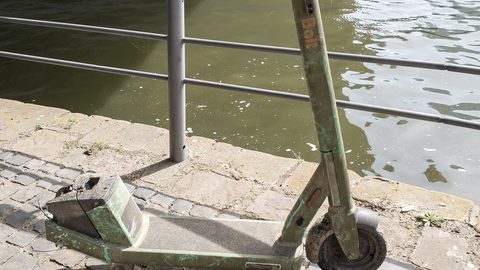 Best Electric Scooter: The Models That Earn Their Spec Sheet in the Real World
The best electric scooter is the one whose real range, brake type, and stem durability match what the spec sheet promises. We compare the models that deliver.
Best Electric Scooter: The Models That Earn Their Spec Sheet in the Real World
The best electric scooter is the one whose real range, brake type, and stem durability match what the spec sheet promises. We compare the models that deliver.
-
 Best Electric Scooter Lights for Actually Seeing the Road at Night
Stock scooter lights are position markers, not headlights. The best electric scooter lights mount securely, survive rain, and project a beam you can actually ride by.
Best Electric Scooter Lights for Actually Seeing the Road at Night
Stock scooter lights are position markers, not headlights. The best electric scooter lights mount securely, survive rain, and project a beam you can actually ride by.