The Best Electric Scooter Lights That Turn Position Markers Into Headlights
Stock scooter lights are position markers, not headlights. The best electric scooter lights mount securely, survive rain, and project a beam you can actually ride by.
Affiliate links. If you buy through the links below we may earn a commission, at no extra cost to you. How this works.
Stock Scooter Lights Are Position Markers, Not Headlights
The stock light on almost every scooter, including the Ninebot Max G30 and Xiaomi M365, is a position light. It makes the scooter visible to others. It does not illuminate the road at 25 km/h. That is the single most useful fact here. A position light puts out 10 to 50 lumens through a single LED and a basic reflector, with no cut-off line and no beam pattern. A headlight delivers 200 lumens or more, shapes the beam to throw distance and width, and keeps light below the horizon so you do not dazzle oncoming traffic. The difference between them is the difference between being seen and seeing. Owner consensus across every major forum is clear: no scooter's stock light is adequate for unlit paths. If you ride at night, you need a supplementary unit. This evaluation judges electric scooter lights on mount security under vibration, waterproof rating for the cockpit environment, and whether the beam has a proper cut-off line to avoid blinding other road users.
What Makes a Scooter Headlight Actually Work at Speed
Three criteria separate a usable add-on light from a gadget that gets bounced off the stem on the first pothole.
Mount Security
A handlebar clamp that relies on a single plastic friction pad will rotate the moment you hit a 5 cm kerb. You need a quick-release bracket that uses a rubber shim and a metal cam, or a screw-down clamp with a hex interface.
Waterproofing
The cockpit environment, handlebars, stem, and display, is where water ingress kills controllers and BMS units. The failure may not appear until days after exposure, when corrosion bridges a trace. A rating of IPX5 means the housing resists jet spray; IPX6 or IPX7 adds protection against immersion. Do not buy a light rated below IPX5 for a daily commuter.
Beam Pattern
An STVZO-compliant light uses a shaped beam with a horizontal cut-off line and no upward spill. That design keeps the road lit without dazzling drivers or pedestrians. A light without a cut-off line is a position marker, regardless of its lumen count.
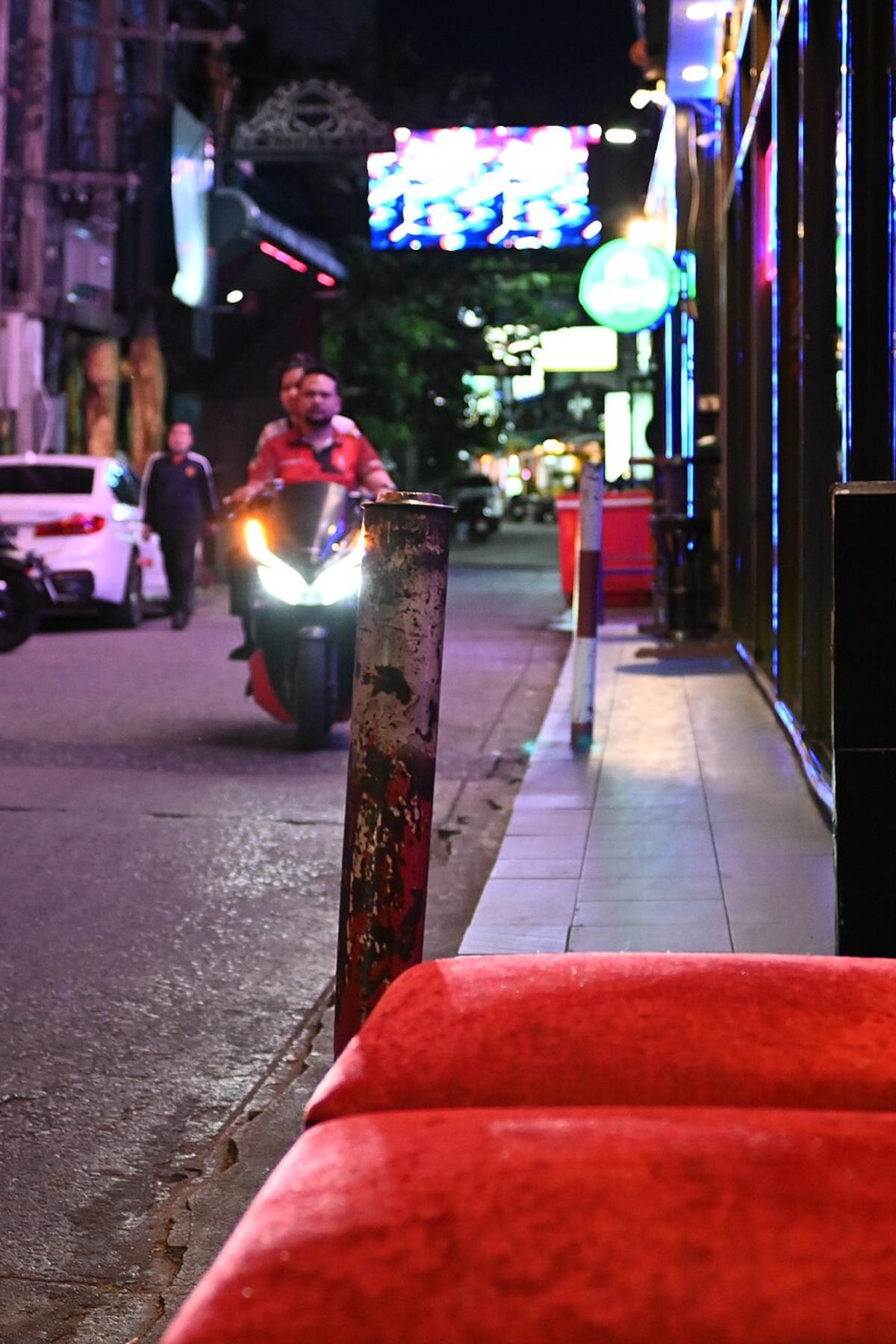

Handlebar, Auxiliary, and Scooter-Specific Lights
Add-on lights fall into three categories.
Handlebar-Mounted Bicycle Lights
These are the most common and the most varied. They range from 200 to 1600 lumens, run on self-contained USB-rechargeable batteries, and attach via a handlebar clamp or a quick-release bracket. Their advantage is portability: you remove them when you park. Their trade-off is battery capacity, measured in watt-hours. A 1000-lumen light with a 5 Wh battery lasts roughly one hour at full output, which is tight for a commute in both directions on a single charge.
Scooter-Specific Auxiliary Lights
These run from 400 to 3000 lumens, often use a wired connection to the scooter's DC-DC converter, and mount on the stem or under the deck. They produce more light and draw from the main battery, but installation requires some electrical work and the mount must survive the vibration that loosens bolts across almost all brands. Under-deck brackets improve side visibility and reduce glare for oncoming traffic, but they put the light in the path of road spray.
STVZO-Compliant Bicycle Lights
This category is the safest choice for mixed traffic. The beam pattern is legally required in Germany and increasingly preferred elsewhere for its lack of glare. These lights have a horizontal cut-off line and a certified lux reading at distance. A German-approved unit must deliver a minimum of 10 lux at 10 metres. That specification, lux at distance, not raw lumens, is the number that tells you whether the light actually illuminates the road ahead.
| Type | Typical Lumens | Mount Position | Power Source | Beam Pattern |
|---|---|---|---|---|
| Handlebar bicycle light | 200–1600 lm | Handlebar clamp | USB rechargeable battery | Uncontrolled or STVZO |
| Scooter auxiliary light | 400–3000 lm | Stem clamp, under deck | Scooter 12 V or battery pack | Uncontrolled or projector |
| STVZO bicycle light | 30–800 lm | Handlebar or stem | USB or dynamo | Shaped with cut-off |
| Clip-on tail light | 30–200 lm | Rear fender, seatpost | USB rechargeable | Flood or strobing |
Tail Lights, Brake Light Integration, and Side Reflectors
Seeing the road is half the problem. Being seen by drivers and pedestrians is the other half.
Rear Visibility
Stock tail lights on entry-level scooters produce 5 to 20 lumens. On mid-range commuters that climbs to 20-100 lumens. That is enough to mark your position in still traffic, but not enough to register reliably at a junction in mixed lighting. An add-on tail light rated for 30 to 200 lumens, mounted on the rear fender bolt or a seatpost-style clamp on the stem, improves your rear visibility dramatically. Look for a unit with a brake light function: a 3× to 10× brightness increase when you apply the brake.
Brake Light Wiring
The integration of brake lights into the stock wiring is model-specific. On a Ninebot Max G30, the tail light already has a brake detection circuit, and some supplementary lights piggyback on that signal. On older Xiaomi M365 units, the rear mudguard is a structural weakness and the tail-light wiring runs through it, so any replacement needs to account for the risk of mudguard fracture.
Side Reflectors and Flashing Rules
Side reflectors are required by law in Germany, white or yellow reflector on each side visible from 200 feet, and in California. Many scooters ship with reflective tyre sidewalls that meet the requirement. If yours does not, adhesive stick-on reflectors on the deck edge are a legal and practical fix. Avoid strobing front lights: they are prohibited on vehicles in the EU and UK. Flashing rear lights are permitted in the UK at a 4 Hz flash rate and in most US states, but illegal in Germany, where only a steady beam is allowed on the vehicle.
Common Questions
How many lumens do I need for night riding on an electric scooter?
For unlit paths at 25 km/h, you need a minimum of 200 lumens with a proper beam pattern. Stock lights on entry-level scooters put out 10-50 lumens, which is enough to be seen but not to see. An add-on unit in the 400-800 lumen range with a shaped beam and cut-off line is the practical minimum for safe night riding.
Will an STVZO light work on my scooter in Germany?
Yes, and it is legally required. Germany (StVZO) requires a white front light with an approved design (K-mark or ECE mark) that delivers a minimum of 10 lux at 10 metres. The light must have a steady beam, not flashing, and must be turned on at all times when riding, day and night. An STVZO bicycle light mounted on the handlebar satisfies the requirement.
Can I wire an add-on light into my scooter's main battery?
Yes, on models with a 12 V DC-DC converter or a direct battery tap. The Ninebot Max G30 and Xiaomi M365 both have accessible wiring points. The trade-off is that the installation requires cutting or splicing wires, which voids the warranty on the electrical system, and a wiring error can damage the BMS or the controller. Self-contained USB rechargeable lights avoid that risk.
How do I stop my handlebar light from rotating on bumps?
Buy a light with a quick-release bracket that uses a rubber shim and a metal cam clamp, or a mount that requires a hex key to tighten. Avoid mounts that rely solely on a plastic friction pad or a rubber O-ring. Apply a thin layer of rubber adhesive or a strip of double-sided tape between the mount and the handlebar to increase grip.
What waterproof rating do I need for a commuter scooter light?
IPX5 as a minimum, IPX6 or IPX7 for reliability in wet climates. IPX5 resists jet spray from any direction, which matches the conditions of riding in rain at speed. IPX6 adds protection against powerful jets; IPX7 allows brief immersion. The cockpit electronics on most scooters fail in sustained rain at IPX4, so the light should be tougher than the scooter it attaches to.
Do add-on lights with brake light integration work on the Ninebot Max G30?
Some do. The G30's tail light has a brake detection circuit that increases brightness when the brake lever is pulled. Third-party tail lights that connect to the same wiring harness can replicate that function. Check compatibility with the specific model year; Ninebot changed the connector between the G30 and G30LP, and the G30LP has a smaller battery and no internal charger.
Is it legal to ride with a flashing front light in the United States?
In most states, yes, if the light also has a steady mode. California, New York, and Texas all require a white front light visible from a specific distance, which a steady beam satisfies. A flashing-only front light may be interpreted as not meeting the steady-beam requirement. In the EU and UK, flashing front lights on vehicles are prohibited. Always check your local jurisdiction, as regulations change.
Read next
-
 Long Range Electric Scooters With Owner-Reported Distance at Real Rider Weight
Long-range electric scooters ranked by owner-reported distance at a real rider weight, not the manufacturer's 60 kg eco-mode claim, with battery capacity in watt-hours.
Long Range Electric Scooters With Owner-Reported Distance at Real Rider Weight
Long-range electric scooters ranked by owner-reported distance at a real rider weight, not the manufacturer's 60 kg eco-mode claim, with battery capacity in watt-hours.
-
 Best Electric Scooters for Adults: Commuter, Heavy Rider and Multi-Modal Picks
The best electric scooter for adults depends entirely on your commute: lightweight folders for train riders, durable tubeless models for daily abuse, and reinforced frames for heavier riders.
Best Electric Scooters for Adults: Commuter, Heavy Rider and Multi-Modal Picks
The best electric scooter for adults depends entirely on your commute: lightweight folders for train riders, durable tubeless models for daily abuse, and reinforced frames for heavier riders.
-
 Best Electric Scooter: The Models That Earn Their Spec Sheet in the Real World
The best electric scooter is the one whose real range, brake type, and stem durability match what the spec sheet promises. We compare the models that deliver.
Best Electric Scooter: The Models That Earn Their Spec Sheet in the Real World
The best electric scooter is the one whose real range, brake type, and stem durability match what the spec sheet promises. We compare the models that deliver.
-
 Fastest Electric Scooters That Can Actually Stop and Turn Safely
The fastest electric scooters ranked on braking power, suspension quality and tyre grip rather than motor watts alone, with a clear warning that most are not street-legal.
Fastest Electric Scooters That Can Actually Stop and Turn Safely
The fastest electric scooters ranked on braking power, suspension quality and tyre grip rather than motor watts alone, with a clear warning that most are not street-legal.