Electric Scooter Safety Standards: Certification, Braking and Being Seen
Electric scooter safety starts with the NTA-8776 helmet standard, understanding real braking distances, and knowing the mechanical failure modes that matter at speed.
Electric Scooter Safety Standards: Certification, Braking and Being Seen
Buy a helmet certified to NTA-8776. Ignore the rest. That single choice determines what happens when your front tyre hits a wet manhole cover at 25 km/h. Below you will find the certification that matters, real braking distances, and the mechanical failures that happen at speed. Know them before you hand over money.
NTA-8776 Helmet Standard: the Standard Written for What You Ride
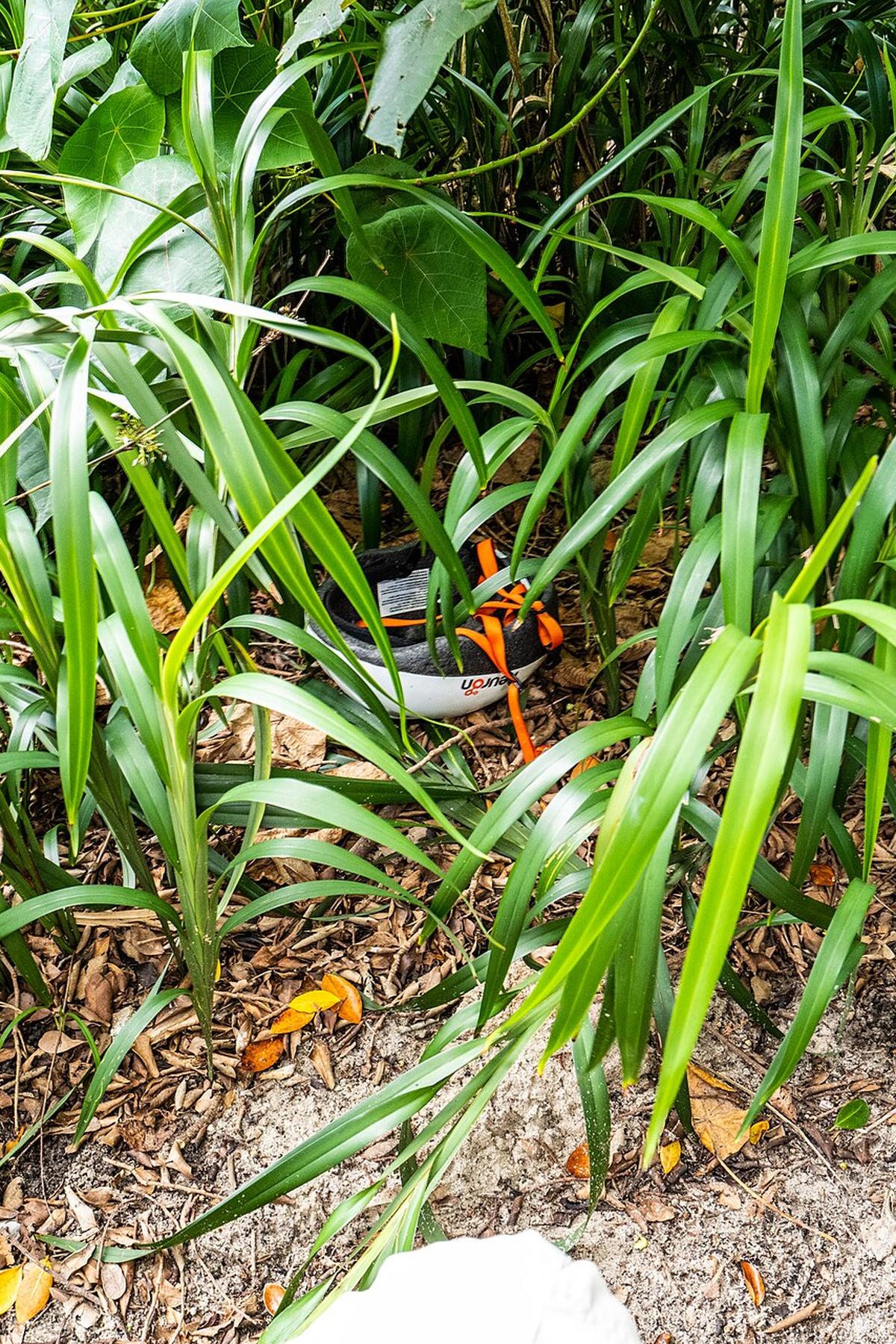
NTA-8776 is a Dutch standard from the Royal Netherlands Standardization Institute (NEN) written specifically for e-scooters. It tests shock absorption at 10.2 metres per second on a flat anvil, which is 100 joules of impact energy. That speed sits between a bicycle helmet test (EN 1078 at 5.5 m/s) and a motorcycle helmet test (DOT FMVSS 218 at 6.0 m/s). It also tests a kerbstone anvil at 5.4 m/s and 60 joules, and it is the only bicycle-derived standard that includes a rotational acceleration test, also called an oblique impact test. That test matters because a scooter rider falls differently than a cyclist: you go forward over the handlebars, and your head hits the road at an angle that twists the neck. The standard also mandates coverage of the temples and the occipital region, meaning the lower rear skull, not just the top of the head.
Since January 2023, NTA-8776 has been the legally required helmet standard for all e-scooter riders in the Netherlands. No other EU member state has adopted it yet, but that is where the regulatory direction points. Buy a helmet carrying NTA-8776 certification and you get the only helmet test designed for your speed and crash angle.
What You Give Up With Bicycle Helmet Standards
EN 1078 is the bicycle helmet standard legally required across the EU for pedal cyclists. It tests a flat anvil at 5.42 to 5.52 metres per second, delivering 88 joules. It has no rotational acceleration test. It covers only the top of the head with no mandate for the temples or occipital region. At 25 km/h, a helmet that passed EN 1078 was tested at roughly half your impact speed. CPSC 16 CFR Part 1203, the US bicycle helmet standard, tests a flat anvil at 6.2 metres per second and 100 joules, which is closer to NTA-8776 on flat impact energy but still has no rotational test and covers only the top of the head above a line 5 millimetres above the ear. DOT FMVSS 218, the US motorcycle helmet standard, is a full-face design tested with a heavier headform at 5 kilograms rather than 4.4 kilograms, but it was designed for speeds above 40 km/h and the helmet weight adds neck strain at scooter speeds. The gap between NTA-8776 and every other standard is not small. It is the difference between a helmet designed for your crash and a helmet designed for someone else's.

Electric Scooter Braking Distance Wet: What the Spec Sheet Hides
Manufacturers claim a braking distance from 25 km/h of 4 metres. Independent test data puts the real figure for an 85 kilogram rider on dry asphalt at 6 to 8 metres. The lab test uses a lightweight rider on a high-friction surface with new brakes. You are not that rider, and your road is not that surface. On wet asphalt, add another 2 to 3 metres. A wet stop from 25 km/h needs 8 to 11 metres of clear road ahead. Follow a car at city distance and you hit the car.
Brake Types That Matter for Wet Stopping
Hydraulic disc brakes are the best option for wet stopping. They self-adjust for pad wear, resist cable stretch, and apply even pressure at the caliper. Mechanical disc brakes are second: they work fine when dry but require cable tension adjustment as pads wear, and the cable routing through the folding mechanism frays internally at the fold point. Electronic braking alone fails when the battery is full because regenerative braking cannot dump energy into a full pack; voltage sag also reduces electronic brake force as the battery depletes. A scooter with electronic-only braking and no mechanical backup loses its brakes on a downhill with a full charge. The brake cutoff switch that kills motor power when you squeeze the lever is a required safety feature. Every scooter with a thumb or trigger control should have one. If the scooter lacks a redundant cable, the brake cutoff is your only stop between a throttle stick-at-full and a crash.
Stopping requires your body weight to work with the brakes. A narrow deck forces a side-on stance that reduces control under heavy braking. A scooter with a deck under 15 centimetres wide is harder to keep stable when you are standing hard on the rear brake.
Electric Scooter Protective Gear: What to Wear Beyond the Helmet
Gloves are the second piece of gear after the helmet. At 25 km/h, your instinct is to put a hand down. On asphalt, that hand loses skin in the first metre of slide. Wear cycling gloves with a padded palm. Full finger is better than half finger because your fingertips hit first. A jacket with a forearm pad or a separate forearm guard is the third piece: your forearm takes the slide after your hand. Knees hit the ground when your weight goes forward over the handlebars. A pair of skate-style knee pads that fit under trousers costs less than a trip to urgent care. Ankle protection matters because the scooter deck can catch your foot on a hard stop. A shoe with a reinforced toe and ankle coverage blocks the pinch point between the deck and the pavement. You do not need a full motorcycle suit for a last-mile commute. Cover the four contact points: hands, forearms, knees, and ankles.
Electric Scooter Visibility Night: Being Seen Before Being Hit
At night, a scooter is invisible to a turning car until the driver is 2 metres away. Fit a front light that meets the brightness of a bicycle dynamo light, around 50 lux. Most integrated scooter lights point at the ground 3 metres ahead and do nothing to make you seen from the side. Add a clip-on tail light with wide-angle visibility to your backpack or rear pocket. The critical piece for night safety is reflective sidewall tyres. A tyre with a reflective strip on the sidewall creates a moving arc of light that a car headlight illuminates from 20 metres out, longer than any handlebar light. The Ninebot Max G30 ships with tubeless tyres that have a reflective sidewall ring, and aftermarket versions exist for common pneumatic tyres. A handlebar-mounted light pointed at a 45 degree angle to the road surface creates the pool of light you need to see a pothole at riding speed, which is different from the light you need to be seen. Carry both. A BMS lockout that kills your battery at night leaves you with no lights and no motor, pushing a dead scooter across a dark intersection.
Electric Scooter Frame Fatigue Failure: the Failures That Matter at 25 Km/h
Stem snap at the folding joint is the single highest consequence mechanical failure on any electric scooter. It is caused by fatigue cracking in the cast aluminium clamp that holds the two halves of the stem together. Riding with the clamp loose or over tightened accelerates it. The crack propagates invisibly until the stem separates in your hands. It has been documented most often on early generation Kaabo Mantis units and some Apollo City units, but any folding scooter with a cast aluminium clamp is susceptible. Stem wobble and headset play that feels like looseness in the handlebars is the warning stage. If your handlebars develop play that does not tighten with the clamp, the bearing or the bore is wearing. Replacement is the only fix.
Throttle stick at full is caused by water ingress or Hall sensor failure in the throttle unit. The scooter accelerates until the brake cutoff switch intervenes. If that switch fails from the same water exposure, the scooter runs until it hits something. The fix is a sealed throttle unit, IPX5 rated or better. This failure is why a brake cutoff switch is mandatory equipment. Bolt loosening from vibration affects motor axle nuts, brake caliper bolts, and stem clamp bolts across almost all brands. A scooter that does not arrive from the factory with thread locker applied will shed bolts within the first 500 kilometres. The rear mudguard fracture, canonical on the Xiaomi M365, happens when the mudguard is used as a foot rest or stand, and it takes the tail light wiring with it. Frame fatigue failure at the deck weld is rare but reported on scooters ridden at or above the manufacturer's stated rider weight limit. Stated limits are optimistic. Riding near them accelerates stem and deck fatigue by a factor that no manufacturer publishes.
The Single Thing That Most Often Goes Wrong
The folding mechanism accumulates wear silently, without a dashboard warning or a sound, and it fails at speed. A rider who does not check stem play before every ride will find out about the crack when the handlebars separate from the deck at 25 km/h. Tighten the clamp. Check for play. Replace the part before it breaks. That one action, done before every ride, is the difference between riding home and being carried home.
Common Questions
Is NTA-8776 legally required where I live?
Only in the Netherlands as of January 2023. No other EU member state has adopted NTA-8776 as a mandatory e-scooter helmet standard. Germany requires a bicycle helmet (EN 1078) for e-scooters with an insurance plate, and Spain requires a helmet for all e-scooter riders with EN 1078 or equivalent accepted. Check your local traffic authority for the current regulation because jurisdictions update these laws. If no local standard mandates a specific helmet, NTA-8776 is still the safest choice because it was written for your speed.
What distance do I actually need to stop from 25 km/h in the rain?
Plan for 8 to 11 metres on wet asphalt if you weigh 85 kilograms. The manufacturer claimed 4 metres is from a dry lab test with a lightweight rider and new brakes. Add road surface texture, rider weight, wet conditions, and worn pads, and the real stopping distance doubles. Leave that gap between you and the vehicle ahead at all times, especially in wet weather.
How do I check if my scooter stem is about to fail?
Grip the handlebars and try to move them forward and backward while the stem is locked. Any play that does not tighten with the folding clamp indicates bearing wear or bore elongation in the cast aluminium clamp. If you feel a click or a wobble when you push the scooter forward with the front brake locked, stop riding and replace the clamp or the entire stem assembly. The crack is invisible until the snap happens.
What is the single most important thing to check before every ride?
The stem clamp tightness. Open and close the folding mechanism and confirm the latch engages with a clean audible click and no free play. Then spin the front wheel to check for binding from a loose brake caliper bolt, and squeeze the brake lever to confirm the brake cutoff kills the motor. This takes 15 seconds and catches the two most common failure modes: stem joint failure and throttle stick at full.
Will any IP rating keep my scooter safe in rain?
No. IPX4 or IPX5 applies only to the battery housing. The throttle, display, and controller are not covered by that rating. Water ingress kills controllers and BMS units, and the failure can appear days later when corrosion bridges a trace on the circuit board. A scooter with an IPX5 battery rating can survive a jet spray on the battery case but fail from a single puddle splash on the thumb throttle. If you must ride in rain, carry a silicone cover for the cockpit electronics or accept that you may need to replace the controller.
Read next
-
 How to Choose an Electric Scooter: Brakes, Range and Carry Weight First
How to choose an electric scooter by the specs that matter: real range for your weight, brake types for wet stopping, and carry weight for daily use.
How to Choose an Electric Scooter: Brakes, Range and Carry Weight First
How to choose an electric scooter by the specs that matter: real range for your weight, brake types for wet stopping, and carry weight for daily use.
-
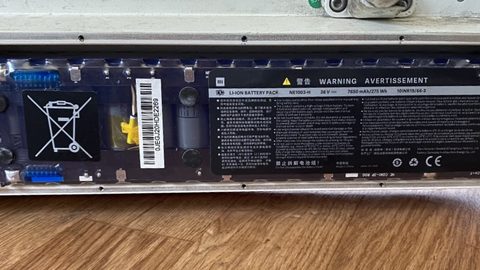 Electric Scooter Batteries: Wh Capacity, 21700 Cells and Real Cycle Life
Electric scooter batteries explained: why watt-hours is the honest capacity unit, how 21700 cells differ from 18650, and what actually shortens pack life.
Electric Scooter Batteries: Wh Capacity, 21700 Cells and Real Cycle Life
Electric scooter batteries explained: why watt-hours is the honest capacity unit, how 21700 cells differ from 18650, and what actually shortens pack life.
-
 Electric Scooter Commuting: Carry Weight, Folded Size and Wet Weather Reality
What electric scooter commuting actually demands: real carry weight for stairs, folded dimensions for trains, wet weather survival and charging logistics.
Electric Scooter Commuting: Carry Weight, Folded Size and Wet Weather Reality
What electric scooter commuting actually demands: real carry weight for stairs, folded dimensions for trains, wet weather survival and charging logistics.
-
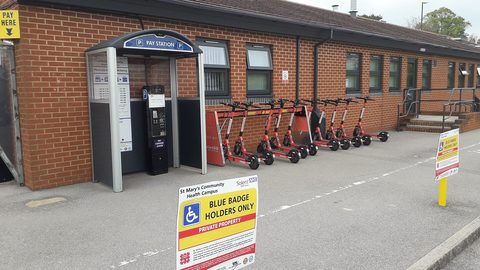 Electric Scooter Maintenance: Stem Bolts, Brake Pads and Tyre Pressure Intervals
Electric scooter maintenance schedule covering stem bolt torque checks, brake pad intervals, tyre pressure and the folding mechanism service that prevents failure.
Electric Scooter Maintenance: Stem Bolts, Brake Pads and Tyre Pressure Intervals
Electric scooter maintenance schedule covering stem bolt torque checks, brake pad intervals, tyre pressure and the folding mechanism service that prevents failure.
-
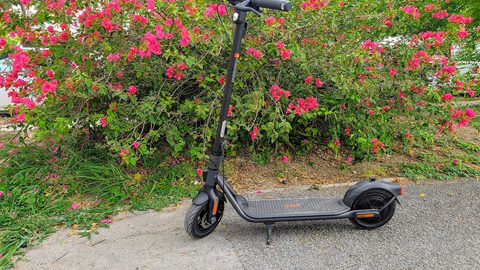 Segway Ninebot ES3
The Ninebot Segway ES3 was discontinued in 2021 but is still traded heavily used, and it remains a genuine argument as a first electric scooter.
Segway Ninebot ES3
The Ninebot Segway ES3 was discontinued in 2021 but is still traded heavily used, and it remains a genuine argument as a first electric scooter.
-
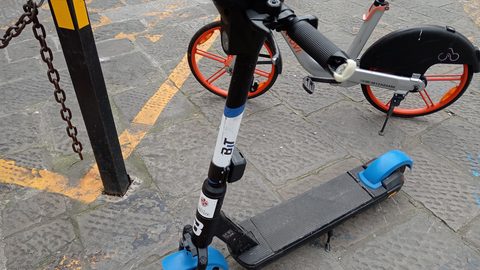 Fluid FreeRide CityRider
The Fluid Freeride CityRider is the mid-band commuter this catalogue keeps pointing people at when they arrive looking at something twice the weight.
Fluid FreeRide CityRider
The Fluid Freeride CityRider is the mid-band commuter this catalogue keeps pointing people at when they arrive looking at something twice the weight.
-
 Weped FS
The Weped FS weighs 45 kg and has real hydraulic suspension, and that weight is the organising fact of ownership no spec sheet can soften.
Weped FS
The Weped FS weighs 45 kg and has real hydraulic suspension, and that weight is the organising fact of ownership no spec sheet can soften.
-
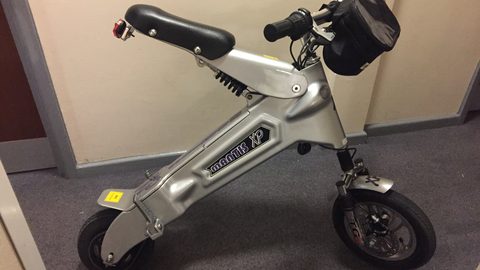 Rion RE90
The Rion RE90 is the lightest genuinely fast electric scooter, built in small numbers with almost no weather sealing and a six-month warranty.
Rion RE90
The Rion RE90 is the lightest genuinely fast electric scooter, built in small numbers with almost no weather sealing and a six-month warranty.
-
 Mercane MX60
The Mercane MX60 is a 41 kg dual-motor scooter whose real story is the gap between what it can do and what an owner will do with it daily.
Mercane MX60
The Mercane MX60 is a 41 kg dual-motor scooter whose real story is the gap between what it can do and what an owner will do with it daily.