Understanding Electric Scooter Batteries: Watt-Hours, Cell Chemistry and Degradation
Electric scooter batteries explained: why watt-hours is the honest capacity unit, how 21700 cells differ from 18650, and what actually shortens pack life.
Electric Scooter Battery Capacity Wh: the Only Number That Matters
The range number on the box is a lie. Not a white lie, not an optimistic estimate. It is a laboratory figure designed for a 60 kg rider at 15 km/h on flat ground with no stops, and that is not how anyone rides. The honest unit is watt-hours (Wh), not kilometres. Electric scooter battery capacity in Wh is calculated by multiplying voltage by amp-hours. A 36 V pack rated at 10 Ah delivers 360 Wh. That number determines how far you can go, and it tells you nothing without the rider and the route. A 360 Wh pack might move a 55 kg rider 30 miles at low speed. Put a 90 kg rider on the same scooter at full throttle and the real consumption jumps to 16-24 Wh per mile, cutting range to roughly 15 miles. The range claim and the pack size never reconcile because the standardised test ignores voltage sag, rider weight, and stop-and-go current draw. Ignore the claimed range. Read the watt-hour figure and do your own math.
Electric Scooter Battery Degradation Cycle Life: What 500 Cycles Actually Means
Real Cycle Life Versus the Spec Sheet
Manufacturers quote 500 charge cycles to 80% capacity. That figure assumes a full discharge (100% depth of discharge), perfect temperature control, and a slow charge. Real use is different. Owner reports and independent tests show that real cycle life is closer to 300-400 cycles before capacity drops to 80% for scooters routinely fast-charged or stored fully charged in warm conditions. Heat and high state-of-charge storage accelerate degradation significantly.
Depth of Discharge and Capacity Fade
Depth of discharge controls how long the pack lasts. Cycle life at 100% DoD is 300-500 cycles to 70% capacity. Drop to 80% DoD and that range becomes 400-800 cycles. At 50% DoD the pack can manage 600-1,200 cycles. At 30% DoD it can reach 1,200-2,000 cycles. The first year of ownership sees a 10% capacity loss for cells without active thermal management, which includes nearly every consumer scooter. That is normal. The pack does not suddenly fail. It fades. A scooter that started with 360 Wh usable capacity will behave like a 320 Wh pack after a year, and the range loss is proportional.

Electric Scooter Cell Formats: Why the Cylinder Size Matters
How Cell Dimensions Shape Performance
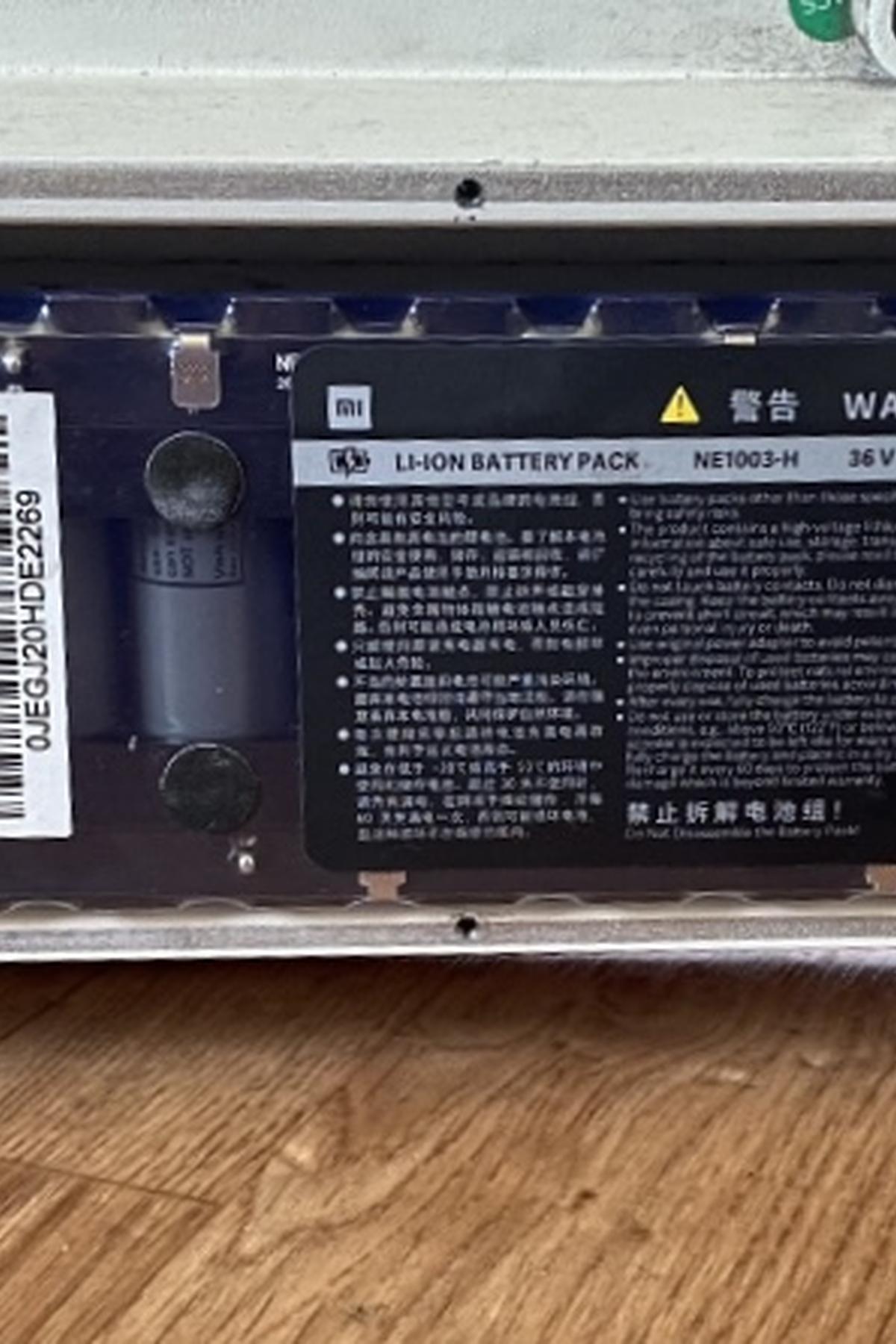
Two cylindrical cell sizes dominate the market. The smaller format measures 18 mm by 65 mm. The larger format measures 21 mm by 70 mm and holds roughly 50% more energy per cell while handling higher discharge currents with less internal resistance. That matters for thermal management. A pack built with the larger cells runs cooler under sustained load because the current density per cell is lower. Voltage sag is reduced, meaning the scooter holds its top speed longer as the battery drains. The Ninebot Max G30 uses the larger format. The Xiaomi Mi M365 uses the smaller format. The G30 maintains speed better on hills and in the second half of a ride, and that difference comes from the cell choice, not the motor.
Chemistry Dictates Longevity
Cell chemistry matters too. Most electric scooter packs use NMC (nickel manganese cobalt) or NCA (nickel cobalt aluminium) chemistry. These offer high energy density but degrade faster when stored fully charged. LFP (lithium iron phosphate) cells are rare in scooters but tolerate more cycles and higher temperatures. If you see a pack advertised as LFP, cycle life improves by roughly a factor of two, but energy density drops, so the pack is heavier for the same watt-hours.
Electric Scooter Battery Charging: How to Keep the Pack Alive
Three factors kill lithium-ion packs: heat, storing at 100% charge, and fast charging. Every charging decision should manage those three variables.
The Two Phases of a Charge Cycle
The constant-current phase fills the pack to roughly 80% quickly. The constant-voltage phase slows down for the final 20%. A manufacturer who claims a 4-hour charge time is quoting the constant-current phase only. A full 0-100% cycle takes 5-6 hours. Fast chargers reduce the constant-current time but increase heat in the cells, which accelerates degradation. Dual charging ports, available on models like the Vsett 8 and 9, can halve charge time if the BMS supports the combined current, but the heat penalty still applies.
Storage Voltage Is the Parameter Everyone Ignores
For NMC and NCA packs, the correct storage voltage is 3.60-3.70 V per cell, which corresponds to 40-60% state of charge. Storing at 100% charge at room temperature accelerates calendar aging. Storing at 100% charge at 40°C accelerates it dramatically: the self-discharge rate jumps from 1-3% per month at 20°C to 5-10% per month at 40°C. Charge the scooter before a ride, not the night before. If you store the scooter for more than a week, discharge the pack to 60% and keep it in a cool place between 0°C and 25°C.
Electric Scooter BMS Lockout Reset: the Most Common Electrical Failure
BMS lockout is the most common electrical failure in electric scooters. The battery management system detects a cell imbalance or a deep discharge and isolates the pack. The scooter refuses to charge or discharge. It appears dead. The reset procedure is model-specific and manufacturers rarely document it. The information exists, but it is scattered across owner forums in multiple languages, buried in threads about other problems.
What Triggers a Lockout
Cell imbalance causes most lockouts. When one cell in a series string drops below the BMS undervoltage threshold, the entire pack is locked out to prevent damage. This happens when a rider runs the battery to zero repeatedly, or when the pack has weak cells that discharge faster than the rest. Deep discharge, where the battery voltage falls below the safe minimum, triggers the same response. A locked BMS can sometimes be reset by applying a low-current charge directly to the pack terminals, bypassing the BMS, to raise the voltage above the lockout threshold. That procedure requires a compatible charger and knowledge of the pinout. The wrong voltage or polarity damages the BMS permanently. For most riders, the practical solution is to avoid running the battery below 20% state of charge and to replace the pack if lockout occurs twice.
Why Electric Scooter Range Claims Are Wrong
The standardised test that produces the claimed range uses a 60 kg rider at 15 km/h on flat ground with no stops. Real riding adds multiple variables that drain watt-hours faster than the test accounts for.
- Rider weight. A 55 kg rider consumes 8-12 Wh per mile. A 75 kg rider consumes 12-18 Wh per mile. A 90 kg rider consumes 16-24 Wh per mile. A 110 kg rider consumes 20-30 Wh per mile. The range for a heavy rider is half that of a light rider on the same pack.
- Speed. Drag increases with the square of speed. Pushing a scooter to 25 km/h instead of 15 km/h roughly doubles the power demand per mile.
- Voltage sag. As the battery drains, voltage drops under load. The BMS cuts power when individual cells hit the undervoltage threshold, even if the pack as a whole still has charge. The scooter at 40% indicated battery will not achieve its top speed or climb its rated grade.
- Terrain and temperature. Every hill, headwind, and cold day reduces range. Cold temperatures increase internal resistance, making voltage sag worse. Tyre pressure below spec increases rolling resistance and cuts range by 10-15%.
Halve the claimed range for a real-world estimate, then adjust down for hills and cold weather. A scooter with a claimed 45 km range delivers 18-25 km for an 85 kg rider at 25 km/h in moderate temperatures.
Who Electric Scooter Batteries Suit and Who Should Skip
Who Should Read This
This subject suits urban commuters covering 3-8 km each way who need to know what survives daily folding, pneumatic tyre maintenance, and the real range for their weight. It suits multi-modal riders carrying a scooter onto trains who need the watt-hour number to judge whether the pack will last a round trip. It suits parents buying for a teenager who need to understand that the claimed 500 cycles is closer to 300 in real use and that the BMS lockout is the failure mode to plan for. It suits fleet operators evaluating bulk purchases who need duty-cycle data and common failure intervals, not consumer feature lists. It suits first-time buyers who have never owned a personal electric vehicle and need the honest trade-offs between price bands.
Who Should Look Elsewhere
Skip this subject if you want an e-bike, e-moped, or electric motorcycle: those have different battery voltages, different BMS architectures, and different regulation. Skip if you expect a weatherproof car replacement: scooters are fair-weather vehicles with no crash protection, and the BMS and controller are not waterproof regardless of the IP rating printed on the battery housing. Skip if you are shopping below the price band where hydraulic brakes and pneumatic tyres appear: below that, the machines are functionally disposable and the battery pack is often the first thing to fail irreparably.
Common Questions
What does Wh mean on an electric scooter battery?
Wh stands for watt-hours. It is the total energy capacity of the battery, calculated as voltage multiplied by amp-hours. A 36 V, 10 Ah pack delivers 360 Wh. This number tells you how much energy the pack holds, independent of the claimed range.
How many cycles does an electric scooter battery last?
Manufacturers quote 500 cycles to 80% capacity at 100% depth of discharge. Real use with fast charging and warm storage drops that to 300-400 cycles. Keeping depth of discharge to 50% can extend cycle life to 600-1,200 cycles.
Can I use a fast charger on my electric scooter?
Yes, but it accelerates degradation by increasing cell temperature during charging. Fast chargers are safe for occasional use. Frequent use reduces cycle life. Dual charging ports can halve charge time if the BMS supports the combined current, but the heat penalty still applies.
How do I reset a BMS lockout on my scooter?
The procedure is model-specific and rarely documented by manufacturers. A common method is applying a low-current charge directly to the pack terminals to raise voltage above the lockout threshold. This requires a compatible charger and knowledge of the pinout. The wrong voltage or polarity damages the BMS permanently.
Why does my scooter range drop in winter?
Cold temperatures increase internal resistance in lithium-ion cells, making voltage sag worse. The BMS cuts power earlier because the cells cannot deliver the same current at low temperature. Expect 20-30% range loss below 10°C.
Should I charge my scooter to 100% every time?
No. Storing the pack at 100% charge accelerates calendar aging. Charge to 80% for daily use and only charge to 100% if you need the full range for a specific ride. For storage longer than a week, discharge to 60% and store in a cool place.
What happens when a BMS locks out during a ride?
The scooter cuts power and becomes unresponsive. The battery will not charge or discharge. This is caused by cell imbalance or deep discharge. The fix requires a bench reset or pack replacement. Avoid running the battery below 20% state of charge to prevent lockout.
Read next
-
 How to Choose an Electric Scooter: Brakes, Range and Carry Weight First
How to choose an electric scooter by the specs that matter: real range for your weight, brake types for wet stopping, and carry weight for daily use.
How to Choose an Electric Scooter: Brakes, Range and Carry Weight First
How to choose an electric scooter by the specs that matter: real range for your weight, brake types for wet stopping, and carry weight for daily use.
-
 Electric Scooter Safety: NTA-8776 Helmets, Braking Distance and Visibility
Electric scooter safety starts with the NTA-8776 helmet standard, understanding real braking distances, and knowing the mechanical failure modes that matter at speed.
Electric Scooter Safety: NTA-8776 Helmets, Braking Distance and Visibility
Electric scooter safety starts with the NTA-8776 helmet standard, understanding real braking distances, and knowing the mechanical failure modes that matter at speed.
-
 Electric Scooter Commuting: Carry Weight, Folded Size and Wet Weather Reality
What electric scooter commuting actually demands: real carry weight for stairs, folded dimensions for trains, wet weather survival and charging logistics.
Electric Scooter Commuting: Carry Weight, Folded Size and Wet Weather Reality
What electric scooter commuting actually demands: real carry weight for stairs, folded dimensions for trains, wet weather survival and charging logistics.
-
 Electric Scooter Maintenance: Stem Bolts, Brake Pads and Tyre Pressure Intervals
Electric scooter maintenance schedule covering stem bolt torque checks, brake pad intervals, tyre pressure and the folding mechanism service that prevents failure.
Electric Scooter Maintenance: Stem Bolts, Brake Pads and Tyre Pressure Intervals
Electric scooter maintenance schedule covering stem bolt torque checks, brake pad intervals, tyre pressure and the folding mechanism service that prevents failure.
-
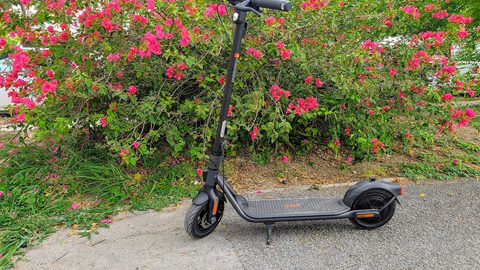 Segway Ninebot ES3
The Ninebot Segway ES3 was discontinued in 2021 but is still traded heavily used, and it remains a genuine argument as a first electric scooter.
Segway Ninebot ES3
The Ninebot Segway ES3 was discontinued in 2021 but is still traded heavily used, and it remains a genuine argument as a first electric scooter.
-
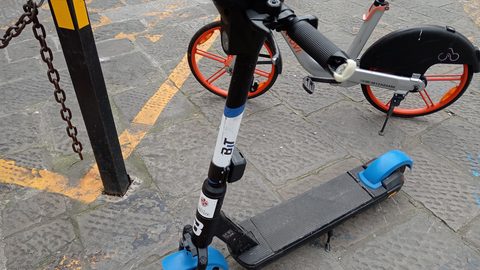 Fluid FreeRide CityRider
The Fluid Freeride CityRider is the mid-band commuter this catalogue keeps pointing people at when they arrive looking at something twice the weight.
Fluid FreeRide CityRider
The Fluid Freeride CityRider is the mid-band commuter this catalogue keeps pointing people at when they arrive looking at something twice the weight.
-
 Weped FS
The Weped FS weighs 45 kg and has real hydraulic suspension, and that weight is the organising fact of ownership no spec sheet can soften.
Weped FS
The Weped FS weighs 45 kg and has real hydraulic suspension, and that weight is the organising fact of ownership no spec sheet can soften.
-
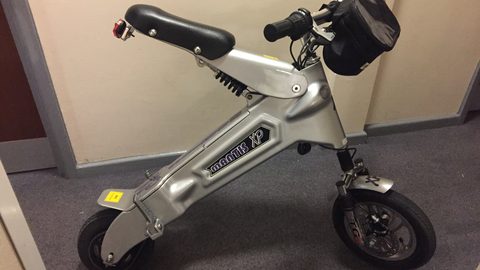 Rion RE90
The Rion RE90 is the lightest genuinely fast electric scooter, built in small numbers with almost no weather sealing and a six-month warranty.
Rion RE90
The Rion RE90 is the lightest genuinely fast electric scooter, built in small numbers with almost no weather sealing and a six-month warranty.
-
 Mercane MX60
The Mercane MX60 is a 41 kg dual-motor scooter whose real story is the gap between what it can do and what an owner will do with it daily.
Mercane MX60
The Mercane MX60 is a 41 kg dual-motor scooter whose real story is the gap between what it can do and what an owner will do with it daily.