The Best Cheap Electric Scooters and the Compromises at Each Price Band
The best cheap electric scooters and the honest compromises at each budget band, including the price point below which a scooter is functionally disposable.
Affiliate links. If you buy through the links below we may earn a commission, at no extra cost to you. How this works.
Stop Looking at Range Claims. Look at the Brakes First.
Below the price band where dual mechanical disc brakes or a front hydraulic disc appear, the machine relies on electronic braking alone or a single mechanical disc. Electronic braking fails when the pack is full. That is not a theory. It is a physical property of regenerative systems: with no headroom, the motor cannot create drag. The only stopping force is a rear foot brake or a small disc never designed to handle the full load alone. Spend nothing rather than a little if the little buys a solid-tyred unit with no mechanical brake. That machine is functionally disposable from day one. The ride quality is punishing enough that you will stop using it within a month. The question this guide answers: at what budget band does a cheap electric scooter become dangerous or disposable, and which models hold up below that line? These are the best cheap electric scooters when you understand what each band gives up and which compromises you can live with.
What Your Money Actually Buys at Each Band
The budget band runs from the cheapest adult units up to the point where hydraulic brakes and pneumatic tyres become standard. Expect a single mechanical disc on the front or rear plus an electronic motor brake, or dual drum brakes. Actuation is by cable-pull lever. Tyres are 8.5 to 10 inch pneumatic inner-tube types on better budget models. Some use solid or honeycomb tyres that transmit every road imperfection directly to your hands and the stem folding mechanism. Frame warranty: 12 months. Motor, controller, and pack warranties run 6 to 12 months. Labour is excluded on nearly all models. Water ingress is excluded even when an IPX4 or IP54 rating is claimed. These are not safe for wet commuting. The rating covers the pack housing only, not the throttle or display.
In the mid-band, the picture improves. Dual mechanical disc brakes are normal. Some models offer a front hydraulic disc paired with a rear mechanical disc. Tyres shift to 10 or 11 inch pneumatic inner-tube types; select models use self-sealing tubeless pneumatic tyres. Frame warranty stretches to 24 months. Motor, controller, and pack warranties hit 12 months. Labour is still excluded on most models, though a few brands include limited coverage. Water ingress protection climbs to IPX5 or IP55, but water damage remains excluded. The mid-band is where a unit becomes repairable rather than disposable. The parts ecosystem around brands like Xiaomi and Ninebot means you can find replacement brake pads, tyres, and inner tubes from multiple sources.
The Band You Skip Entirely
Below the point where a unit has at least one mechanical disc brake and pneumatic tyres, do not buy. This band includes machines with electronic-only braking, solid tyres, and no suspension. The rider weight limit is often optimistically high. The stem folding mechanism is the single highest-stress mechanical joint on any scooter. Failure at speed is catastrophic. The Razor E Prime is the canonical example of what a non-researching parent buys because they recognise the brand. It has solid tyres throughout, electronic braking, and no suspension. For the same money, a Xiaomi Mi M365 or a Segway Ninebot F-series gives you pneumatic tyres and a mechanical disc brake. The Razor is what you skip.
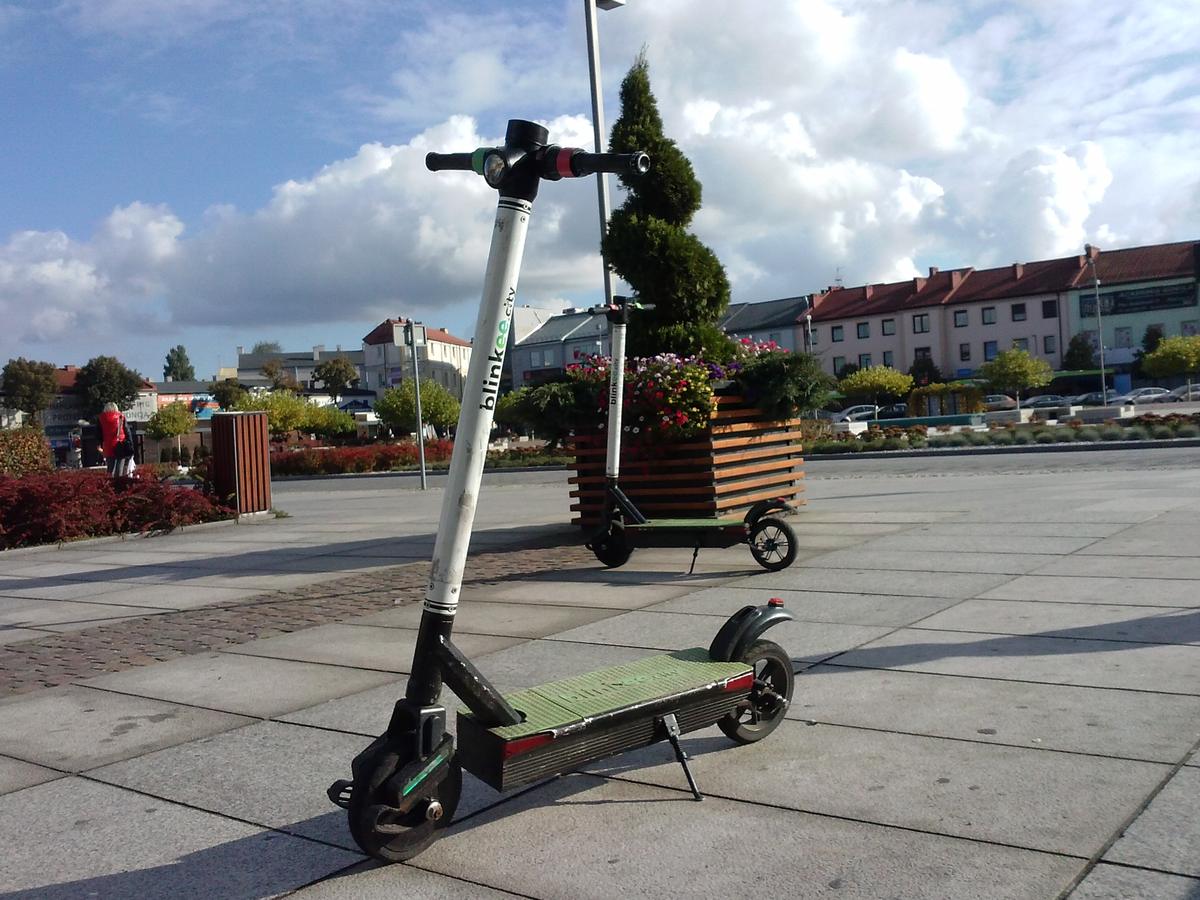

Budget Electric Scooter Brake Type: the Dividing Line
The brake type is the first filter. A budget unit with a single mechanical disc on one wheel and an electronic brake on the other is acceptable for flat city riding below 15 km/h. A unit with only an electronic brake and a foot brake is not acceptable at any speed. The problem is not the stopping distance on dry asphalt. The problem is what happens when the pack is full. An electronic brake cannot generate drag because the battery management system will not accept charge. The scooter coasts through an intersection with only a foot brake. On a mid-band unit with dual mechanical discs or a front hydraulic disc, you have physical pads against a rotor regardless of state of charge.
What the Real Stopping Distance Looks Like
Manufacturers claim 4 metres from 25 km/h. Real stopping distance for an 85 kg rider on dry asphalt is 6 to 8 metres. Add a wet road and a unit with only an electronic brake, and that distance doubles. The test uses a lightweight rider on a high-friction surface. Your real-world experience will be worse. If you are a parent buying for a teenager, brake type is the specification that determines whether the machine is safe to ride near traffic. If it has only an electronic brake, it is not.
Cheap Electric Scooter Solid Tyres vs Pneumatic Tyres
Solid tyres eliminate punctures. That is their only advantage. They transmit every road vibration to the stem, deck, and electronics, accelerating solder-joint fatigue and stem-clamp wear. The ride quality on anything but smooth tarmac is punishing. A cheap unit with solid tyres is functionally a rental scooter: designed for short trips on perfect surfaces, intended to be replaced, not repaired. The Unagi Model One is the most visible example. Beautiful design, dual motors, solid tyres, no suspension. On the E-TWOW GT, which also uses solid tyres, a mechanical suspension actually works, making the ride tolerable. On the Unagi, the ride is harsh enough that many owners stop using it. Pneumatic tyres give grip, comfort, and a much longer fatigue life for the frame. They require pressure checks. Under-inflation causes pinch flats and increases rolling resistance, which cuts range. The trade-off is worth it. The Ninebot Max G30 uses self-sealing tubeless pneumatic tyres, eliminating the inner tube and sealing small punctures without intervention. That is the gold standard in the mid-band. Below that, standard pneumatic inner-tube tyres are acceptable. Solid tyres are not.
Electric Scooter Under Each Budget Band: What You Actually Get
The gap between claimed range and real range is proportionally larger on cheap units because the pack capacity, measured in watt-hours, is smaller. A unit with a pack under 300 Wh may claim 30 km. For an 85 kg rider at 25 km/h in moderate temperatures, real range is 12 to 18 km. That is not enough for a 7 km each way commute if you need to ride home on the same charge. Voltage sag under load means the unit at 40 percent indicated will not achieve its top speed or climb its rated grade. The drop is progressive, not sudden. You will feel it slow down before it stops.
What To Expect at Each Band
At the entry band, expect a 250 to 300 Wh pack, claimed range of 25 to 30 km, real range of 10 to 15 km, a single mechanical disc brake or none, 8.5 inch pneumatic or solid tyres, and no suspension. The Xiaomi Mi M365 and the Segway Ninebot F-series are worth considering here because they have a parts ecosystem. If they break, you can fix them. Frame warranty: 12 months. The ride is acceptable on pavement but punishing on cobbles. At the mid-band, expect a 400 to 551 Wh pack, claimed range of 40 to 65 km, real range of 20 to 35 km, dual mechanical disc brakes or a front hydraulic disc, 10 inch pneumatic tubeless tyres, and spring or rubber cartridge suspension. The Ninebot Max G30, the Niu KQi3, and the Vsett 8 are worth considering. The G30 has the longest real range. The KQi3 has a wider deck and disc brakes. The Vsett 8 adds suspension. None is weatherproof, but mid-band models handle rain better than entry band ones.
When To Move Up a Band
If your commute includes a hill above 12 percent grade, even a mid-band unit with a 500 W nominal motor will struggle with an 85 kg rider. Motor peak power matters more than the nominal figure, but manufacturers quote it inconsistently. A unit with a 500 W nominal motor may pull 800 W peak, enough for moderate hills. For sustained climbing, you need a dual-motor unit like the Kaabo Mantis or the Apollo City Pro. Those are heavier, more expensive, and harder to carry onto a train. The trade-off is climbing ability. If your route is flat and your distance is under 5 km each way, the entry band works, provided the unit has a mechanical disc brake.
Affordable Electric Scooter Repairable: What Makes a Scooter Fixable vs Disposable
A unit is repairable if you can buy standard replacement parts from multiple sources. It is disposable if the manufacturer is the only source and those parts cost more than a new one. The Xiaomi Mi M365 and the Ninebot Max G30 are repairable. Their brake pads, tyres, inner tubes, and motors are available from dozens of sellers. The stem folding mechanism clamp can be replaced. The BMS can be bench reset. The aftermarket ecosystem determines whether a unit has a life beyond the first pack cycle. Expect 300 to 400 cycles before capacity drops to 80 percent for units routinely fast-charged or stored fully charged. A unit from a brand with no dealer network outside China, like the Okai Neon, is harder to repair. Parts must be shipped internationally and labour instructions are scarce. The E-TWOW GT is repairable for its suspension components but uses proprietary brake parts. The Unagi Model One uses proprietary motors and a custom pack shape; replacement costs approach the price of a new unit. When choosing, check whether standard 10 inch inner tubes fit the wheels. Check whether the brake pads are a standard size. Check whether the stem folding mechanism uses a common collar clamp or a custom latch. If any of these is proprietary, the unit has a fixed lifespan. After that, it goes to landfill.
Five Questions Before You Buy
These five questions cover the most common points of confusion and the most important gaps in manufacturer documentation. Read them before you open a shopping tab.
The Best Cheap Electric Scooters and the Compromises at Each Price Band
Three units define the value band. The Xiaomi Mi M365, or its near-identical sibling the 1S, is the reference point. It has a single mechanical disc brake on the rear, pneumatic tyres, a 250 W nominal motor, and a 275 Wh pack. Claimed range is 30 km. Real range for an 85 kg rider is 12 to 15 km. Its weakness: the rear mudguard fractures if used as a foot rest and takes the tail light wiring with it. It is the cheapest unit worth buying because it is repairable. Trade-off: no suspension, so the ride is firm on anything but smooth pavement. Stem wobble develops after 1000 km.
The Segway Ninebot F-series occupies the middle of the budget band. It has a mechanical disc brake on the front, a rear electronic brake, tubeless tyres, a slightly larger pack than the Mi M365, and a reinforced folding mechanism. Real range for an 85 kg rider is 15 to 20 km. Heavier than the Xiaomi but stiffer. Trade-off: the rear electronic brake fails when the pack is full. Plan stops on steep downhills with a full charge.
The Glion Dolly is the niche choice for multimodal commuters who need a unit that stands vertically when folded. It has solid honeycomb tyres, no suspension, and a single electronic brake with a foot brake. Real range is 10 to 15 km. Trade-off: the ride is punishing and the top speed is slow by modern standards. It wins only if you need the self-standing vertical fold for an office or train. If you do not need that specific attribute, the Xiaomi is a better unit at the same price.
What was excluded and why. The Razor E Prime: solid tyres and electronic-only braking at a price that buys a Xiaomi with pneumatic tyres and a mechanical disc. The Unagi Model One: ride quality on anything but smooth tarmac is punishing and repair costs approach replacement cost. The Turboant X7: its detachable stem pack adds a failure point in the wiring harness and the mechanical disc brake is undersized for the unit's weight.
Who This Subject Suits and Who Should Skip
This subject suits urban commuters covering a last-mile gap of three to eight km each way who need a unit that survives potholes, rain, and being folded twice daily. It suits multimodal riders who carry the scooter onto trains or into an office and need to know weight, folded dimensions, and latch security. It suits parents buying for a teenager who need to understand speed limiting, build quality, and local legal age and helmet requirements before looking at colours. It suits first-time buyers who have never owned a personal electric vehicle and need the vocabulary to read a spec sheet.
Skip this subject if you want an e-bike, e-moped, or electric motorcycle. Those have different regulation, different failure modes, and different comparison attributes. Skip it if you are seeking a mobility aid for a disability; these are recreational and commuter vehicles with no medical device certification. Skip it if you expect a weatherproof car replacement. Scooters are fair-weather vehicles with no crash protection and minimal cargo capacity. Skip it if you are shopping below the band where hydraulic brakes and pneumatic tyres appear. Below that line the machines are functionally disposable and the research questions are different.
Common Questions
What is the real range for an 85 kg rider?
Halve the claimed range. If the manufacturer says 45 km, expect 18 to 25 km for an 85 kg rider at 25 km/h in moderate temperatures. The test uses a 60 kg rider in eco mode at 15 km/h with no stops. Your real range will be lower.
Can I ride in the rain?
No scooter is truly waterproof regardless of the IP rating. The IPX4 or IPX5 rating covers the pack housing only. The throttle, display, and controller are exposed. Water ingress kills the controller and BMS, and the failure may not appear until days after exposure when corrosion bridges a trace. Water damage is excluded from every warranty in the budget and mid-bands.
How do I know if the folding mechanism is safe?
Look for a collar clamp or pin-lock design from a brand with a documented parts ecosystem. Avoid units where the stem folds using a single latch with no secondary lock. The folding mechanism is the highest-stress mechanical joint on the scooter. Stem snap at the folding joint is a documented failure mode on early Kaabo Mantis and some Apollo units. Every stem develops play eventually. The fix is tightening or replacing the clamp.
What charger should I use?
Use only the charger that came with the unit or a direct replacement from the manufacturer with the same voltage and a charge current at or below the original. Fast chargers degrade cells faster. Dual charging ports can halve charge time if the BMS supports it. The final constant voltage phase of charging is slower than the bulk phase, so a claimed 4 hour charge time is really 5 to 6 hours for a full 0 to 100 percent cycle.
How long will the pack last?
Manufacturers claim 500 cycles to 80 percent capacity. Real life is 300 to 400 cycles for units routinely fast charged or stored at 100 percent charge in heat. Heat and high state of charge storage accelerate degradation. Store the pack at 50 to 70 percent charge in a cool place. Capacity loss is irreversible.
Read next
-
 Long Range Electric Scooters With Owner-Reported Distance at Real Rider Weight
Long-range electric scooters ranked by owner-reported distance at a real rider weight, not the manufacturer's 60 kg eco-mode claim, with battery capacity in watt-hours.
Long Range Electric Scooters With Owner-Reported Distance at Real Rider Weight
Long-range electric scooters ranked by owner-reported distance at a real rider weight, not the manufacturer's 60 kg eco-mode claim, with battery capacity in watt-hours.
-
 Best Electric Scooters for Adults: Commuter, Heavy Rider and Multi-Modal Picks
The best electric scooter for adults depends entirely on your commute: lightweight folders for train riders, durable tubeless models for daily abuse, and reinforced frames for heavier riders.
Best Electric Scooters for Adults: Commuter, Heavy Rider and Multi-Modal Picks
The best electric scooter for adults depends entirely on your commute: lightweight folders for train riders, durable tubeless models for daily abuse, and reinforced frames for heavier riders.
-
 Best Electric Scooter: The Models That Earn Their Spec Sheet in the Real World
The best electric scooter is the one whose real range, brake type, and stem durability match what the spec sheet promises. We compare the models that deliver.
Best Electric Scooter: The Models That Earn Their Spec Sheet in the Real World
The best electric scooter is the one whose real range, brake type, and stem durability match what the spec sheet promises. We compare the models that deliver.
-
 Best Electric Scooter Lights for Actually Seeing the Road at Night
Stock scooter lights are position markers, not headlights. The best electric scooter lights mount securely, survive rain, and project a beam you can actually ride by.
Best Electric Scooter Lights for Actually Seeing the Road at Night
Stock scooter lights are position markers, not headlights. The best electric scooter lights mount securely, survive rain, and project a beam you can actually ride by.