Riding an Electric Scooter on Pavements: Jurisdictions Where It Is Prohibited
Riding an electric scooter on pavements is banned in the UK, France, and many US states due to pedestrian safety, with fines and confiscation as common penalties.
The Speed Gap That Makes Pavements Dangerous
A new e-scooter rider assumes the footpath is safer than the road. It is not. In nearly every jurisdiction that has written a law, riding on the pavement is illegal. A pedestrian walks at 5 km/h. A scooter at 25 km/h closes that gap in under a second. The scooter is silent until it is right behind you. High closing speed and no engine noise make pavement riding a hazard to vulnerable road users. The law reflects that.
Here are the jurisdictions where pavement riding is explicitly banned, the source legislation, the penalties, and the year each ban took effect. It also covers the few places that permit footpath riding under strict speed limits. If you ride a private scooter on a public pavement in the UK, France, California, or New York City, you are breaking the law. The fine, the confiscation risk, and the legal classification of your vehicle vary by location. The rule does not: pavements are for pedestrians.
United Kingdom: The DfT Powered Transporter Classification
The UK treats private e-scooters as motor vehicles under the Road Traffic Act 1988. That classification makes them illegal on public roads, cycle lanes, and pavements. The only place you can legally ride a private scooter is on private land with the landowner's permission.
Two Statutes, Two Offences
Section 72 of the Highway Act 1835 prohibits riding a carriage on a footpath or causeway by the side of a road. Section 34 of the Road Traffic Act 1988 makes driving a motor vehicle on a footpath an offence. Riding on the pavement under the Highway Act 1835 carries a fine up to £500. Under the Road Traffic Act 1988, the penalty rises to a fine up to £1,000 and 3 to 6 penalty points on your driving licence.
Seizure And Enforcement
Police can seize your scooter under section 59 of the Police Reform Act 2002. The Department for Transport published its guidance on the e-scooter pavement ban in 2020 and reaffirmed it in 2022. Transport for London bans e-scooters on pavements across all London boroughs as of 2023. The London Metropolitan Police issued a public enforcement warning in 2023. Scotland uses the Roads (Scotland) Act 1984 section 129(5) with a maximum fine of £500. Northern Ireland applies Article 29 of the Road Traffic (Northern Ireland) Order 1995. The Republic of Ireland uses the Road Traffic (Roads and Roadworthiness) Regulations 2018 with a fixed charge notice of €50.
E-Scooter Pavement Ban UK: What The Law Actually Says
The e-scooter pavement ban UK is absolute for private scooters. The rental scooter trials that began in 2020 permit riding on roads and cycle lanes only. Riding a rental scooter on the pavement is prohibited in all trial areas. The maximum speed for rental scooters is 12.5 mph (20 km/h). Private scooters have no legal speed limit because they have no legal place to ride on public land.
If you ride a private scooter on a UK pavement, you risk confiscation. The scooter is treated as an unregistered motor vehicle. Enforcement is patchy, but in central London, Manchester, and other trial cities, police have run targeted operations. The practical outcome for the rider is a fixed penalty notice and losing the scooter.
France: The EDPM Troittoir Prohibition Under Code De La Route
France classified e-scooters as EDPMs (Engins de Déplacement Personnel Motorisés) in 2019. Article R412-34 of the Code de la Route forbids riding an EDPM on the pavement. The fine is €135. The law applies nationwide and covers all standing electric scooters, not just rental fleets.
The 2024 fine in Paris was €135. Enforcement is consistent in central Paris, Lyon, and Marseille. The police can also impound the scooter. The French government updated the regulations in 2023 to require third-party insurance for all EDPMs, but the pavement prohibition did not change. Riders must use cycle lanes or, where none exist, the roadway. The speed limit on roads is 25 km/h.
California: CVC 21235 And The Sidewalk Ban
California Vehicle Code section 21235(g) prohibits riding an electric scooter on a sidewalk. The law took effect in 2019. The rider must be at least 16 years old, hold a valid driver's licence or instruction permit, and wear a helmet. The penalty is a fine that varies by municipality.
The California scooter sidewalk law applies to all public sidewalks. Riding in a bike lane is permitted. Riding on the road is permitted, with a speed limit of 15 mph (24 km/h) unless local ordinance sets a lower limit. Local municipalities can add restrictions. Los Angeles, San Francisco, and San Diego all enforce the sidewalk ban. Dismount and walk the scooter on the footpath.
| City | Fine | Year | Source |
|---|---|---|---|
| Paris | €135 | 2024 | Code de la Route article R412-34 |
| Berlin | €55–€100 | 2024 | Elektrokleinstfahrzeuge-Verordnung |
| Madrid | €200 | 2024 | DGT instruction 2019 |
| Rome | €42–€173 | 2024 | Codice della Strada article 190 |
| Amsterdam | €100 | 2024 | RDW classification |
| Brussels | €58 | 2024 | Code de la route article 7.2 |
| Vienna | €50–€100 | 2024 | Local ordinance |
| Oslo | NOK 1,000 | 2024 | Road Traffic Act |
| Stockholm | SEK 500 | 2024 | Road Traffic Ordinance |
| Copenhagen | DKK 700 | 2024 | Road Traffic Act |
| Helsinki | €40 | 2024 | Road Traffic Act |
| Lisbon | €60–€300 | 2024 | Local ordinance |
| Barcelona | €200 | 2024 | DGT instruction 2019 |
| Singapore | SGD 2,000 | 2024 | Land Transport Authority |
| Tokyo | ¥50,000 | 2024 | Road Traffic Act amendment 2023 |
| Dubai | AED 300 | 2024 | RTA regulations |
Australia: State-By-State Footpath Rules And Fines
Australia treats e-scooters as motor vehicles under the Australian Road Rules 2021. Pavement riding is forbidden in all states. The scooter footpath rules Australia vary by state in penalty amount and enforcement intensity.
New South Wales, Victoria And Queensland
New South Wales imposes a fine under the Road Transport Act 2013, effective 2023. Victoria fines under the Road Safety Road Rules 2017, effective 2023. Queensland fines under the Transport Operations (Road Use Management) Act 1995, effective 2023. These are among the highest fines globally.
Queensland is the only state that permits footpath riding under a strict speed limit of 12 km/h, but only on shared paths and footpaths where local signage permits. The rider must be 16 or older. The scooter must have a bell, a brake, and a front light. Even in Queensland, riding on a footpath at more than 12 km/h is an offence. Enforcement has increased since 2023, with police issuing on-the-spot fines.
Scooter Footpath Rules Australia: The Queensland Exception
The scooter footpath rules Australia are strictest in New South Wales and Victoria, where no footpath riding is permitted under any circumstances. The Queensland exception is narrow: you may ride on a footpath at a speed no higher than 12 km/h, you must give way to pedestrians, and you must dismount if the footpath is crowded. The fine for exceeding 12 km/h on a Queensland footpath is the same as riding on the footpath in other states.
New Zealand has a similar rule. E-scooters must use the road or a cycle path under the Land Transport (Road User) Rule 2004. Pavement riding is forbidden. The fine is NZD $150.
New York City: The 2020 Legalisation That Still Bans Pavements
New York City legalised private e-scooters in 2020 under NYC Administrative Code section 19-176.2. Riding on the pavement is explicitly forbidden. The scooter must have a working headlight and taillight. The rider must be 16 or older. A helmet is required for riders under 18. The speed limit is 15 mph (24 km/h).
The pavement ban is enforced by the NYPD. The fine is $200 for a first offence, rising to $500 for subsequent offences. The scooter can be impounded. New York City's pavement riding rule applies to all five boroughs. Riders must use bike lanes or the roadway. Dismounting and walking the scooter on the sidewalk is the only legal option for crossing a pedestrian zone.
Why The Ban Exists: Speed, Silence, And The Vulnerable Road User
The pavement is designed for pedestrians. A pedestrian moves at 5 km/h, can stop in one step, and produces audible footstep sounds. An e-scooter at 25 km/h covers 7 metres per second, takes 4 to 6 metres to stop on dry pavement at 15 mph, and makes no noise until it is metres away. That combination is a collision waiting to happen.
The small tyres common on consumer scooters, 8 to 10 inches, transmit every pavement joint and kerb edge into the stem. A rider hitting an uneven paving stone at speed can lose control. The deck height from the ground, typically 100 to 180 mm, is low enough that a fall puts the rider's head near the ground with no time to brace. These are not design flaws; they are physics. The bans exist because pavements cannot be made safe for both a pedestrian and a vehicle that outruns a sprinting person by a factor of five.
Common Questions
Can I ride my electric scooter on the pavement in the UK?
No. Private e-scooters are illegal on all public roads and pavements in the UK under the Road Traffic Act 1988. Riding on a pavement is an offence under section 72 of the Highway Act 1835. The penalty is a fine up to £500 and possible confiscation of the scooter. Rental scooters in trial areas are also banned from pavements.
What is the fine for riding an e-scooter on the pavement in California?
The fine varies by municipality but typically ranges from $100 to $250 for a first offence. California Vehicle Code section 21235(g) prohibits sidewalk riding. The rider must also have a driver's licence and wear a helmet.
Is pavement riding ever allowed for e-scooters?
In a few jurisdictions, yes, under strict speed limits. Queensland, Australia permits footpath riding at a maximum of 12 km/h. Some municipalities in Florida allow sidewalk riding unless a local ordinance prohibits it. No major manufacturer endorses pavement riding.
Why is riding on the pavement banned for e-scooters?
The speed differential between a pedestrian walking at 5 km/h and a scooter at 25 km/h creates a collision risk. The scooter is silent until it is close. Pedestrians cannot react in time. The pavement is reserved for vulnerable road users.
What happens if the police catch me riding on the pavement?
You will receive a fixed penalty notice. The scooter may be seized under police powers such as section 59 of the Police Reform Act 2002 in the UK. In Australia, the fine can be as high as AUD $2,200. In France, the fine is €135. In Singapore, the fine is SGD $2,000.
Do rental e-scooters have different pavement rules than private scooters?
In the UK, rental scooters in trial areas may use roads and cycle lanes but not pavements. In most other jurisdictions, the pavement ban applies equally to rental and private scooters. The French EDPM regulation and California CVC 21235 do not distinguish between rental and private vehicles.
Which countries allow riding an e-scooter on the footpath?
Queensland, Australia allows it at 12 km/h. Florida, USA allows it unless a local ordinance bans it. No European Union country permits pavement riding. The EU has no pavement-riding permission; each member state forbids it. Canada's provinces generally forbid it, with British Columbia's pilot program exception only for roads and bike lanes.
Read next
-
 Electric Scooter Laws by Country, State and City 2025
Electric scooter laws vary by country, state and city. This hub routes you to the current rules for your jurisdiction, what is enforced, and what changed recently.
Electric Scooter Laws by Country, State and City 2025
Electric scooter laws vary by country, state and city. This hub routes you to the current rules for your jurisdiction, what is enforced, and what changed recently.
-
 Long Range Electric Scooters With Owner-Reported Distance at Real Rider Weight
Long-range electric scooters ranked by owner-reported distance at a real rider weight, not the manufacturer's 60 kg eco-mode claim, with battery capacity in watt-hours.
Long Range Electric Scooters With Owner-Reported Distance at Real Rider Weight
Long-range electric scooters ranked by owner-reported distance at a real rider weight, not the manufacturer's 60 kg eco-mode claim, with battery capacity in watt-hours.
-
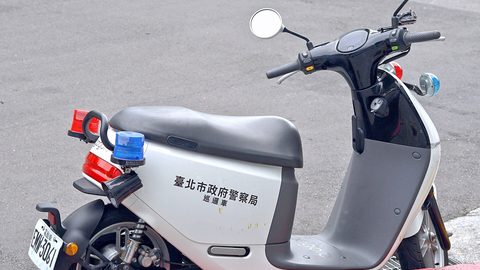 Best Electric Scooters for Adults: Commuter, Heavy Rider and Multi-Modal Picks
The best electric scooter for adults depends entirely on your commute: lightweight folders for train riders, durable tubeless models for daily abuse, and reinforced frames for heavier riders.
Best Electric Scooters for Adults: Commuter, Heavy Rider and Multi-Modal Picks
The best electric scooter for adults depends entirely on your commute: lightweight folders for train riders, durable tubeless models for daily abuse, and reinforced frames for heavier riders.
-
 Best Electric Scooter: The Models That Earn Their Spec Sheet in the Real World
The best electric scooter is the one whose real range, brake type, and stem durability match what the spec sheet promises. We compare the models that deliver.
Best Electric Scooter: The Models That Earn Their Spec Sheet in the Real World
The best electric scooter is the one whose real range, brake type, and stem durability match what the spec sheet promises. We compare the models that deliver.
-
 Best Electric Scooter Lights for Actually Seeing the Road at Night
Stock scooter lights are position markers, not headlights. The best electric scooter lights mount securely, survive rain, and project a beam you can actually ride by.
Best Electric Scooter Lights for Actually Seeing the Road at Night
Stock scooter lights are position markers, not headlights. The best electric scooter lights mount securely, survive rain, and project a beam you can actually ride by.