Diagnosing Bearing and Wheel Noise on an Electric Scooter
A systematic guide to tracing grinding, clicking, or humming sounds from electric scooter wheels back to their source, with bearing inspection steps and when to involve a repair shop.
Electric Scooter Bearing Noise Diagnosis: Start Here, Not With Parts
Most owners who hear a grinding, clicking, or humming from a wheel immediately buy new bearings and tear the scooter apart. That is the wrong first step. Electric scooter bearing noise diagnosis is a process of elimination, not a single fix. A sound that seems to come from the wheel can be a dry bearing, a failing motor bearing inside the hub, debris in the brake, or a loose axle nut that makes the whole wheel wobble. Isolate the source before you order any part. The dominant drive type on commuter and performance scooters is the hub motor. The motor bearing is a sealed unit inside the motor housing. Replacing it requires opening the motor, and that is the stop condition for most owners: if the noise comes from inside the motor, the repair cost and labour often exceed the value of an entry-level scooter.
Scooter Wheel Grinding Sound: Free-Spin Each Wheel First
Park the scooter on a level surface and turn off the power. Lift the first wheel off the ground. Spin it by hand. A clean wheel spins freely with no friction and no audible sound beyond the soft hiss of the tyre on air. If you hear a grinding noise that sounds like sand inside a bearing, you have identified the suspect wheel. Repeat for the other wheel.
What the Sound Tells You
A dry bearing produces a high-pitched whine that rises with wheel speed. A contaminated bearing produces a grinding that sounds gritty, as if small particles are being crushed between the balls and the race. A brinelled bearing, one with small indentations from vibration during transport or from a hard impact, produces a rhythmic clicking or rumbling whose frequency is proportional to wheel speed. On a hub motor scooter, a failing motor bearing sounds the same as a failing wheel bearing at free-spin, because the bearing is inside the motor assembly. The difference shows up when you check for lateral play.
Distinguish a Dry Bearing from a Motor Bearing
Grab the wheel at the top and bottom and try to rock it side to side. Any noticeable movement at the rim, more than about 0.1 mm of radial play measured at the rim, indicates a worn wheel bearing or a loose axle nut. If the wheel feels solid and the noise is still present during free-spin, the source is almost certainly the motor bearing inside the hub. On high-power models like the Dualtron Thunder 3 and Kaabo Wolf King GT, owner forum reports put the typical failure mileage for motor bearings at 3,000 to 5,000 km for the Thunder 3 and 2,500 to 4,000 km for the Wolf King GT. Those numbers assume regular use on mixed surfaces. A scooter ridden exclusively on wet roads or pressure-washed will fail earlier.
Hub Motor Bearing Replacement: What It Takes
A hub motor bearing is a sealed unit, typically a 608-2RS radial ball bearing (8 mm bore, 22 mm outer diameter, 7 mm width) with a C3 internal clearance for the thermal expansion of the motor. Replacing it requires disassembling the motor housing. Remove the wheel, unscrew the motor cover bolts, and separate the stator from the rotor. This exposes the motor stator and rotor. The bearing is pressed into the motor side cover. You will need C-clip pliers to remove the retaining ring that holds the bearing in place, and a bearing puller to extract the old bearing without damaging the aluminium housing. The new bearing must be the same size code, 608-2RS C3, and should be pressed in with a bearing press or a socket that contacts only the outer race. Driving a bearing in by hammering the inner race will brinell the new part before it ever turns.
When to Replace vs. When to Scrap
On an entry-level scooter, the labour of opening a hub motor and replacing a bearing is rarely economical. A replacement wheel-and-motor assembly for a Xiaomi M365 or Ninebot Max G30 costs less than a full repair and takes 15 minutes to swap. On a high-end scooter like the Vsett 10+ or Dualtron Thunder 3, replacing the bearing is worth doing because the rest of the scooter is still high-value. The bearing itself is inexpensive. The time investment is one to two hours for a first-timer. If you lack a bearing puller and C-clip pliers, a local scooter repair shop will charge a modest labour fee.
Scooter Wheel Wobble Noise: Check the Axle and Spacers
A wheel that wobbles side to side as it spins makes a noise that sounds like something is rubbing intermittently. This is rarely the bearing itself. The cause is usually a loose axle nut, a missing or incorrectly positioned spacer between the bearings, or a bent axle. On a hub motor scooter, the axle is the stationary shaft that passes through the motor and is clamped by the fork. The bearing race is the inner ring of the bearing that fits onto the axle. If the axle nut is torqued to the correct specification, typically 10 to 15 N·m on most models, the inner race is locked in place and the wheel cannot wobble. If the nut is loose, the wheel moves axially on the axle, and the bearing side-loads under cornering, accelerating wear.
How to Test for Lateral Play
With the wheel off the ground, grip it at the top and bottom and push and pull alternately. If you feel a clunk or see the wheel shift relative to the fork, you have lateral play. Tighten the axle nut to the manufacturer's torque spec. If the play persists, the spacer between the two bearings has collapsed or was omitted during a previous repair. A missing spacer allows the inner races to shift inward when the nut is tightened, which pinches the bearings and causes a grinding noise that sounds identical to a worn bearing. Always check the spacer before you order a replacement bearing.
Dual Motor Scooter Noise Source: Which Motor Is Making the Sound
On a dual motor scooter like the Dualtron Thunder 3 or Kaabo Wolf King GT, you cannot assume the noise comes from the motor you think it does. Sound travels through the frame, and a failing bearing in the rear motor can sound as if it is coming from the front. The systematic isolation method is the same: lift both wheels, spin each by hand, and listen at the axle. A mechanic's stethoscope or a long screwdriver pressed against the motor housing while the wheel spins pinpoints the source. If both wheels sound clean, the noise may be coming from the brake. A piece of grit between the pad and rotor produces a scraping sound that changes with wheel speed. On scooters with hydraulic disc brakes, a warped rotor produces a rhythmic ticking that sounds like a bearing fault. Remove the brake caliper and spin the wheel. If the noise disappears, the caliper or rotor is the source, not the bearing.
Tools and Bearing Size Codes You Need
If your diagnosis points to a bearing replacement, gather these tools before you start. You need a set of hex wrenches (typically 2.5, 3, 4, and 5 mm for motor cover bolts), a C-clip pliers with straight tips for the retaining ring inside the motor housing, a bearing puller with a jaw span of at least 22 mm for the 608-2RS bearing, and a torque wrench that reads in N·m for the axle nut. The bearing size code for nearly all hub motors is 608-2RS C3. The steering column bearings on most scooters are 6800-2RS or 6801-2RS. If you are ordering a replacement, buy a sealed bearing with double rubber seals, that is what the 2RS suffix means. Do not buy open bearings or bearings with a metal shield; they will fail quickly from water and grit ingress. An ABEC-5 or ABEC-7 tolerance class is standard for scooter bearings; a 440C stainless steel bearing resists corrosion better than chrome steel in wet conditions. A hybrid ceramic bearing (silicon nitride balls, steel races) reduces rolling resistance but costs three to five times as much and is unnecessary for a commuter scooter.
When the Noise Is Not a Bearing: Debris, Brakes, and Tyres
A grinding sound that only happens when the scooter is under power, not when free-spinning, is almost certainly not a bearing. It is either debris in the brake or a tyre rubbing against the frame or fender. Check the brake first: look for a small stone wedged between the pad and the rotor. Remove the caliper and spin the wheel. If the noise stops, the caliper was the source. If the noise continues, check the tyre for a bulge or a loose inner tube that is rubbing against the inside of the tyre. A pinch flat in the inner tube can cause a rhythmic thumping sound that mimics a brinelled bearing. On tubeless tyres, a bead leak produces a hissing sound that is sometimes mistaken for a bearing noise. Spray soapy water on the bead seat and look for bubbles.
The One Thing That Most Often Goes Wrong
The single most common error in diagnosing wheel noise on an electric scooter is replacing the bearing when the actual problem is a loose axle nut. Owners hear a grinding, assume the bearing is worn, and spend an hour disassembling the wheel only to find that tightening the nut to 12 N·m eliminates the noise. Check the axle nut first. If the nut is tight and the wheel has no lateral play, then move to the bearing. This sequence costs you five minutes and prevents an unnecessary repair.
More in this guide
Electric Scooter Repairs Diagnosis Tools and When to Visit a ShopLong Range Electric Scooters With Owner-Reported Distance at Real Rider WeightCharger Not Working on Your Electric Scooter: Diagnose the Charger, Battery and Charge Port.
Common Questions
How do I tell if the noise is from the motor bearing or the wheel bearing?
Free-spin the wheel by hand. If the noise is present and the wheel has no lateral play (no wobble when rocked side to side), the source is the motor bearing inside the hub. If the wheel wobbles, the issue is a loose axle nut, a missing spacer, or a worn wheel bearing.
What is the bearing size for most electric scooter hub motors?
The standard bearing size is 608-2RS C3 (8 mm bore, 22 mm outer diameter, 7 mm width) with double rubber seals and C3 internal clearance. Steering column bearings are typically 6800-2RS or 6801-2RS.
How often do hub motor bearings need replacing?
On high-power models like the Dualtron Thunder 3 and Kaabo Wolf King GT, owner forum reports indicate failure at 3,000 to 5,000 km and 2,500 to 4,000 km respectively. On lighter commuters like the Xiaomi M365, front wheel bearing noise is widely reported at 500 to 1,500 km. Bearings on a scooter ridden in wet conditions fail sooner.
Can I replace a hub motor bearing without a bearing puller?
No. The bearing is pressed into the motor side cover. Removing it without a bearing puller risks damaging the aluminium housing. A puller with a jaw span of at least 22 mm is the minimum tool. A C-clip pliers is also required to remove the retaining ring.
What should I check before assuming the bearing is bad?
Check the axle nut torque (10 to 15 N·m typical). Check for lateral play at the wheel rim. Remove the brake caliper and spin the wheel to rule out debris or a warped rotor. Check for a tyre bulge or a loose inner tube. These checks take five minutes and prevent an unnecessary bearing replacement.
Read next
-
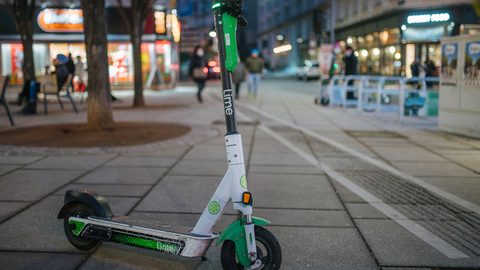 Electric Scooter Repairs Diagnosis Tools and When to Visit a Shop
Route to electric scooter repair guides by symptom: diagnosis order, essential tools, and the clear boundary where a fault requires a professional shop.
Electric Scooter Repairs Diagnosis Tools and When to Visit a Shop
Route to electric scooter repair guides by symptom: diagnosis order, essential tools, and the clear boundary where a fault requires a professional shop.
-
 Long Range Electric Scooters With Owner-Reported Distance at Real Rider Weight
Long-range electric scooters ranked by owner-reported distance at a real rider weight, not the manufacturer's 60 kg eco-mode claim, with battery capacity in watt-hours.
Long Range Electric Scooters With Owner-Reported Distance at Real Rider Weight
Long-range electric scooters ranked by owner-reported distance at a real rider weight, not the manufacturer's 60 kg eco-mode claim, with battery capacity in watt-hours.
-
 Best Electric Scooters for Adults: Commuter, Heavy Rider and Multi-Modal Picks
The best electric scooter for adults depends entirely on your commute: lightweight folders for train riders, durable tubeless models for daily abuse, and reinforced frames for heavier riders.
Best Electric Scooters for Adults: Commuter, Heavy Rider and Multi-Modal Picks
The best electric scooter for adults depends entirely on your commute: lightweight folders for train riders, durable tubeless models for daily abuse, and reinforced frames for heavier riders.
-
 Best Electric Scooter: The Models That Earn Their Spec Sheet in the Real World
The best electric scooter is the one whose real range, brake type, and stem durability match what the spec sheet promises. We compare the models that deliver.
Best Electric Scooter: The Models That Earn Their Spec Sheet in the Real World
The best electric scooter is the one whose real range, brake type, and stem durability match what the spec sheet promises. We compare the models that deliver.
-
 Best Electric Scooter Lights for Actually Seeing the Road at Night
Stock scooter lights are position markers, not headlights. The best electric scooter lights mount securely, survive rain, and project a beam you can actually ride by.
Best Electric Scooter Lights for Actually Seeing the Road at Night
Stock scooter lights are position markers, not headlights. The best electric scooter lights mount securely, survive rain, and project a beam you can actually ride by.