Segway Electric Scooters: Why Service Infrastructure Defines the Volume Brand
Segway-Ninebot is the only electric scooter brand with genuine mass-market service infrastructure, and that changes the ownership calculation entirely.
Segway Electric Scooters: Why Service Infrastructure Defines the Volume Brand
Every brand talks about range, speed, and suspension. Segway-Ninebot has something no other catalogue matches: a genuine mass-market service infrastructure, and that fact changes what it means to buy one. A machine that cannot be fixed on a Tuesday is a machine you will throw away in twelve months. For the commuter who cannot afford downtime, the fleet buyer who needs uptime metrics, and the first-time owner who has never changed a tyre, this is the decisive attribute. Enthusiasts who do their own wrenching and value exotic specs over parts availability can safely ignore it. Everyone else should read the warranty terms before the advertised range.
Segway Electric Scooters Service Infrastructure: What a 1,200-Centre Network Actually Means
Segway-Ninebot operates through more than 1,200 authorised service centres in North America, 800 in Europe, and 500 across Asia-Pacific outside China. No other brand in this price band has a network that scale. If your Ninebot Max G30 develops a stem click or your F-series loses regenerative braking, a repair centre within driving distance exists. The parts are in a warehouse in City of Industry, California, or in the Netherlands. Parts remain available for two to three years after a model is discontinued. That is the difference between a repair bill and a landfill fee.
Compare that to the boutique brands. A Dualtron or Kaabo owner ships the controller to a specialist who may or may not be reachable by phone. An Apollo owner waits for a proprietary stem clamp from Canada. The Segway-Ninebot network is not perfect. No direct manufacturer-owned centres exist outside China, so quality varies by franchisee. But it is a real infrastructure, not a mailing address. That is what makes the brand the volume play.
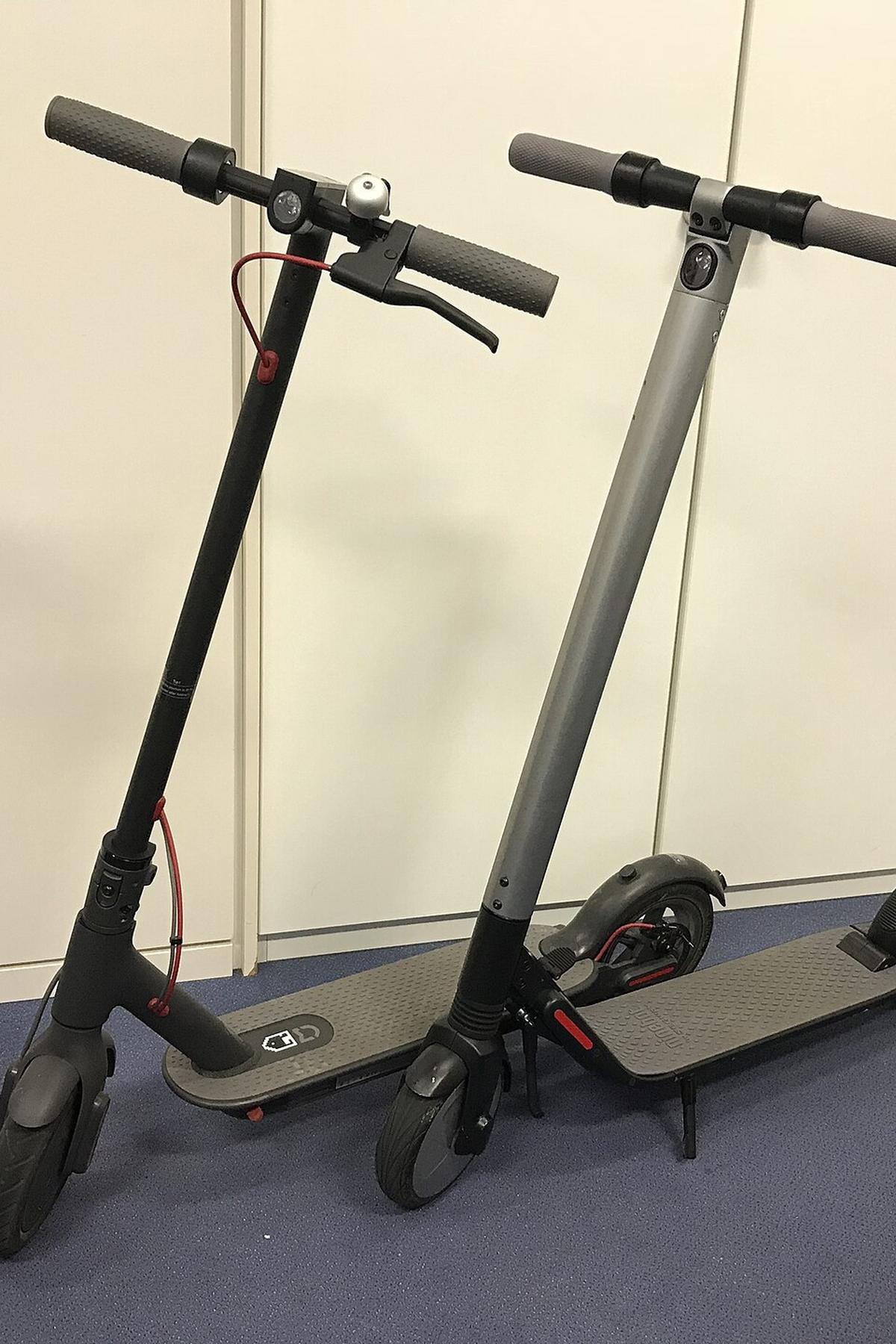

The Ninebot Max G30 as the Reference Case
The Max G30 is the durability benchmark for a reason. It uses self-sealing tubeless tyres under IPX5-rated electronics, has a folding mechanism that does not develop play at 2,000 km, and ships with a battery management system that actually manages cells rather than merely logging faults. The advertised range is 45 km. The real number for an 85 kg rider at 25 km/h in moderate temperatures is 18 to 25 km. The advertised charge time is four hours; a full zero-to-one-hundred cycle runs five to six because the constant-voltage phase slows at the top. The water resistance rating of IPX5 applies to the battery housing, not the throttle or display. Both fail in sustained rain. Knowing these gaps is exactly what the service infrastructure lets you do something about: buy the replacement throttle, and a centre installs it without mailing the whole unit to a depot.
Advertised Versus Real Numbers
Apply that delta to every figure on the spec sheet. The advertised 25 km/h top speed becomes 22 to 24 km/h once the pack drops below eighty percent charge, because voltage sag under load reduces speed progressively. The advertised four-metre braking distance from 25 km/h becomes six to eight metres on dry asphalt with an 85 kg rider. The advertised twenty-percent hill grade becomes a struggle above twelve percent. These are not flaws of the Max G30 specifically. They are the difference between a marketing test and real riding. What matters is that when the real-world numbers cause a failure, a brake cable stretched past adjustment, a tyre that has finally punctured, the parts ecosystem exists to fix it.
- Authorised Service Centres (North America, 2025): 1,200+
- Authorised Service Centres (Europe, 2025): 800+
- Authorised Service Centres (Asia-Pacific ex. China, 2025): 500+
- Typical Parts Availability Post-Discontinuation: 2-3 years
- Global Cumulative Scooter Sales (through 2024): Over 15 million units
- Ninebot FY2024 Revenue: RMB 14.2 billion
Ninebot Segway Scooter Catalogue: Where the Models Land
Reading the catalogue means understanding which models sit inside the service network and which do not. The Max G30 is the reference. Below it, the F-series offers mid-range commuting with mechanical disc brakes and tubeless tyres at a lighter weight. The F-series is the G30's less robust sibling, but it still uses the same parts distribution. The P100S and GT2 sit at the top of the consumer range: 100 km advertised range and 70 km/h top speed respectively, with controllers and stems that the service centres have seen before. The ES series, by contrast, is the cautionary tale. An early model that fell outside the mature parts ecosystem, the ES developed known failure modes, controller shutdown, pack lockout, and owners found themselves navigating forums instead of a service counter.
Max Versus F Series: The Real Difference
The Max versus F series decision comes down to duty cycle. The Max G30 uses a larger pack and its stem clamp and folding mechanism are engineered for fleet use: the same unit that survives rental operations in hundreds of cities. The F-series is lighter and faster to fold, but its deck width is narrower and its stem wobble tolerance is lower. A fleet buyer picks the Max. A multi-modal commuter who folds twice daily and boards a train picks the F-series, accepting the narrower service margin for the weight savings.
Segway Scooter Parts Availability: What Determines Whether a Scooter is Repairable or Disposable
Parts availability is what separates this brand from the batch of machines that arrive in a box and disappear from the internet eighteen months later. Xiaomi built a parts ecosystem alongside the M365. Segway-Ninebot built one on top of the Ninebot Max. Brake pads, inner tubes, tyres, and folding mechanism clamps are stocked not just for the current model but for the three previous generations. The throttle type, the deck width, the specific BMS firmware revision, all of these vary by model, but the critical wear parts are standardised within the brand.
Compare to a brand like Kaabo or Apollo. The Kaabo Mantis stem-folding clamp had a documented failure history on early units. Owners could not buy a revised clamp at a local shop; they waited for a warranty part from Taiwan or China. The Apollo City had stem wobble on early units that required a proprietary fix. Segway-Ninebot's aftermarket parts ecosystem means that when your stem clamp wears, the part is in a warehouse and a service centre has installed it before. That is the difference between three days of downtime and three weeks.
Segway Scooter Warranty Support: What the Fine Print Actually Covers
Warranty support varies by jurisdiction, but the standard terms cover manufacturing defects in the frame, motor, and battery for one to two years. The pack is limited to 300 cycles or twelve months, whichever comes first. Use the service network for warranty claims directly: take the unit to a centre, they diagnose, and if it is a covered part they replace it and bill Segway. That workflow is not universal. Many boutique brands require you to ship the whole machine to a single facility, pay return shipping, and wait for a technician who may be the brand founder.
What the warranty does not cover is wear items: brake pads, tyres, cables. It does not cover water damage, even if the IPX5 rating suggests it should, because the rating applies only to the housing. It does not cover firmware issues. Over-the-air updates that change throttle maps or speed limits are your problem. The value of the service network is that when a non-warranty failure occurs, you can still get the part and pay a centre to install it, rather than buying a new machine. That calculus is why the ES series owners who could not get parts ended up selling their units for half price, while Max G30 owners are still riding.
Who the Segway Infrastructure Suits and Who Should Skip it
Buy This If You Need Uptime
The service network suits the urban commuter covering three to eight kilometres each way who cannot be without a vehicle for two weeks. It suits the fleet operator who needs to know that a batch of forty units can be serviced at multiple locations, not one. It suits the first-time buyer who does not know the difference between a mechanical disc brake and a hydraulic disc brake, and who will need a shop to adjust the cable tension at 500 km. It suits the parent buying for a teenager, because the build means the machine will survive a drop, and the parts availability means it can be repaired when it does not.
Skip This If You Value Speed Over Service
This brand does not suit the enthusiast who values top speed over uptime. If you want a Kaabo Wolf Warrior that hits 90 km/h on private land, you are buying into a different support model: forums, spare parts from alibaba, and your own toolkit. If you want a Nami Burn-E with hydraulic suspension and sine-wave controllers, you are paying for performance and accepting that a controller failure means a dedicated repair cycle. Those buyers should look at the boutique brands and budget for their own wrenching. Everyone else should start with the model that has a service centre near them, then compare specs.
| Attribute | Claimed Value | Real Value (85 kg rider, mixed urban speed) |
|---|---|---|
| Range | 45 km | 18–25 km |
| Top Speed | 25 km/h | 22–24 km/h below 80% battery |
| Charge Time | 4 hours | 5–6 hours for full 0–100% cycle |
| Water Resistance | IPX5 | Throttle and display fail in sustained rain; battery housing only is IPX5 |
| Braking Distance (25 km/h, dry asphalt) | 4 metres | 6–8 metres |
| Hill Climbing | 20% grade | Struggles above 12% |
Common Questions
How do I find an authorised Segway-Ninebot service centre near me?
Segway-Ninebot publishes a locator on their consumer website. In North America, the network exceeds 1,200 centres. In Europe it exceeds 800. Call ahead to confirm the centre stocks parts for your specific model, because not every centre carries parts for the GT2 or P100S. The Max G30 and F-series are stocked at nearly all locations.
What is the real-world range of the Ninebot Max G30?
For an 85 kg rider at 25 km/h in moderate temperatures, expect18 to25 km. The advertised45 km is achievable only at15 km/h on flat ground with a60 kg rider. When the pack drops below80 percent charge, voltage sag reduces top speed and range further.
Is the Segway F-series as repairable as the Max G30?
Yes, the F-series uses the same parts distribution network. Its tubeless tyres and mechanical disc brakes are standard Segway parts. The smaller pack is less likely to need replacement within the first two years, and if it does, the service centre replaces it the same way.
Can I buy Segway scooter parts directly, or must I use a service centre?
Segway's parts distribution in North America ships from a warehouse in City of Industry, California, to both authorised centres and direct to consumers. In Europe, the warehouse is in the Netherlands. Direct purchase requires identifying the exact part number and accepting that some parts require firmware pairing.
What is the failure interval for the folding mechanism on a Ninebot Max?
Segway-Ninebot does not publish a formal durability figure, but independent fleet operators report the Max stem clamp needing adjustment or replacement at3,000 to5,000 km depending on rider weight and terrain. The stem is the highest-stress mechanical joint, and developing slight play is normal; the relevant question is whether the part is stocked, and the answer is yes.
Read next
-
 Long Range Electric Scooters With Owner-Reported Distance at Real Rider Weight
Long-range electric scooters ranked by owner-reported distance at a real rider weight, not the manufacturer's 60 kg eco-mode claim, with battery capacity in watt-hours.
Long Range Electric Scooters With Owner-Reported Distance at Real Rider Weight
Long-range electric scooters ranked by owner-reported distance at a real rider weight, not the manufacturer's 60 kg eco-mode claim, with battery capacity in watt-hours.
-
 Best Electric Scooters for Adults: Commuter, Heavy Rider and Multi-Modal Picks
The best electric scooter for adults depends entirely on your commute: lightweight folders for train riders, durable tubeless models for daily abuse, and reinforced frames for heavier riders.
Best Electric Scooters for Adults: Commuter, Heavy Rider and Multi-Modal Picks
The best electric scooter for adults depends entirely on your commute: lightweight folders for train riders, durable tubeless models for daily abuse, and reinforced frames for heavier riders.
-
 Best Electric Scooter: The Models That Earn Their Spec Sheet in the Real World
The best electric scooter is the one whose real range, brake type, and stem durability match what the spec sheet promises. We compare the models that deliver.
Best Electric Scooter: The Models That Earn Their Spec Sheet in the Real World
The best electric scooter is the one whose real range, brake type, and stem durability match what the spec sheet promises. We compare the models that deliver.
-
 Best Electric Scooter Lights for Actually Seeing the Road at Night
Stock scooter lights are position markers, not headlights. The best electric scooter lights mount securely, survive rain, and project a beam you can actually ride by.
Best Electric Scooter Lights for Actually Seeing the Road at Night
Stock scooter lights are position markers, not headlights. The best electric scooter lights mount securely, survive rain, and project a beam you can actually ride by.