Commuting by Electric Scooter: What the Daily Routine Actually Demands
What electric scooter commuting actually demands: real carry weight for stairs, folded dimensions for trains, wet weather survival and charging logistics.
Commuting by Electric Scooter: What the Daily Routine Actually Demands
Fold your scooter at the bottom of a three-floor walk-up. Now carry it up. The manufacturer claimed 15 kg. On a calibrated scale, that machine weighs 16.5 kg. The stem and folding mechanism were excluded from the published figure. This is the moment no buying guide prepares you for. A 30 kg scooter never goes up stairs daily, no matter how elegantly it folds. Every spec sheet hides a truth, and what follows is what the daily routine demands after the first month.
Electric Scooter Carry Weight: Stairs and the Real Figure
Why Published Weight Is Wrong
Published carry weight is the most misleading number on any spec sheet. Manufacturers routinely exclude the stem, handlebars, or folding mechanism from the total. The Xiaomi Electric Scooter 4 Ultra states a carry weight of 24.7 kg. The Segway Ninebot MAX G2 is 24.3 kg. The Apollo City 2023 is 26.0 kg. At the other end, the Niu KQi Air is 11.9 kg and the Unagi Model One Voyager is 13.6 kg. That 11.9 kg to 26.0 kg range is the real spectrum you choose between.
Do not trust a number until you have seen an owner post a weight from a calibrated scale. The difference between 15 kg and 16.5 kg is the difference between carrying it up three flights without thinking and swearing at it before the first landing. If your commute involves stairs, set your maximum at 16 kg. Test-lift a model in a shop before buying. Kerb weight on the spec sheet is not the weight in your hand.
_der_Motorenwerke_Zschopau_GmbH.jpg)
Electric Scooter Folded Size: Train Carriages and Office Storage
UK Rail and Underground Rules
Folded dimensions are quoted in three numbers, but the figures often exclude protruding handlebars. That extra 10 cm on each side turns a tidy box into a thing that bangs against every train seat. On UK National Rail services, folded e-scooters are permitted as hand luggage with no extra charge. Stow them in luggage areas. Do not block aisles or doorways. The London Underground permits folded e-scooters at all times on all Tube lines. Fold before entering the station and carry on escalators, never ride. London buses allow them at the driver's discretion.
EU Train Operators and Size Limits
Across the EU, the rules vary by operator. SNCF in France permits folded scooters on TGV and Intercités if dimensions are 130 x 90 cm or smaller. Deutsche Bahn allows them on ICE and regional trains if stowed in overhead racks. Trenitalia sets a limit of 80 x 110 x 50 cm. Renfe in Spain requires dimensions no larger than 85 x 55 x 35 cm. The fold time claims are fast: 3 seconds for the Xiaomi 4 Ultra, Segway MAX G2, and Niu KQi3 Pro. The Unagi Model One Voyager states 1 second with its one-click mechanism. A 3-second fold means nothing if the folded package is still awkward to carry through a train aisle.
Check the Latch Before You Buy
Measure the folded dimensions yourself before committing. If the handlebars stick out, you will resent it every morning. The stem folding mechanism is the single highest-consequence mechanical joint on the vehicle. Latch security matters as much as the folded size. A loose latch at speed is catastrophic.
Electric Scooter Wet Weather Riding: Water Ingress is the Real Risk
IP Ratings Do Not Cover the Cockpit
No scooter is truly waterproof, regardless of IP claims. An IPX5 rating on the battery housing means it is protected against jets of water. That rating does not cover the throttle, the display, or the controller. Water ingress kills controllers and BMS units. The failure may not appear until days after exposure, when corrosion bridges a trace on the circuit board.
Sustained rain finds the gap around the throttle and the display. These are not sealed components. Riders who treat an IPX5 rating as a licence to ride in heavy rain end up with a scooter that powers on but does not move, or a throttle that sticks at full. The repair cost often exceeds the resale value. If you ride in wet weather, dry the scooter immediately afterward with compressed air or a towel. Store it in a warm, dry place. Do not fast-charge a wet scooter. Voltage sag worsens in cold rain, so a scooter at 40% indicated charge may not reach its top speed or climb its rated grade.
Braking Distance Doubles in the Wet
Pneumatic tyres lose grip on wet tarmac. Solid tyres are worse. Stopping distance from 25 km/h on dry asphalt is 6 to 8 metres for an 85 kg rider, not the 4 metres some makers state. In the rain, add another 2 metres. Hydraulic disc brakes perform best in wet conditions. Mechanical disc brakes and foot brakes lose significant stopping power when wet.
Electric Scooter Office Storage: What Fits and What Gets Banned
Size and Weight Determine Where It Lives
Your office storage plan depends on the scooter's folded size and your workplace policy. A scooter with a folded length under 100 cm and a handlebar width under 50 cm fits under most desks or in a standard locker. The Glion Dolly is designed for office commuters with its self-standing vertical fold. The Niu KQi Air at 11.9 kg can be carried to a fourth-floor desk without a second thought. The Apollo City at 26.0 kg stays on the ground floor.
Fire Policy and Charging Reality
Ask your building manager before buying. Some offices ban scooters entirely due to fire risk from lithium-ion cells stored inside. Battery fires during charging are rare but catastrophic. Charging should never be unattended. If you plan to charge at the office, know the real charge time: a full 0 to 100% cycle takes 5 to 6 hours, not 4 hours, because the final constant-voltage phase is slower. A scooter with dual charging ports can halve that time if the BMS supports it. Fast chargers degrade cells faster. Use the standard charger unless you have a reason not to.
Electric Scooter Multi-Modal Commute: Train, Bus, and Last Mile Logistics
Weight and Fold Speed at the Gate
The multi-modal commute is where weight and folded size become decisive. You carry the scooter from your front door to the train, onto the platform, into the carriage, off the train, through the station, and to the office. Every transfer involves lifting, folding, and unfolding. The fold mechanism must be fast enough that you do not hold up the queue behind you at the station gate. The latch must be secure enough that the stem does not come loose in your hand while you carry it.
Metro Rules Across Europe
On EU metro systems, rules vary by city. The Paris Métro permits folded scooters on all lines. Berlin's U-Bahn and S-Bahn allow them folded and stowed. Madrid Metro and Barcelona Metro also permit them folded. Amsterdam's GVB allows them on metro and trams. The key requirement across every operator is the same: fold before you enter the station, do not ride on platforms, and do not block aisles or doorways. A scooter that folds in 3 seconds is a commuter tool. One that takes 10 seconds is a liability. The fold time claims range from 1 second on the Unagi Voyager to 5 seconds on the Pure Advance Flex and Apollo City 2023. Test the mechanism before buying. A sticky latch in a cold station is not something you troubleshoot on a packed train.
The Ergonomic Constants: Stem Height, Deck Width, and Rider Fit
Fit Is Fixed, So Test It
Stem height and handlebar width are ergonomic constants. A scooter that fits a 175 cm rider will be uncomfortable for a 190 cm rider, regardless of what the spec sheet says. Deck width also matters. Wider decks allow a stable forward stance. Narrow decks force a side-on stance that reduces control under braking. The Niu KQi3 Pro has a wider deck than the Segway Ninebot MAX G2, and riders with larger feet notice the difference immediately.
If you are outside the 165 to 185 cm height range, test ride. A stem that is too short forces you to hunch. One that is too tall shifts your weight too far forward under braking. There is no adjustment. The handlebars on most scooters are fixed width. The Apollo Phantom and Dualtron models have wider bars that suit larger riders. They also weigh more. Every scooter's stem develops play eventually. The fix is tightening or replacing the clamp. Budget for that maintenance.
Charge Time, Range, and the Real Numbers
Half the Claimed Range Is Normal
Claimed range on any scooter assumes a 60 kg rider on flat ground in eco mode at 15 km/h. For an 85 kg rider at 25 km/h in moderate temperatures, real range is roughly half the stated figure. A scooter advertised at 45 km delivers 18 to 25 km. That is not a defect. It is the physics of voltage sag under load. The motor draws more current to push a heavier rider, the pack voltage drops, and the scooter reduces speed progressively, not suddenly.
The 5-to-6-Hour Charge Window
Charge time is another gap between claim and reality. The 4-hour claim is for the constant-current bulk charge. The final constant-voltage phase adds another 1 to 2 hours. Plan for 5 to 6 hours from dead to full. If you cannot charge at the office, you need a pack large enough for a round trip plus a safety margin of 20%. The Ninebot Max G30 has the longest real range in the commuter class because of its large capacity and self-sealing tubeless tyres that reduce rolling resistance. The Xiaomi Mi M365 series has a vast parts ecosystem and a rear mudguard that is its structural weakness. Do not use the rear mudguard as a footrest. It will fracture and take the tail-light wiring with it.
| Model | Carry Weight (kg) | Fold Time Claim (seconds) |
|---|---|---|
| Niu KQi Air | 11.9 | 3 |
| Unagi Model One Voyager | 13.6 | 1 |
| Turboant X7 Pro | 15.0 | 3 |
| Pure Advance+ | 16.0 | 5 |
| Hiboy S2 Pro | 16.3 | 3 |
| Apollo Air 2023 | 17.5 | 3 |
| Segway Ninebot F2 Pro | 18.5 | 3 |
| Niu KQi3 Pro | 20.2 | 3 |
| Segway Ninebot MAX G2 | 24.3 | 3 |
| Xiaomi Electric Scooter 4 Ultra | 24.7 | 3 |
| Apollo City 2023 | 26.0 | 5 |
What Goes Wrong: Failure Modes You Need to Know
Known Weak Points by Model
Every scooter model has a known failure mode. The Xiaomi Mi M365 rear mudguard fractures if you use it as a footrest. Early Kaabo Mantis units suffered stem snap at the folding joint due to fatigue cracking in cast aluminium clamps. The Apollo City's early units had stem wobble issues. Controller overheat shutdown happens during sustained hill climbing in high ambient temperatures. The scooter cuts power without warning. Recovery requires letting it cool. Throttle stick at full is caused by water ingress or Hall sensor failure. The scooter accelerates uncontrollably until the brake cutoff intervenes. BMS lockout from cell imbalance or deep discharge makes the pack refuse to charge, requiring a bench reset or replacement.
Weekly Bolt Check and Other Preventable Failures
Bolt loosening from vibration affects motor axle nuts, brake caliper bolts, and stem clamp bolts across almost all brands. Carry a multi-tool and check these bolts weekly. Solid tyre de-bonding from heat and shear stress separates the tyre from the hub, leaving you with no drive and reduced braking. Charging port melt happens when the connector arcs or you use a charger with the wrong voltage. These failures are not rare. They are the predictable cost of operating a light electric vehicle at 25 km/h on imperfect roads.
Common Questions
Can I carry an electric scooter on a train in the UK?
Yes. Folded e-scooters are permitted as hand luggage on all National Rail services, the London Underground, London buses at driver's discretion, Tramlink, DLR, Elizabeth line, London Overground, ScotRail, and Transport for Wales. The scooter must be folded before entering the station and stowed in luggage areas without blocking aisles or doorways. These rules are from the 2024 editions of the respective conditions of carriage and are subject to annual revision.
What does IPX5 mean on an electric scooter?
IPX5 means the component is protected against jets of water from any direction. That rating is applied only to the battery housing, not the throttle, display, or controller. Water ingress at the cockpit electronics kills controllers and BMS units, and the failure may not appear until days after exposure. No scooter is truly waterproof regardless of IP claims.
How much does an electric scooter actually weigh for carrying up stairs?
Published carry weight often excludes the stem, handlebars, or folding mechanism. On a calibrated scale, a scooter stated at 15 kg can weigh 15.8 to 16.5 kg. The range for folded standing scooters in the current catalogue is 11.9 kg for the Niu KQi Air to 26.0 kg for the Apollo City 2023. Set your maximum at 16 kg if you carry it up stairs daily.
What is the real range of an electric scooter for an average rider?
Claimed range assumes a 60 kg rider on flat ground in eco mode at 15 km/h. For an 85 kg rider at 25 km/h in moderate temperatures, real range is roughly half the stated figure. A scooter advertised at 45 km delivers 18 to 25 km. Voltage sag under load reduces speed progressively as the pack depletes.
Can I charge my electric scooter at the office?
Ask your building manager first. Some offices ban lithium-ion charging due to fire risk. A full 0 to 100% charge takes 5 to 6 hours, not 4 hours, because the final constant-voltage phase is slower. Fast chargers degrade cells faster. If the office allows charging, do not leave it unattended.
Read next
-
 How to Choose an Electric Scooter: Brakes, Range and Carry Weight First
How to choose an electric scooter by the specs that matter: real range for your weight, brake types for wet stopping, and carry weight for daily use.
How to Choose an Electric Scooter: Brakes, Range and Carry Weight First
How to choose an electric scooter by the specs that matter: real range for your weight, brake types for wet stopping, and carry weight for daily use.
-
 Electric Scooter Safety: NTA-8776 Helmets, Braking Distance and Visibility
Electric scooter safety starts with the NTA-8776 helmet standard, understanding real braking distances, and knowing the mechanical failure modes that matter at speed.
Electric Scooter Safety: NTA-8776 Helmets, Braking Distance and Visibility
Electric scooter safety starts with the NTA-8776 helmet standard, understanding real braking distances, and knowing the mechanical failure modes that matter at speed.
-
 Electric Scooter Batteries: Wh Capacity, 21700 Cells and Real Cycle Life
Electric scooter batteries explained: why watt-hours is the honest capacity unit, how 21700 cells differ from 18650, and what actually shortens pack life.
Electric Scooter Batteries: Wh Capacity, 21700 Cells and Real Cycle Life
Electric scooter batteries explained: why watt-hours is the honest capacity unit, how 21700 cells differ from 18650, and what actually shortens pack life.
-
 Electric Scooter Maintenance: Stem Bolts, Brake Pads and Tyre Pressure Intervals
Electric scooter maintenance schedule covering stem bolt torque checks, brake pad intervals, tyre pressure and the folding mechanism service that prevents failure.
Electric Scooter Maintenance: Stem Bolts, Brake Pads and Tyre Pressure Intervals
Electric scooter maintenance schedule covering stem bolt torque checks, brake pad intervals, tyre pressure and the folding mechanism service that prevents failure.
-
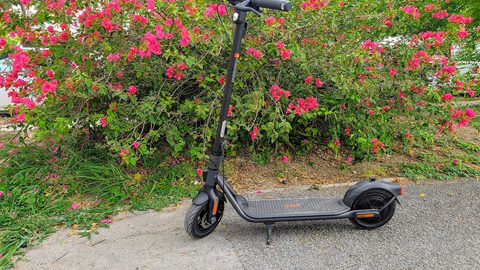 Segway Ninebot ES3
The Ninebot Segway ES3 was discontinued in 2021 but is still traded heavily used, and it remains a genuine argument as a first electric scooter.
Segway Ninebot ES3
The Ninebot Segway ES3 was discontinued in 2021 but is still traded heavily used, and it remains a genuine argument as a first electric scooter.
-
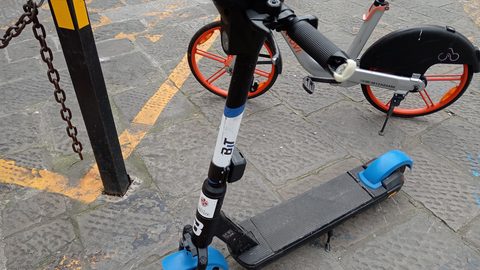 Fluid FreeRide CityRider
The Fluid Freeride CityRider is the mid-band commuter this catalogue keeps pointing people at when they arrive looking at something twice the weight.
Fluid FreeRide CityRider
The Fluid Freeride CityRider is the mid-band commuter this catalogue keeps pointing people at when they arrive looking at something twice the weight.
-
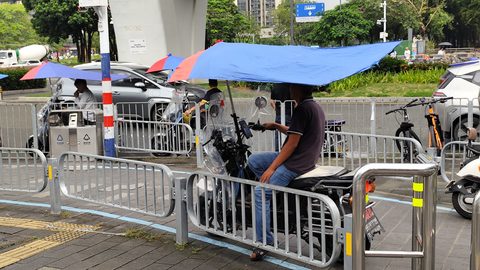 Weped FS
The Weped FS weighs 45 kg and has real hydraulic suspension, and that weight is the organising fact of ownership no spec sheet can soften.
Weped FS
The Weped FS weighs 45 kg and has real hydraulic suspension, and that weight is the organising fact of ownership no spec sheet can soften.
-
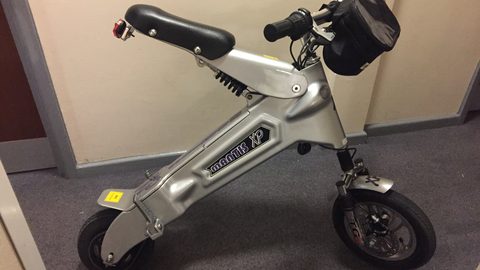 Rion RE90
The Rion RE90 is the lightest genuinely fast electric scooter, built in small numbers with almost no weather sealing and a six-month warranty.
Rion RE90
The Rion RE90 is the lightest genuinely fast electric scooter, built in small numbers with almost no weather sealing and a six-month warranty.
-
 Mercane MX60
The Mercane MX60 is a 41 kg dual-motor scooter whose real story is the gap between what it can do and what an owner will do with it daily.
Mercane MX60
The Mercane MX60 is a 41 kg dual-motor scooter whose real story is the gap between what it can do and what an owner will do with it daily.