Electric Scooter Batteries: Wh, Cell Chemistry, Cycle Life and the Real Range Gap
Electric scooter range claims assume a 60 kg rider at 15 km/h—real range is half that. Learn how watt-hours, cell chemistry and cycle life determine what you actually get.
.jpg)
Electric Scooter Battery Capacity Wh Explained
Published range claims are not lies, but they are measured under conditions that do not match how you will ride. The standard test uses a 60 kg rider on flat ground at 15 km/h in eco mode. An 85 kg rider at 25 km/h gets roughly half the claimed distance. The number that predicts real range better than any marketing figure is the battery capacity in watt-hours. That is where electric scooter battery capacity Wh explained starts.
Watt-Hours: the Only Range Number That Matters
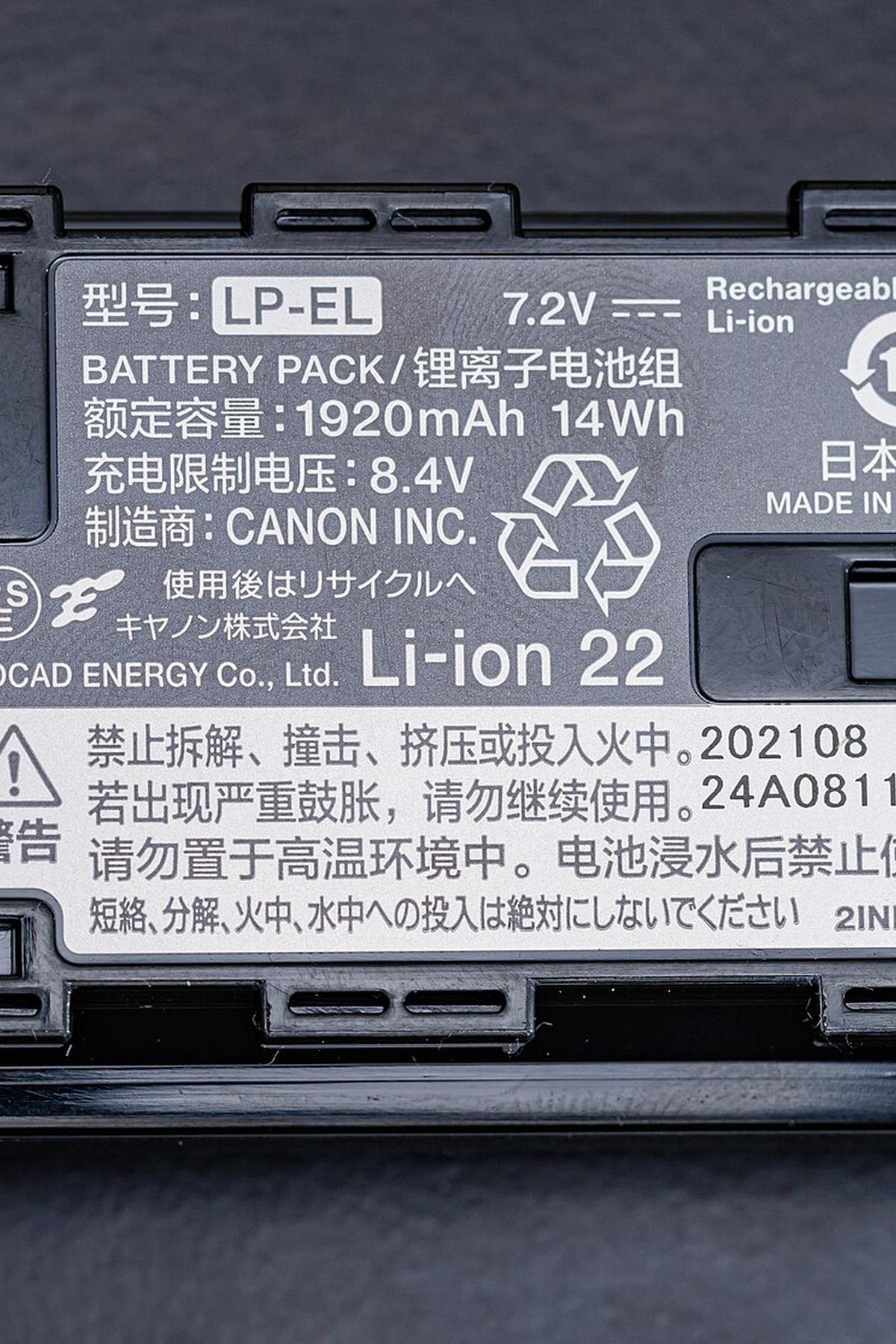
Battery capacity is measured in watt-hours (Wh). This is calculated as voltage multiplied by amp-hours. Voltage and amp-hours alone tell you nothing; watt-hours tell you how much energy is actually stored.
What The Research Says
A lightweight scooter with a 75 kg rider on flat ground at 15 mph consumes 10 to 15 Wh per mile. A performance scooter at 25 mph burns 20 to 30 Wh per mile. Push to high speed, hills, and a heavy rider, and consumption rises to 40 to 50 Wh per mile. Take a 360 Wh pack and divide by 25 Wh per mile: you get 14.4 miles of real range, not the 45 km (28 miles) the box claims. That gap is not a defect. It is the difference between the lab and your commute.
Why Voltage Sag Cuts Range In Half
Voltage sag is the drop when the motor draws high current. At full charge a 36 V pack delivers peak power. At 40% indicated battery, sag means the scooter cannot maintain top speed or climb its rated grade. You do not lose range gradually. You lose speed first, then range follows. The claim of 500 cycles to 80% capacity assumes perfect conditions. Real scooters see 300 to 400 cycles when routinely fast-charged or stored fully charged.
Electric Scooter Battery Cycle Life
Cycle life is the number of full charge-discharge cycles before the pack drops to 70% of its original capacity. The research gives specific numbers for lithium-ion NMC and NCA cells, which dominate consumer scooters.
How Depth of Discharge Changes Everything
At 100% depth of discharge (running the battery to zero every time), you get 300 to 500 cycles to 70% capacity. At 80% depth of discharge, 500 to 800 cycles. At 50%, 1,200 to 2,000 cycles. At 30%, 2,000 to 3,000 plus cycles. The single most effective thing you can do for cycle life is not draining the battery below 20% and not charging it to 100% unless you need the range.
Cell Chemistry: LG, Samsung, Panasonic vs Domestic Chinese Cells
Scooters from Xiaomi, Ninebot, and Segway commonly use cells from LG, Samsung, or Panasonic. These are 18650 or 21700 format cells with energy densities of 200 to 260 Wh per kg for 18650s and 250 to 300 Wh per kg for 21700s. Domestic Chinese cells have lower energy density and shorter cycle life. The battery management system (BMS) on the circuit board balances cells and prevents over-charge and over-discharge. A BMS failure can brick the pack or, in rare cases, cause thermal runaway. No manufacturer publishes which cells are in a given model year, and sourcing shifts between suppliers without notice.
Lithium Ion Battery Degradation Scooter: What Accelerates it
Lithium-ion battery degradation is irreversible and accelerates under three conditions: heat, high state of charge storage, and fast charging.
Storage Kills Batteries Faster Than Riding
Storage state of charge for Li-ion NMC and NCA cells should be 40 to 60% at a per-cell voltage of 3.6 to 3.8 V. Storing a scooter at 100% charge in summer heat cuts cycle life by roughly half. Storing it at zero charge can damage cells below the minimum safe discharge voltage of 2.5 to 3.0 V per cell. If you park the scooter for more than a week, discharge it to roughly 50% and keep it in a cool place below 25 °C.
Fast Charging Degradation Is Real
Fast chargers push current at a higher rate than the standard charger. The constant-voltage phase at the end of charging is slower than the constant-current bulk charge. Manufacturers quote charge time for the bulk phase only. A claimed 4 hour charge takes 5 to 6 hours for a full 0 to 100% cycle. Fast charging degrades cells faster. Dual charging ports can halve time if the BMS supports it, but the degradation still applies.
Electric Scooter Range Claim vs Real: the Gap Explained
The research provides exact baseline numbers. Claimed 45 km becomes 18 to 25 km for an 85 kg rider at 25 km/h in moderate temperatures. Top speed of 25 km/h drops to 22 to 24 km/h when the battery is below 80% charge. Braking distance from 25 km/h is claimed at 4 metres but measures 6 to 8 metres on dry asphalt with an 85 kg rider. Hill climbing claimed at 20% grade struggles above 12% with the same rider. The test uses motor torque at the shaft, not the wheel, and ignores drivetrain losses.
Why Real Range Is Half the Claim
Three factors create the gap. First, the test rider is 60 kg. Every 10 kg above that adds roughly 5 to 10% to Wh per mile consumption. Second, the test speed is 15 km/h. Air resistance increases with the square of speed, so 25 km/h consumes roughly twice the energy of 15 km/h. Third, the test has no stops. Each acceleration from a standstill draws peak current, and voltage sag after several stops reduces available power. The result is not a lie. It is a laboratory number with no relation to how you ride.
Electric Scooter Charging Best Practice
Charging best practice is about slowing degradation, not about speed. Do not charge unattended. Battery fires during charging, though rare, are catastrophic and the research names cell damage, BMS failure, or use of an incorrect charger as causes.
The Rules
- Charge to 80% for daily use. Charge to 100% only when you need the full range for a trip.
- Do not let the battery drop below 20% routinely. Deep discharge accelerates capacity loss.
- Store at 40 to 60% state of charge if the scooter sits for more than a week.
- Use the charger that came with the scooter. Voltage and connector type are not enough; charge current limits are often undocumented.
- Charge in a cool, dry place away from flammable materials.
Battery Pack Configurations and What They Mean for Range
Consumer scooters use common pack configurations. A 10S pack is 36 V nominal. A 13S pack is 48 V nominal. A 16S pack is 60 V nominal. A 20S pack is 72 V nominal. Cell capacity in scooter packs ranges from 2,000 to 5,000 mAh per cell. The 18650 cell format is most common, with the larger 21700 format appearing in higher capacity packs on models like the Ninebot Max G30.
What The Configuration Tells You
Higher voltage systems (48 V and above) deliver more power to the motor at the same current, reducing voltage sag. This is why the Ninebot Max G30, with its 36 V pack but large capacity, has longer real range than many 48 V scooters with smaller packs. The number that matters is watt-hours, not voltage alone.
Real World Battery Comparisons
ScooterBattery Capacity (Wh)Claimed RangeReal Range (85 kg Rider, 25 km/h)Ninebot Max G30551 Wh65 km25-35 kmXiaomi Mi M365 / 1S280 Wh30 km12-18 kmApollo City468 Wh40 km18-25 kmVsett 8523 Wh50 km20-30 km
These are approximate figures from the research dossier. The real range varies with temperature, tyre pressure, and elevation. Pneumatic tyres require pressure checks because under-inflation causes pinch flats and increases rolling resistance, which cuts range.
BMS, Thermal Management and Cell Imbalance
The battery management system is the circuit board inside the battery that balances cells and prevents over-charge, over-discharge, and short circuits. Cell imbalance occurs when one cell in the series string drops to a lower voltage than the others faster. The BMS attempts to balance them during charging, but if the imbalance is severe, the BMS locks out the pack. This is the most common electrical failure and requires a bench reset or replacement. Thermal management matters because heat accelerates degradation. Scooters without thermal management can see 10% capacity loss in the first year.
Regenerative Braking: Minor Range Extender, Major Safety Function
Regenerative braking recovers a small fraction of energy during deceleration. The research states it is a minor range extender at best. Its real function is to provide drag when coasting, and it cannot be the sole braking system. Electronic-only braking fails when the battery is full. Always use the mechanical disc, hydraulic disc, or drum brake as the primary stopping system.
Battery Fire Risk and Charging Safety
The research names battery fire during charging as a catastrophic but rare risk. Cell damage, BMS failure, or use of an incorrect charger are the causes. Do not charge unattended. Do not charge in a bedroom or near flammable materials. Use only the charger supplied with the scooter. If the charging port shows arcing, melting, or discolouration, stop charging immediately and have the port inspected.
Scooter Battery Storage and Winter Care
If you live in a climate where the scooter sits unused for weeks or months, storage protocol determines whether the battery survives. Lithium-ion cells degrade with cycle count and calendar age. Capacity loss is irreversible and accelerates when stored at 100% charge in heat.
Storage Steps
- Discharge or charge the battery to 40 to 60% state of charge. For Li-ion NMC and NCA cells, this corresponds to 3.6 to 3.8 V per cell.
- Store in a cool, dry place. Do not store in direct sunlight, a hot garage, or below freezing.
- Check the battery voltage every four to six weeks. If it has dropped below 3.0 V per cell, charge it back to storage level.
- Never store a scooter with a fully discharged battery. Deep discharge can damage cells below the minimum safe voltage and make the pack unrecoverable.
Who Electric Scooters Suit and Who Should Skip
Electric scooters suit urban commuters covering a last-mile gap of 3 to8 km each way. They suit multi-modal riders who carry the scooter onto trains or into an office, for whom weight, folded dimensions, and latch security are the decisive attributes. They suit parents buying for a teenager who need to understand speed limiting, build quality, and the local legal age and helmet requirements before looking at colours. They suit fleet operators and buyers evaluating bulk purchases who need duty-cycle data, parts availability, and common failure intervals, not consumer feature lists. They suit first time buyers who have never owned a personal electric vehicle and need the vocabulary to read a spec sheet and the honest trade-offs between price bands.
Anyone wanting an e-bike, e-moped, or electric motorcycle should skip scooters: those have different regulation, different failure modes, and different comparison attributes. Anyone seeking a mobility aid for a disability should consult a specialist supplier because scooters have no medical device certification. Anyone expecting a weatherproof car replacement should skip: scooters are fair-weather vehicles with no crash protection and minimal cargo capacity. Anyone shopping below roughly the price band where hydraulic brakes and pneumatic tyres appear should also skip, because below that the machines are functionally disposable. The single thing that most often goes wrong is the owner treating the battery like a fuel tank rather than a consumable component with a finite lifespan and specific storage needs.
Common Questions
How do I calculate real range from watt-hours?
Take the battery capacity in watt-hours and divide by your expected consumption per mile. For a75 kg rider on flat ground at15 mph, consumption is10 to15 Wh per mile. At25 mph,20 to30 Wh per mile. A360 Wh battery at25 Wh per mile gives14.4 miles. That is your real range. Halve the manufacturer claim as a quick check.
What is the difference between18650 and21700 cells?
The21700 is larger:21 mm diameter by70 mm length versus18 by65 mm for the18650. The21700 holds more energy per cell,250 to300 Wh per kg compared to200 to260 Wh per kg for the18650. The Ninebot Max G30 uses21700 cells for its long range. Most other consumer scooters use18650s.
How many cycles does a scooter battery last?
At100% depth of discharge,300 to500 cycles to70% capacity. At80% depth of discharge,500 to800 cycles. At50% depth of discharge,1,200 to2,000 cycles. At30% depth of discharge,2,000 to3,000 plus cycles. Real cycle life is lower for scooters routinely fast-charged or stored fully charged.
Can I replace the battery in my scooter?
Yes, but ease depends on the model. Xiaomi Mi M365 and Ninebot Max G30 have large aftermarket ecosystems with replacement packs. Most other brands do not. Aftermarket parts availability determines whether a scooter is repairable or disposable.
Is it safe to charge a scooter indoors?
Charge only in a cool, dry place away from flammable materials. Never charge unattended. Battery fires during charging are rare but catastrophic. The research names cell damage, BMS failure, and use of an incorrect charger as causes. Use only the charger that came with the scooter.
Read next
-
 Long Range Electric Scooters With Owner-Reported Distance at Real Rider Weight
Long-range electric scooters ranked by owner-reported distance at a real rider weight, not the manufacturer's 60 kg eco-mode claim, with battery capacity in watt-hours.
Long Range Electric Scooters With Owner-Reported Distance at Real Rider Weight
Long-range electric scooters ranked by owner-reported distance at a real rider weight, not the manufacturer's 60 kg eco-mode claim, with battery capacity in watt-hours.
-
 Best Electric Scooters for Adults: Commuter, Heavy Rider and Multi-Modal Picks
The best electric scooter for adults depends entirely on your commute: lightweight folders for train riders, durable tubeless models for daily abuse, and reinforced frames for heavier riders.
Best Electric Scooters for Adults: Commuter, Heavy Rider and Multi-Modal Picks
The best electric scooter for adults depends entirely on your commute: lightweight folders for train riders, durable tubeless models for daily abuse, and reinforced frames for heavier riders.
-
 Best Electric Scooter: The Models That Earn Their Spec Sheet in the Real World
The best electric scooter is the one whose real range, brake type, and stem durability match what the spec sheet promises. We compare the models that deliver.
Best Electric Scooter: The Models That Earn Their Spec Sheet in the Real World
The best electric scooter is the one whose real range, brake type, and stem durability match what the spec sheet promises. We compare the models that deliver.
-
 Best Electric Scooter Lights for Actually Seeing the Road at Night
Stock scooter lights are position markers, not headlights. The best electric scooter lights mount securely, survive rain, and project a beam you can actually ride by.
Best Electric Scooter Lights for Actually Seeing the Road at Night
Stock scooter lights are position markers, not headlights. The best electric scooter lights mount securely, survive rain, and project a beam you can actually ride by.