The Best Electric Scooters for Commuting, Chosen by What Survives the Daily Fold and Ride
Affiliate links. If you buy through the links below we may earn a commission, at no extra cost to you. How this works.
The Range Lie is the First Thing You Need to Unlearn
The single biggest mistake new riders make is trusting the range number on the box. That figure, 65 km for the Ninebot Max G30, 70 km for the Xiaomi Electric Scooter 4 Ultra, is measured with a 60 kg rider on flat ground in eco mode at 15 km/h. Your commute is not that. You weigh more. You go faster. You stop at lights. You hit a hill. For an 85 kg rider at 25 km/h in moderate temperatures, real range is roughly half the claimed number. The Ninebot Max G30, which claims 65 km, gives 40-55 km in owner reports. The Niu KQi3 Pro, which claims 50 km, gives 30-40 km. The E-TWOW GT Sport, which claims 45 km, returns 30-40 km. The gap is predictable, repeatable, and never disclosed. This guide picks the best electric scooter for commuting not by top speed or price, but by the four attributes that determine whether a machine survives a real commute: carry weight, brake type, IP rating, and owner-reported real range. Every pick below holds a category win. Every one carries a stated trade-off. No single scooter wins for every rider, because someone who lugs the machine up three flights of stairs needs something fundamentally different from a rider covering a bike-path 8 km each way.
How These Picks Are Ranked: Carry Weight, Brakes, IP Rating, and Real Range
Four attributes govern commuter durability, and they are the only ones used to rank these picks. Carry weight decides whether you will actually fold and haul it every day. A 32.9 kg Segway P100S may have the range, but you will not drag it into a fourth-floor walk-up. Brake type determines whether you stop in the wet. Cable-actuated disc brakes require tension adjustment and pad replacement. Hydraulic disc brakes stop harder with less hand fatigue, but they require bleeding and add weight. IP rating tells you what survives rain. IPX4 means splash-resistant. IPX5 means jet-resistant. No scooter is truly waterproof, but the gap between ratings determines whether a wet-season commute ends with a working throttle or a dead controller. Real range, reported by owners at an 85 kg rider baseline, is the number that actually matters. Claimed range is a marketing figure. Real range is what gets you home.
Voltage Sag and the Speed You Actually Get
Voltage sag is the drop in voltage when the motor draws high current. It means a scooter at 40% indicated charge cannot achieve its top speed or climb its rated grade. The effect is gradual, not sudden. The Ninebot Max G30, with its large pack and conservative BMS, sags less than most. A scooter with a smaller pack, like the Fluid Mosquito at 13.2 kg, will feel noticeably slower after the first 10 km of a ride. This is not a defect. It is the physics of lithium-ion cells under load. Plan your route distance around real range, not claimed range, and add a 25% buffer for cold weather.
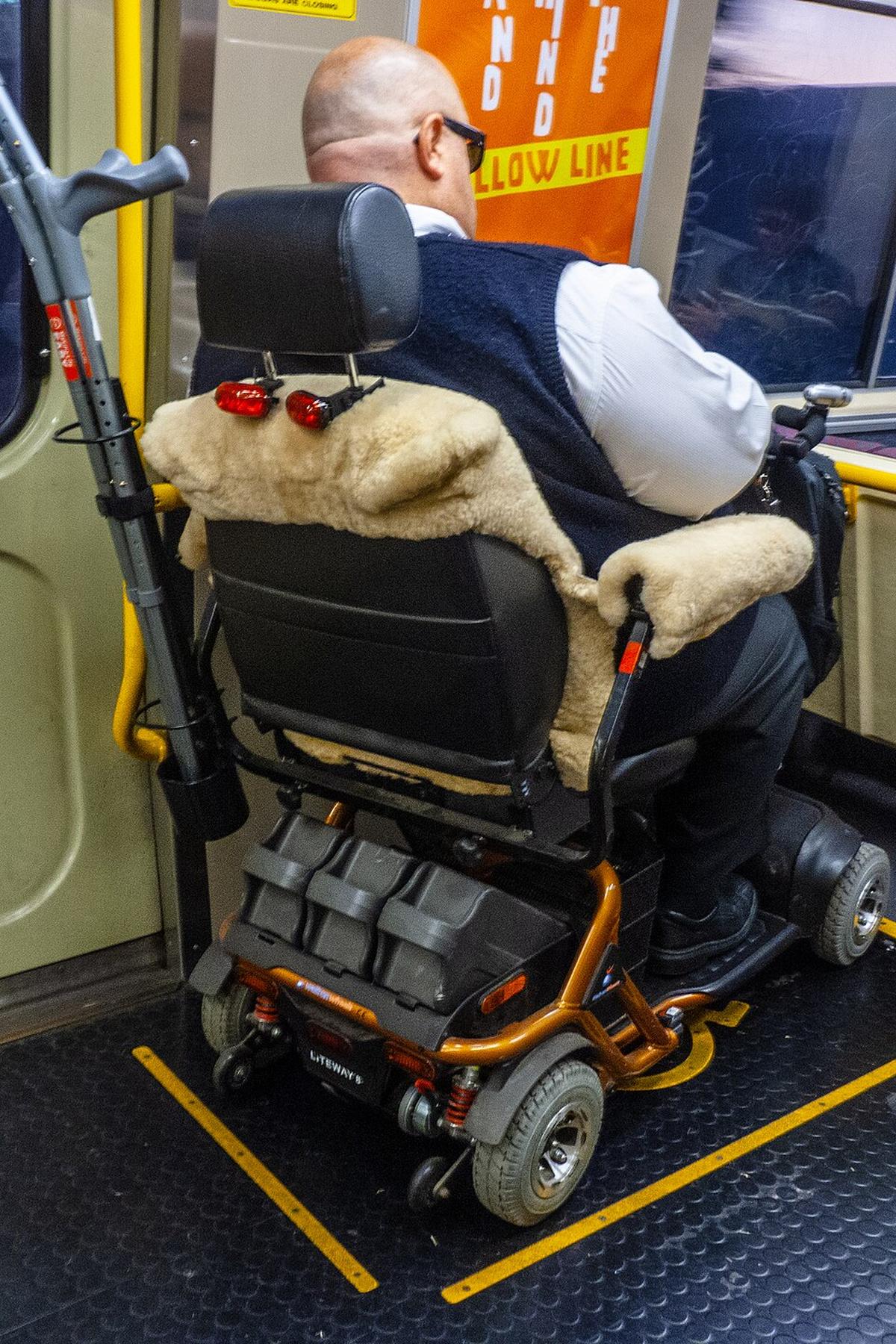

The Lightest Commuter Under 14 Kg: E-TWOW GT Sport
Weight is the decisive attribute for multi-modal riders who fold and carry onto trains, into lifts, or up stairs. The E-TWOW GT Sport, at 13.5 kg, is the lightest machine on this list that still qualifies as a commuter rather than a toy. Its category win is weight. The trade-off is ride comfort: it uses solid tyres and a proprietary suspension that works better than none, but every expansion joint and painted lane marking transmits through the stem. The real range of 30-40 km for an 85 kg rider beats the Unagi Model One Voyager (13.6 kg, 20-30 km real range) because the E-TWOW has a mechanical suspension that keeps the rider in control long enough to use the range. The Unagi has no suspension and punishes the rider on anything but smooth tarmac. Both use solid tyres, which eliminate punctures at the cost of transmitting every vibration to the stem and electronics, accelerating solder-joint fatigue in the controller. The E-TWOW carries an IP54 rating, which means splash resistance only. Do not ride it in sustained rain. The folded dimensions are tight enough for a backpack or a train overhead rack, and the single-action folding mechanism takes three seconds. If you carry your scooter more than you ride it, this is the pick. If you ride more than you carry, look at the Ninebot Max G30 below.
The Runner-Up: Fluid Mosquito
The Fluid Mosquito at 13.2 kg is lighter on paper, but its real range drops to 20-28 km for an 85 kg rider, and its cable-actuated disc brake requires frequent tension adjustment. The E-TWOW GT Sport’s proprietary suspension and slightly better range make it the stronger choice for daily use. The trade-off on the Mosquito is weight for range. You save 300 grams and lose roughly 10 km of real-world distance.
The Best Wet-Weather Commuter: Ninebot Max G30
Rain is the fastest way to kill an electric scooter. Water ingress kills controllers and BMS units, and the failure may not appear until days after exposure, when corrosion bridges a trace. The Ninebot Max G30 is the pick for wet-weather commuting because its IP rating is IPX5 for the body and IPX7 for the pack. No other scooter at its weight and price band matches that. The Xiaomi Electric Scooter 4 Ultra has an IP55 rating. The Niu KQi3 Pro is IP54. The Apollo City 2024 claims IP66, but at 29.5 kg it is nearly 10 kg heavier than the G30 and its real range of 35-50 km is comparable. The G30’s category win is water resistance. The trade-off is weight: 19.1 kg, which means you will not carry it up multiple flights of stairs daily. Its single-action folding mechanism takes three seconds, but the folded package is large enough that train riders will find it awkward. The self-sealing tubeless tyres are a durability advantage: they resist punctures without the ride harshness of solid tyres, and they hold pressure better than pneumatic tyres with inner tubes. The cable-actuated disc brake is adequate but requires pad replacement and tension adjustment. The real range of 40-55 km for an 85 kg rider is the best in this weight class. The Ninebot Max G30LP is 15% lighter at roughly 16.2 kg, but its pack is 30% smaller and its real range drops to 25-35 km. The LP is not the same machine. Buy the G30 for rain and range. Buy the LP only if weight is your absolute constraint and you accept the range penalty.
What IPX5 Actually Protects
The IPX5 rating covers the battery housing and motor. It does not cover the throttle, display, or cockpit electronics. No scooter is waterproof. After riding in rain, dry the throttle and display area with compressed air or a cloth. Store the scooter upright indoors to let any residual moisture drain. The G30’s reputation for surviving wet commutes comes from its sealed battery enclosure and conservative BMS design, not from magic. Treat it as weather-resistant, not weatherproof.
Commuter Electric Scooter Comparison: Ninebot Max G30 vs Niu KQi3 Max vs Apollo Go 2024
Three scooters occupy the same price band and target the same rider: a daily commute of 5-15 km total on mixed surfaces. The comparison comes down to which trade-off you can live with.
| Attribute | Ninebot Max G30 | Niu KQi3 Max | Apollo Go 2024 |
|---|---|---|---|
| Weight | 19.1 kg | 21.3 kg | 20.8 kg |
| Claimed Range | 65 km | 65 km | 50 km |
| Real Range (85 kg rider) | 40–55 km | 40–55 km | 30–40 km |
| IP Rating | IPX5 body / IPX7 battery | IP54 | IP66 |
| Brake Type | Cable-actuated disc | Cable-actuated disc | Cable-actuated disc |
| Tyre Type | Tubeless self-sealing | Tubeless | Tubeless |
| Fold Time | 3 seconds | 3 seconds | 5 seconds |
| Payload | Up to 100 kg | Up to 120 kg | Up to 120 kg |
Why the Ninebot Max G30 Wins for Range and Rain, the Niu for Deck Width and Stance
The Ninebot Max G30 and the Niu KQi3 Max are the two most compared scooters in this bracket. The G30 wins on real range and IP rating. The Niu wins on deck width and a slightly higher payload limit. The deck of the Niu KQi3 Max is wider, which gives a more stable stance under braking and reduces foot fatigue on longer rides. The G30’s narrower deck forces a side-on stance that reduces control when stopping from 25 km/h. The Niu’s cable-actuated disc brake is functionally equivalent to the G30’s. Both use tubeless tyres, which eliminate the inner tube as a failure point. The Niu’s IP54 rating is splash-resistant only. The G30’s IPX5 is jet-resistant. If you ride in rain more than once a month, choose the G30. If you ride on bike paths with smooth surfaces and want a more stable deck, choose the Niu. Neither is a bad choice. The Apollo Go 2024 costs more and weighs 20.8 kg with an IP66 rating that sounds better on paper but returns a real range of 30-40 km, which is 10 km less than the G30 and Niu in practice. The Go’s 5-second fold time is slower than the 3-second fold of both competitors. Its stem latch mechanism is proprietary, which means replacement parts are available only through Apollo. The G30 and Niu have aftermarket parts ecosystems. The Go does not. For most riders, the G30 or the Niu is the better buy.
Lightweight Folding Electric Scooter: What You Gain and Lose at Under 15 Kg
Ultralight scooters under 15 kg serve a specific rider: the multi-modal commuter who folds and carries more than they ride. The E-TWOW GT Sport at 13.5 kg, the Unagi Model One Voyager at 13.6 kg, and the Fluid Mosquito at 13.2 kg are the three contenders. The E-TWOW wins this category because its proprietary suspension actually works. The Unagi has no suspension and transmits every road imperfection through the solid tyres to the stem and rider. The Fluid Mosquito has a mechanical suspension but its real range of 20-28 km is the shortest of the three. The trade-off for ultralight weight is ride quality and range. None of these scooters should be your choice for a commute longer than 5 km each way. None should be ridden in rain. Their IP54 rating means splash resistance only. The stem folding mechanisms on all three are the highest-stress mechanical joints, and every one will develop play eventually. Tightening or replacing the clamp is the fix. The E-TWOW’s solid tyres de-bond from the hub under heat and shear stress, which causes the tyre to spin freely on the hub, leaving the rider with no drive and reduced braking. This is a known failure mode. Inspect the tyre-hub interface monthly. If you see separation, replace the wheel assembly.
Electric Scooter IP Rating for Wet Weather: Why IPX5 is the Baseline and IPX7 is the Gold Standard
The IP rating is the single most important specification for anyone who cannot choose their riding days. IPX4 means the battery housing resists splashing from any direction. IPX5 means it resists low-pressure jets. IPX7 means it survives immersion up to one metre for 30 minutes. No scooter carries an IPX7 rating for the whole vehicle. The Ninebot Max G30 and G2 carry IPX5 for the body and IPX7 for the pack. The Segway P65 and P100S carry the same split rating. The Xiaomi Electric Scooter 4 Ultra is IP55, which is functionally similar to IPX5. The Apollo City 2024 claims IP66, which is dust-tight and jet-resistant, but its 29.5 kg weight and real range of 35-50 km make it a different class of machine. The Niu KQi Air and Air X carry IP55, which is splash-resistant but not jet-resistant. The E-TWOW GT Sport and Fluid Mosquito are IP54, which is splash-resistant only. If you commute in a climate with regular rain, you need at least IPX5 on the battery and a plan to dry the cockpit electronics after each wet ride. The throttle and display are the failure points. Cover them with a plastic bag in heavy rain. This is not elegant. It works.
Electric Scooter Real Range for the Commuter: the 85 Kg Rider Baseline
Real range for an 85 kg rider at 25 km/h in moderate temperatures is the only number that matters for commute planning. The data below comes from owner reports collected from forums and community ride logs. It is not a lab test. It is what actual riders get. The Ninebot Max G30 returns 40-55 km. The Niu KQi3 Max returns 40-55 km. The Xiaomi Electric Scooter 4 Ultra returns 40-55 km. The Segway P100S returns 60-80 km. The Apollo City 2024 returns 35-50 km. The E-TWOW GT Sport returns 30-40 km. The Fluid Mosquito returns 20-28 km. The Unagi Model One Voyager returns 20-30 km. The Niu KQi3 Pro returns 30-40 km. The Niu KQi Air and Air X return 30-40 km. To calculate your own real range, take the claimed range, halve it, then subtract an additional 10% for every 10 kg over 60 kg you weigh. If you ride at full throttle rather than eco mode, subtract another 20%. If your route has hills, subtract another 15%. The result is a conservative estimate that will get you home. Scooter energy capacity is measured in watt-hours. Higher is better. The Ninebot Max G30 uses a 551 Wh unit. The Niu KQi3 Max uses a 486 Wh unit. The Segway P100S uses a 1,040 Wh unit. A 10% degradation in the first year is normal for cells without thermal management. Store the pack at 50-60% charge in a cool place to slow degradation. Never store it fully charged or in heat.
The Commuter Scooter Suits These Riders and Skips These
Electric scooters suit urban riders covering a last-mile gap of 3-8 km each way who need a machine that survives potholes, rain, and being folded twice daily. They suit multi-modal riders who carry the scooter onto trains or into an office, for whom weight, folded dimensions, and latch security are the decisive attributes. They suit parents buying for a teenager who need to understand speed limiting, build quality, and local legal requirements before looking at colours. They suit fleet operators evaluating bulk purchases who need duty-cycle data and parts availability. They suit first-time buyers who have never owned a personal electric vehicle and need the vocabulary to read a spec sheet honestly. Skip them if you want an e-bike, e-moped, or electric motorcycle. Those have different regulation, different failure modes, and different comparison attributes. Skip them if you need a mobility aid for a disability. These are recreational and commuter vehicles with no medical device certification. Skip them if you expect a weatherproof car replacement. Scooters are fair-weather vehicles with no crash protection and minimal cargo capacity. Skip them if you are shopping below the price band where hydraulic brakes and pneumatic tyres appear. Below that, the machines are functionally disposable and the research questions are different.
Common Questions
How do I know if a folding stem is safe on a commuter scooter?
The folding mechanism is the highest-consequence mechanical joint on the vehicle. Stem snap at the folding joint is caused by fatigue cracking in cast aluminium clamps, accelerated by riding with the clamp loose or over-tightened. Every scooter’s stem will develop play eventually. The fix is tightening or replacing the clamp. Before buying, check owner forums for documented stem failures on that specific model. The early Kaabo Mantis and some Apollo City units have failure histories. The Ninebot Max G30 has a well-proven mechanism with few reported failures. A scooter with a single-action folding mechanism that takes 3 seconds is generally simpler and more robust than a multi-step mechanism that takes 5 seconds.
What is the real-world range I can expect from a scooter that claims 65 km?
For an 85 kg rider at 25 km/h in moderate temperatures, expect 40-55 km. The claimed 65 km is measured with a 60 kg rider at 15 km/h on flat ground in eco mode with no stops. Real-world riding includes acceleration, braking, hills, wind, and temperature. Voltage sag under load reduces speed progressively as the pack drains. At 40% indicated charge, a scooter may not achieve its top speed. Plan your commute distance around real range, not claimed range, and add a 25% buffer for cold weather.
Can I ride a commuter scooter in the rain?
Yes, if the scooter has at least an IPX5 rating on the battery and you accept that the throttle and display may fail. IPX5 means jet-resistant. IPX4 means splash-resistant only. No scooter is truly waterproof. The Ninebot Max G30 with IPX5 on the body and IPX7 on the battery is the best wet-weather choice in the commuter class. After riding in rain, dry the throttle and display area with compressed air or a cloth. Store the scooter upright indoors to let residual moisture drain. Do not ride a scooter with an IP54 rating in sustained rain.
What is the difference between cable-actuated disc brakes and hydraulic disc brakes on a commuter scooter?
Cable-actuated disc brakes use a cable to pull the caliper. They require pad replacement and tension adjustment as the cable stretches and the pads wear. Hydraulic disc brakes use fluid pressure and stop harder with less hand fatigue, but they require bleeding and add weight. For a commuter scooter under 25 kg, cable-actuated disc brakes are adequate if maintained. For a scooter over 25 kg, hydraulic disc brakes are preferable because the stopping distance at 25 km/h with an 85 kg rider is longer than the 4 metres quoted in manufacturer tests. Real braking distance on dry asphalt is 6-8 metres.
Which scooter is best for a teenager commuting to school?
Speed limiting, build quality, and local legal age and helmet requirements matter more than top speed. The Ninebot Max G30 is a durable choice with a proven fleet pedigree, but its 19.1 kg weight may be heavy for a teenager to carry. The Niu KQi3 Max at 21.3 kg is wider and more stable. The E-TWOW GT Sport at 13.5 kg is light enough to carry but has solid tyres that are harsh on rough roads. Check local regulations: in the European Union, scooters are capped at 25 km/h and helmet rules vary by member state. In the United States, California requires a driver’s licence and helmet for minors. In Singapore, mandatory registration, a 25 km/h speed cap, a 20 kg weight limit, and a theory test apply. Never buy a scooter that can be software-unlocked to exceed the legal speed limit for the rider’s age and jurisdiction.
Read next
-
 Long Range Electric Scooters With Owner-Reported Distance at Real Rider Weight
Long-range electric scooters ranked by owner-reported distance at a real rider weight, not the manufacturer's 60 kg eco-mode claim, with battery capacity in watt-hours.
Long Range Electric Scooters With Owner-Reported Distance at Real Rider Weight
Long-range electric scooters ranked by owner-reported distance at a real rider weight, not the manufacturer's 60 kg eco-mode claim, with battery capacity in watt-hours.
-
 Best Electric Scooters for Adults: Commuter, Heavy Rider and Multi-Modal Picks
The best electric scooter for adults depends entirely on your commute: lightweight folders for train riders, durable tubeless models for daily abuse, and reinforced frames for heavier riders.
Best Electric Scooters for Adults: Commuter, Heavy Rider and Multi-Modal Picks
The best electric scooter for adults depends entirely on your commute: lightweight folders for train riders, durable tubeless models for daily abuse, and reinforced frames for heavier riders.
-
 Best Electric Scooter: The Models That Earn Their Spec Sheet in the Real World
The best electric scooter is the one whose real range, brake type, and stem durability match what the spec sheet promises. We compare the models that deliver.
Best Electric Scooter: The Models That Earn Their Spec Sheet in the Real World
The best electric scooter is the one whose real range, brake type, and stem durability match what the spec sheet promises. We compare the models that deliver.
-
 Best Electric Scooter Lights for Actually Seeing the Road at Night
Stock scooter lights are position markers, not headlights. The best electric scooter lights mount securely, survive rain, and project a beam you can actually ride by.
Best Electric Scooter Lights for Actually Seeing the Road at Night
Stock scooter lights are position markers, not headlights. The best electric scooter lights mount securely, survive rain, and project a beam you can actually ride by.