A Guide to Electric Scooters with Seats and What Changes When You Sit Down
Adding a seat to an electric scooter changes its legal status in the UK, Germany and California, and shifts handling in ways that reduce braking control.
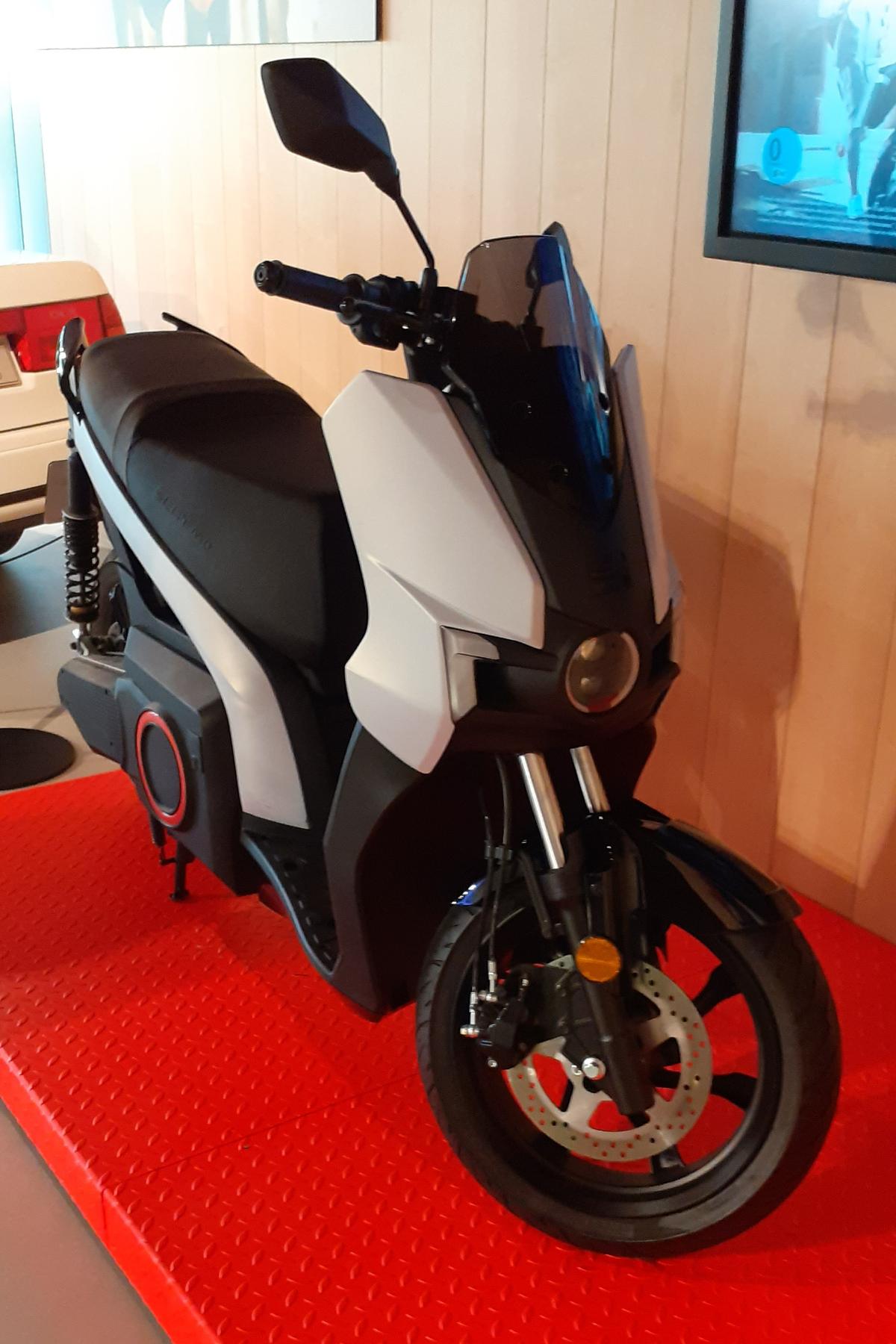

Electric Scooters with Seats Change More Than Your Riding Position
The assumption is simple: a seat makes an electric scooter more comfortable, more like a bike, easier for longer rides. The reality is the opposite. Adding a seat shifts the centre of gravity backward, reduces front-wheel traction under braking, and in the UK, Germany, and California can reclassify the machine from a legal personal transporter to an unregistered moped or motorcycle. That means you need a licence, insurance, and type-approval you almost certainly do not have. Before you search for an aftermarket seat post or look at seated scooters sold as a bundle, understand what a seat does to handling, range, and the law.
What a Seat Does to Centre of Gravity, Steering Geometry, and Braking
A standing rider has their centre of gravity roughly above the deck, between the wheels. That position lets them shift weight forward under braking and lean into turns. A seated rider drops the centre of gravity rearward by 20 to 30 cm and shifts it back behind the steering axis. That rearward bias reduces the load on the front tyre exactly when you need it most: during hard braking. On a model with a mechanical or hydraulic disc brake, the front wheel does 70 to 80% of the stopping work. With a seat pushing weight off that wheel, braking distance on dry asphalt stretches out. The steering geometry also changes. The rider cannot lean independently of the handlebars, so the scooter becomes less responsive to counter-steer inputs at speed above 15 km/h.
Add Seat to Electric Scooter: the Aftermarket Clamp is a New Failure Point
Most aftermarket solutions clamp a seat post to the deck or the folding mechanism. The clamp itself becomes the highest-stress mechanical joint on the machine, replacing the stem folding mechanism as the part most likely to fail. A clamp that loosens under vibration causes the seat to rock side to side. That introduces a wobble that feeds back into the handlebars. On a Xiaomi M365 or a Ninebot Max G30, the folding mechanism already develops play over 2000 km. Adding a seat clamp multiplies the load on that joint. The rider's weight now acts through a lever arm above the deck rather than directly on it. The documented failure mode is a snapped or bent seat post bracket, not a catastrophic stem snap, but a sudden loss of seat support at 25 km/h is a crash.
Seated Electric Scooter Legal: How Three Jurisdictions Reclassify the Vehicle
United Kingdom
Private electric scooter use on public roads is illegal regardless of seat presence. The Department for Transport's 2024 guidance states that seated e-scooters are not permitted in rental trials. If used on a public road, a seated scooter is classified as a motor vehicle requiring registration, insurance, MOT, and a driving licence. It cannot meet type-approval requirements for road use.
Germany
A seated scooter with a maximum speed above 20 km/h is disqualified from the "Elektrokleinstfahrzeug" (eKFV) regulation that covers stand-up scooters. It becomes a moped or motorcycle under L1e or L3e classification, requiring type-approval, an insurance plate, and a driving licence (category AM or higher). The German Federal Ministry of Transport publishes the eKFV criteria. A seat that is not integral to a standing design invalidates the exemption.
California
California Vehicle Code section 407.5 defines a motorized scooter as a device with a floorboard designed to be stood upon. A fixed seat removes the device from that definition and reclassifies it as a moped or motor-driven cycle, requiring registration with the DMV, a motorcycle licence, and a helmet for all riders. The California Highway Patrol enforces this at the officer's discretion. Impound is a likely outcome for a rider stopped on a seated scooter.
Scooter Seat Attachment: What to Look for in the Clamp and Post Design
If you are buying a seat attachment anyway, the clamp diameter must match your scooter's stem or deck tube exactly. Most aftermarket posts use a 28 to 32 mm clamp. The Xiaomi M365 stem is 32 mm at the base. The Ninebot Max G30 is 35 mm. A generic clamp that relies on rubber shims will slip under the vibration of solid or pneumatic tyres on rough asphalt. Look for a two-bolt aluminium clamp with a pinch bolt that engages a machined groove in the post. Even then, the rider weight limit of the scooter itself is typically 100 kg. A seated rider's additional force through the lever arm means that limit should be derated by 15 to 20 kg. The seat itself should be bicycle-style with a narrow profile, not a wide cruiser saddle. A wide seat catches the inside of your thighs when you put a foot down.
Xiaomi M365 Seat: the Model That Created the Aftermarket
The Xiaomi M365 is the reference scooter that defined the consumer category. Its vast parts ecosystem includes dozens of aftermarket seats. The seat post clamps to the rear of the deck between the rear mudguard and the folding latch. That position places the rider's weight over the rear axle, which unloads the front wheel further than a stem-mounted seat would. The rear mudguard is the structural weakness of the M365. Using it as a foot-rest or leaning the scooter on it fractures the plastic. A seat that adds weight to the rear section of the frame accelerates fatigue in the deck weld near the folding mechanism. Real range for an 85 kg rider on an M365 with a seat drops from 18 to 22 km to about 15 to 18 km. The seated posture reduces your ability to absorb road shock through your legs, which increases rolling resistance on the rear pneumatic tyre.
How a Seat Reduces Range and Damages Suspension and Tyres
Your Legs Are the Missing Suspension
A seat changes how the scooter interacts with the road surface. A standing rider uses their legs as a secondary suspension, flexing their knees to absorb bumps. A seated rider transmits every impact through the seat post into the frame. That increases stress on the suspension, whether spring, rubber cartridge, or none, and on the tyres. On a model with solid tyres, which already transmit every vibration to the stem and deck, a seat accelerates solder-joint fatigue in the controller and battery management system.
Pinch Flats and Real Range
On a scooter with pneumatic tyres, the seated posture increases the risk of pinch flats. The rider is not rising off the seat to unweight the tyres over kerbs. The claimed range of 45 km for a scooter like the Ninebot Max G30 assumes a 60 kg rider on flat ground in eco mode. An 85 kg rider seated on the same scooter at 25 km/h in moderate temperatures gets 18 to 25 km. The seat's effect on rolling resistance and the inability to shift weight forward on hills cuts another 3 to 5 km from that real range.
Rider Weight Limit, Kerb Weight, and Deck Flex Under Seated Load
Every scooter has a published rider weight limit, typically 100 kg. That limit assumes a standing rider whose weight is distributed across both feet and absorbed through the deck and stem. A seated rider concentrates their entire weight on a single point: the seat post clamp on the deck or stem. That point loading accelerates deck flex fatigue on narrow-deck models like the Xiaomi M365 or the Unagi Model One, where the deck is less than 15 cm wide. The kerb weight of the scooter itself matters more when you are seated. You cannot use your body weight to steer through low-speed turns. A 30 kg scooter like the Dualtron Thunder becomes hard to balance at walking pace when seated. An ultralight scooter like the E-TWOW GT at 10.5 kg feels unstable when seated. The wheelbase is too short to keep the front wheel planted through turns.
Folding Mechanism and Stem Wobble Under Seated Riding
The folding mechanism is the highest-consequence mechanical joint on any scooter. A collar clamp or pin-lock develops play over time, and every stem does eventually. That feels like handlebar looseness when you are standing. When you are seated, that play amplifies. Your body weight acts through the stem at a longer lever arm. The result is a wobble that feeds into the handlebars at 20 to 25 km/h, and the wobble worsens as the clamp loosens. On models with a documented stem-folding failure history, such as the early Kaabo Mantis stem design, a seat adds enough force to accelerate the fatigue crack in the cast aluminium clamp. The Ninebot Max G30 and the Xiaomi M365 have more robust folding mechanisms. Neither is designed for a seat. The bolt loosening from vibration that affects almost all brands will eventually require tightening or replacement of the clamp at the folding latch.
Suspension Type and Braking Distance on a Seated Scooter
Hydraulic suspension is the only suspension type that can compensate for the seated rider's inability to absorb bumps through their legs. Rubber cartridge suspensions, found on Dualtron models, degrade silently and become stiffer over time. A seated rider on degraded rubber cartridges feels every expansion joint as a jarring hit through the seat. Spring suspension, common on the Apollo City and Vsett models, bottoms out more easily under seated load. The spring rate is calibrated for a standing rider's weight distribution. Braking distance on a seated scooter with hydraulic disc brakes is still 8 to 10 metres from 25 km/h for an 85 kg rider on dry asphalt. Standing, expect 6 to 8 metres. Electronic-only braking, found on rental-style scooters like the Unagi Model One, fails when the battery is above 90% charge. Regenerative braking cannot engage. On a seated scooter with no mechanical brake backup, that is a loss of all stopping power.
Aftermarket Seat Post Selection and Clamp Diameter Compatibility
The aftermarket seat post must match the scooter's deck or stem clamp diameter exactly. For the Xiaomi M365 and 1S, the deck tube is 32 mm. For the Ninebot Max G30, the stem tube tapers from 35 mm at the base to 32 mm at the handlebars. For the Apollo City, the stem is 35 mm throughout. A post with an adjustable clamp that uses rubber or plastic shims will slip under vibration within 50 km of riding. The correct design is a machined aluminium post with a two-bolt clamp that engages a groove in the post to prevent rotation. Even then, the post introduces a new failure point at the clamp-to-frame interface. On scooters with a detachable battery in the stem, such as the Turboant X7, a seat post that clamps to the stem blocks access to the battery release latch.
Models That Come with a Factory Seat Versus Aftermarket Add-Ons
Very few scooters intended for adult commuting come with a factory seat. The list of models with a fixed seat sold as a seated scooter includes the Razor E300, Razor E200, Razor EcoSmart Metro, Razor Pocket Mod, Voro Motors EMOVE RoadRunner and RoadRunner V2, Voro Motors EMOVE Roadster, and the Glion Balto. These are heavy, slow, and designed for leisure use rather than commuting. The Turboant X7 Pro and Hiboy S2 Pro and S2 Max offer detachable seats as a factory accessory. The manufacturer part names, "Turboant Detachable Seat" and "Hiboy S2 Seat", are sold as bundles, not as integrated designs. No Xiaomi, Ninebot, NIU, Apollo, Kaabo, Dualtron, Inokim, E-TWOW, or Segway model intended for adult commuting has a factory seat option. Every seat on a Ninebot Max G30, Xiaomi M365, or Apollo City is aftermarket.
Germany, France, Spain, Netherlands: EU Member State Variation on Seat Classification
Germany and the eKFV
Regulation (EU) No 168/2013 on type-approval of L-category vehicles governs how a seated electric scooter is classified across the European Union. A scooter with a seat and a maximum design speed of 25 km/h falls into L1e-A (powered cycle) or L1e-B (two-wheel moped) depending on the member state's interpretation. Germany's eKFV regulation disqualifies a seated scooter from the stand-up exemption. The machine becomes a moped requiring an insurance plate and a driving licence.
France, Spain, and the Netherlands
France's EDPM rules allow a removable seat if the machine is primarily designed as a standing scooter. A fixed seat classifies it as a cyclomoteur. Spain classifies seated scooters as VMP (vehículo de movilidad personal) only if the seat is removable. A fixed seat means L1e moped. The Netherlands does not permit seated scooters as "bijzondere bromfiets" under current rules. They are classified as bromfiets (moped) requiring type-approval, registration, helmet, and a driving licence. In all these jurisdictions, the legal risk is that a rider stopped on a seated scooter faces impound, fines, and potential points on a driving licence.
US State Classification: California, New York, Texas, Florida, and Beyond
The US Consumer Product Safety Commission defines electric scooters as devices with handlebars and a floorboard designed to be stood upon. A seat can remove the device from CPSC jurisdiction and place it under NHTSA regulation as a motor vehicle. California Vehicle Code section 407.5 classifies a seated scooter with a fixed seat as a moped or motor-driven cycle, requiring DMV registration, a motorcycle licence, and a helmet. New York state law classifies a fixed-seat scooter as a limited use motorcycle if the speed exceeds 15 mph, requiring registration, insurance, and a licence. Texas classifies a seated scooter as a moped if the engine displacement equivalent is 50 cc or less, requiring registration and a licence. Florida requires a Class E licence or motorcycle endorsement for a seated scooter. At least 15 US states explicitly define e-scooters as devices designed to be stood upon. A seat triggers reclassification. The rider who buys a seat attachment thinking it is an accessory may be riding an unregistered motor vehicle.
Common Questions
Is it legal to add a seat to my Xiaomi M365?
On private land with the owner's permission, yes. On any public road in the UK, Germany, California, or most of the EU, no. The seat reclassifies the scooter as a moped or motorcycle requiring registration, insurance, and a driving licence you likely do not have.
Does a seat make an electric scooter more stable?
No. A seated rider lowers and rearward-shifts the centre of gravity, which reduces front-wheel traction under braking and makes the steering less responsive. The scooter is harder to balance at low speed and more prone to wobble at high speed.
Can I use a seat on a rental scooter?
No. Government rental e-scooter trials in the UK, Germany, and other EU countries do not permit seated scooters. Attaching a seat to a rental scooter also violates the rental agreement and reclassifies the vehicle as unregistered.
What is the real range loss from riding seated?
3 to 8 km for an 85 kg rider at 25 km/h. The seated posture increases rolling resistance and prevents the rider from shifting weight forward on hills. On a scooter with a claimed 45 km range, expect 15 to 18 km seated versus 18 to 25 km standing.
Read next
-
 Long Range Electric Scooters With Owner-Reported Distance at Real Rider Weight
Long-range electric scooters ranked by owner-reported distance at a real rider weight, not the manufacturer's 60 kg eco-mode claim, with battery capacity in watt-hours.
Long Range Electric Scooters With Owner-Reported Distance at Real Rider Weight
Long-range electric scooters ranked by owner-reported distance at a real rider weight, not the manufacturer's 60 kg eco-mode claim, with battery capacity in watt-hours.
-
 Best Electric Scooters for Adults: Commuter, Heavy Rider and Multi-Modal Picks
The best electric scooter for adults depends entirely on your commute: lightweight folders for train riders, durable tubeless models for daily abuse, and reinforced frames for heavier riders.
Best Electric Scooters for Adults: Commuter, Heavy Rider and Multi-Modal Picks
The best electric scooter for adults depends entirely on your commute: lightweight folders for train riders, durable tubeless models for daily abuse, and reinforced frames for heavier riders.
-
 Best Electric Scooter: The Models That Earn Their Spec Sheet in the Real World
The best electric scooter is the one whose real range, brake type, and stem durability match what the spec sheet promises. We compare the models that deliver.
Best Electric Scooter: The Models That Earn Their Spec Sheet in the Real World
The best electric scooter is the one whose real range, brake type, and stem durability match what the spec sheet promises. We compare the models that deliver.
-
 Best Electric Scooter Lights for Actually Seeing the Road at Night
Stock scooter lights are position markers, not headlights. The best electric scooter lights mount securely, survive rain, and project a beam you can actually ride by.
Best Electric Scooter Lights for Actually Seeing the Road at Night
Stock scooter lights are position markers, not headlights. The best electric scooter lights mount securely, survive rain, and project a beam you can actually ride by.