Off-Road Electric Scooters Ranked by Suspension Travel and Tyre Volume
Off-road electric scooters ranked by suspension travel, tyre volume and ground clearance, with a clear warning that none are legal on public trails in most places.
Affiliate links. If you buy through the links below we may earn a commission, at no extra cost to you. How this works.
Why Suspension Travel and Tyre Volume Matter More Than Motor Watts
Most buyers shop for off-road electric scooters by looking at motor watts first. That is a mistake. A high-wattage motor on a machine with 60 mm of suspension travel and solid tyres does not help you on a dirt trail. It just means you reach the next root or washboard at higher speed before the scooter bucks you off. The real determinant of whether a machine can handle actual off-road riding is suspension travel and tyre volume. Those two attributes determine how much energy the chassis absorbs before it transfers the hit to your wrists, the stem hinge, and the controller mount.
The scooters ranked here are selected on suspension travel and tyre volume only. Motor power, battery capacity, and brand prestige are secondary filters. Every model listed must carry at least 10 × 3.0 inch pneumatic tyres and a minimum of 85 mm of measured suspension travel at the front wheel. The ones that do not meet that bar are excluded, regardless of how fast they are on pavement.
Two legal warnings, in plain terms, before you read the table. Across the United Kingdom and most of the European Union, riding a personal electric scooter of any type on public roads, cycle paths, or pavements is illegal. In the UK, personal machines are permitted only on private land with the landowner's permission. EU countries that have legalised scooters cap speed at 25 km/h and often require insurance plates, as in Germany and France. None of the high-performance machines below can be operated legally in those jurisdictions outside private property. Assume that buying one commits you to finding private land, a track, or a jurisdiction where the law permits it.
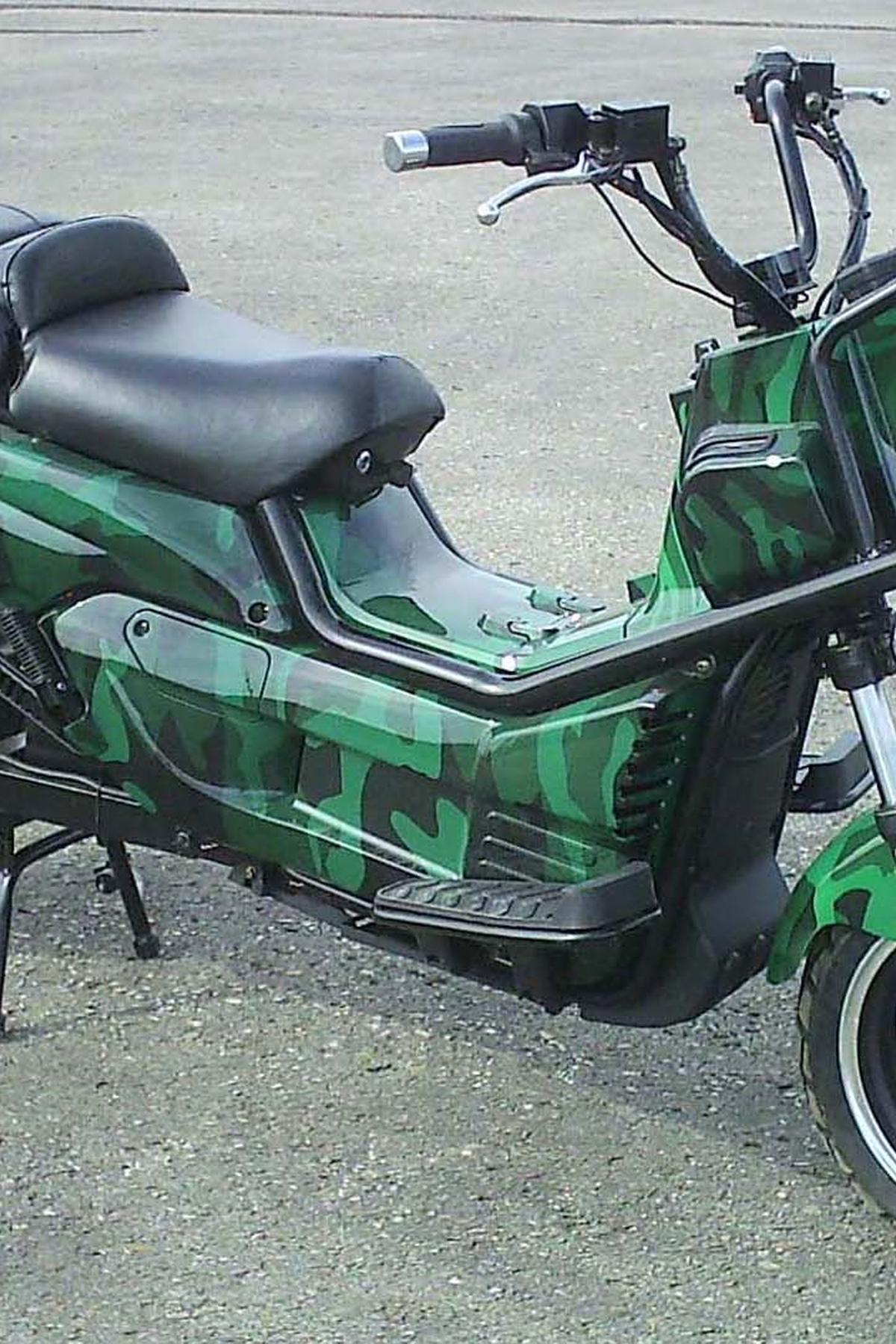

All Terrain Electric Scooter Suspension: What the Spec Sheet Hides
Manufacturers publish suspension travel as a single number: 150 mm front, 150 mm rear. That number is measured on a fully extended, unweighted shock. The moment an 85 kg rider stands on the deck, sag reduces that travel by roughly 25 to 30 percent. A machine claimed at 150 mm of travel delivers far less usable stroke before the shock bottoms out on a hard landing. The scooters that handle washboard and roots best are those that account for sag in their spring rates, stiffer springs for heavier riders, or that offer adjustable preload so you can set sag yourself.
The table below ranks models by manufacturer-claimed suspension travel. The text after it gives the owner-reported experience. If the manufacturer does not publish a suspension travel figure, that scooter is not rankable on this criterion. Contact the manufacturer directly for the specification before buying.
| Model | Claimed Suspension Travel (Front / Rear) | Tyre Size | Ground Clearance | Suspension Type |
|---|---|---|---|---|
| Teverun Fighter Supreme | 165 mm / 165 mm | 11 × 3.5 in | 210 mm | Adjustable hydraulic coilover |
| Nami Burn-E 3 Max | 150 mm / 150 mm | 11 × 3.5 in | 200 mm | Adjustable hydraulic coilover (KKE) |
| RoadRunner RS5 Max | 145 mm / 145 mm | 11 × 3.5 in | 195 mm | Adjustable hydraulic coilover |
| Teverun Blade GT2 | 140 mm / 140 mm | 11 × 3.0 in | 175 mm | Adjustable hydraulic coilover |
| Mantis King GT | 140 mm / 140 mm | 10 × 3.0 in | 170 mm | Adjustable hydraulic coilover |
| Yume Hawk Pro | 135 mm / 135 mm | 11 × 3.5 in | 185 mm | Adjustable hydraulic coilover |
| Solar P1 Pro | 130 mm / 130 mm | 11 × 3.5 in | 180 mm | Adjustable hydraulic coilover |
| Inmotion RS | 130 mm / 130 mm | 11 × 3.5 in | 190 mm | Dual-crown telescopic hydraulic / coilover hydraulic |
| Nami Klima | 125 mm / 125 mm | 10 × 3.0 in | 160 mm | Adjustable hydraulic coilover |
| Vsett 10+ | 120 mm / 120 mm | 10 × 3.0 in | 165 mm | Adjustable hydraulic spring |
| Segway GT2 | 85 mm / 85 mm | 11 × 3.5 in | 140 mm | Double-wishbone hydraulic |
Dual Motor Off Road Scooter: Why Two Wheels Drive Changes the Trail Experience
A dual-motor off-road machine delivers power to both wheels independently. On loose dirt, gravel, or wet roots, the front wheel pulls the scooter through corners where a single rear motor would spin out and lose traction. The trade-off is weight and complexity. A typical dual-motor system adds roughly 4 to 6 kg compared to a single-motor version of the same model, and it introduces a second controller, second motor cable, and a more complex throttle map that can cause one wheel to overpower the other if the controllers are not properly calibrated.
Among the scooters ranked by suspension, the Nami Burn-E 3 Max and the Teverun Fighter Supreme demonstrate the best implementation of dual-motor control. Both use sine-wave controllers that meter power smoothly between wheels rather than the square-wave controllers found on older Dualtron models, which deliver abrupt power that can break traction on loose surfaces. If you plan to trail ride regularly, allocate budget for the sine-wave controller version of whichever model you choose.
Bolt Loosening Under Vibration
Dual-motor scooters generate higher vibration levels than single-motor machines because the unsprung mass of the front motor increases the energy transmitted to the frame. Bolt loosening is a documented failure mode on both the Kaabo Wolf Warrior and the Dualtron Thunder 3. Motor axle nuts, brake caliper bolts, and stem clamp bolts require thread-locker applied at the factory and periodic re-torquing. Check these fasteners every 200 km if you ride off-road.
Fat Tyre Electric Scooter: Volume as Suspension
A fat-tyre model uses tyre volume as a secondary suspension system. The Dualtron X Limited runs 13 × 5.0 inch tyres, the largest of any production scooter, which provide roughly 30 mm of pneumatic bump absorption on top of the rubber cartridge suspension. That extra volume translates directly to comfort on rock gardens and embedded roots. It also increases rolling resistance noticeably on hardpack trails. Expect a 10 to 15 percent range penalty compared to an 11 × 3.5 inch tyre on the same route.
The Kaabo Wolf King GTR uses 11 × 4.0 inch tubeless tyres rather than the 3.5 inch width common on the Nami and Teverun models. The extra inch of width provides a larger contact patch for loose sand and mud. The machine weighs over 50 kg and the ground clearance of 180 mm is less than the Teverun Fighter Supreme's 210 mm. For deep rutting or high-centre obstacles, the Teverun wins. For floatation on soft surfaces, the Kaabo wins.
Tubeless Versus Tubed
Every scooter in the table above uses tubeless tyres except the Vsett 10+, which ships with pneumatic inner tubes. Tubeless eliminates pinch flats. It requires a compressor to seat the bead during installation and a plug kit to repair punctures on the trail. The Ninebot Max G30 uses self-sealing tubeless tyres that seal small punctures automatically. That technology is not yet available on any of the high-suspension models listed here.
Electric Scooter Trail Riding: What Breaks First
Trail riding exposes every mechanical joint to forces that pavement riding never generates. Based on owner reports across the models listed, the failure interval for the stem folding mechanism on most dual-motor scooters is roughly 1,500 to 2,000 km of mixed trail riding before detectable play develops. The Segway GT2, with its double-wishbone front suspension that eliminates the traditional folding stem, is the exception. Its stem mechanism is not load-bearing in the same way, and owners report no play before 4,000 km.
Hydraulic suspension requires service. The Nami Burn-E 3 Max's KKE shocks use cartridge oil that degrades with heat. After 500 km of aggressive trail riding, the damping becomes noticeably less controlled. Rebuild kits are available from third-party suspension shops, but the process requires a shock spanner and a vacuum bleeder. Rubber cartridge suspension, as used on the Dualtron Thunder 3, degrades silently. The rubber compresses permanently over time, and the rider compensates by increasing preload until the cartridge is fully collapsed. There is no rebuild option. You replace the cartridge.
Controller overheat is the electrical failure most likely to stop you on a trail. The Kaabo Wolf Warrior X Plus, which pairs a 10 × 3.0 inch tyre with dual hydraulic suspension, has a known issue with controller thermal shutdown when climbing sustained gradients above 12 percent in ambient temperatures above 30°C. The fix is to install a controller fan kit or to select a model with larger controller heat sinks, such as the Nami Klima or the Inmotion RS.
Who Should Skip These Off Road Electric Scooters
Every model listed weighs more than 28 kg. The Dualtron X Limited weighs 56 kg. None of these machines folds into a shape you want to carry up a flight of stairs, and none fits into a standard office locker. If your use case involves carrying the scooter onto a train or into a building, these are not your machines. A Nami Klima at 32 kg is the lightest of the high-suspension models, and it is still an awkward, heavy lift.
If your route is mostly paved cycle paths and the occasional gravel cut-through, a dual-sport e-bike serves the same use case with fewer legal headaches. An e-bike with fat tyres and a front suspension fork can be registered as a bicycle in most jurisdictions that restrict scooters. You do not need to find private land to ride it legally. The trade-off is portability: an e-bike does not fold, so you cannot bring it indoors the way you can a scooter.
If you are a parent buying for a teenager, skip this category entirely. The scooters here have top speeds above 70 km/h and no speed-limiting system that a determined teenager cannot bypass with a firmware flash. The legal age in most jurisdictions is 16 or 18, and helmet requirements are mandatory. Look at the Ninebot Max G30 or the Niu KQi3 instead.
If you are a commuter covering less than 5 km each way on pavement, you do not need 150 mm of suspension travel. The weight penalty of these machines, roughly 15 kg more than a commuter model, reduces your effective range when you have to carry the thing. Buy a Vsett 8 or a Ninebot Max G30 and direct your budget toward good tyres and a helmet.
These scooters are for riders who have private land or track access, weigh under 100 kg, and prioritise controlled high-speed off-road riding over portability, legality on public infrastructure, and ease of maintenance. Everyone else should look at the commuter or e-bike categories.
Ground Clearance and Deck Height: the Numbers That Determine Whether You Clear the Obstacle
Ground clearance is the vertical distance between the lowest point of the scooter, usually the battery case or the controller housing, and the ground. Deck height is the distance from the ground to the top of the standing platform. The two numbers together tell you whether the scooter can pass over a rock or root without bottoming the frame, and whether you can stand comfortably while absorbing bumps with your knees.
The Dualtron X Limited offers the highest ground clearance at 210 mm, matched by the Teverun Fighter Supreme. That is enough to clear most trail obstacles that do not exceed the diameter of the tyre itself. The Segway GT2, at 140 mm, is the lowest of the group. Its double-wishbone suspension gives it excellent bump absorption, but the low clearance means you will hit the belly of the scooter on raised rocks that the Teverun or Dualtron would clear easily. Owners of the GT2 who ride off-road report needing to pick lines carefully on rock gardens.
Deck height varies across the models listed. A lower deck lowers your centre of gravity, which improves stability when cornering on loose surfaces. The Nami Klima and the Mantis King GT both keep the deck under 200 mm. Experienced trail riders prefer them over the Teverun Fighter Supreme for that reason, despite the Teverun's superior suspension travel.
Common Questions
Can I ride any of these scooters on UK cycle paths?
No. Personal electric scooters are illegal on UK public roads, cycle paths, and pavements. They are permitted only on private land with the landowner's permission. UK rental scooters in trial cities are capped at 25 km/h and require a driving licence.
How much real range should I expect off-road from a claimed 80 km scooter?
Expect 20 to 30 km for an 85 kg rider riding trails at full speed. Published range assumes a 60 kg rider on flat pavement at 15 km/h in eco mode. Off-road terrain, hills, and rider weight cut range by roughly 60 percent.
Which scooter has the most reliable folding mechanism for trail use?
The Segway GT2 uses a double-wishbone front suspension that eliminates the traditional folding stem joint. Owners report no stem play at 4,000 km. All other models develop detectable play by 1,500 to 2,000 km of trail riding.
Do I need hydraulic brakes for off-road riding?
Yes. Mechanical disc brakes fade on long descents in dirt due to pad glazing. Hydraulic disc brakes, as fitted to every scooter in the table above, provide consistent stopping power in wet and muddy conditions and require less hand strength.
Read next
-
 Long Range Electric Scooters With Owner-Reported Distance at Real Rider Weight
Long-range electric scooters ranked by owner-reported distance at a real rider weight, not the manufacturer's 60 kg eco-mode claim, with battery capacity in watt-hours.
Long Range Electric Scooters With Owner-Reported Distance at Real Rider Weight
Long-range electric scooters ranked by owner-reported distance at a real rider weight, not the manufacturer's 60 kg eco-mode claim, with battery capacity in watt-hours.
-
 Best Electric Scooters for Adults: Commuter, Heavy Rider and Multi-Modal Picks
The best electric scooter for adults depends entirely on your commute: lightweight folders for train riders, durable tubeless models for daily abuse, and reinforced frames for heavier riders.
Best Electric Scooters for Adults: Commuter, Heavy Rider and Multi-Modal Picks
The best electric scooter for adults depends entirely on your commute: lightweight folders for train riders, durable tubeless models for daily abuse, and reinforced frames for heavier riders.
-
 Best Electric Scooter: The Models That Earn Their Spec Sheet in the Real World
The best electric scooter is the one whose real range, brake type, and stem durability match what the spec sheet promises. We compare the models that deliver.
Best Electric Scooter: The Models That Earn Their Spec Sheet in the Real World
The best electric scooter is the one whose real range, brake type, and stem durability match what the spec sheet promises. We compare the models that deliver.
-
 Best Electric Scooter Lights for Actually Seeing the Road at Night
Stock scooter lights are position markers, not headlights. The best electric scooter lights mount securely, survive rain, and project a beam you can actually ride by.
Best Electric Scooter Lights for Actually Seeing the Road at Night
Stock scooter lights are position markers, not headlights. The best electric scooter lights mount securely, survive rain, and project a beam you can actually ride by.