Full-face helmets
Every model reviewed against the same specifications, with the manufacturer's claim and the owner-reported figure kept apart.
Two hundred and twenty-four models were reviewed on this domain between 2022 and 2025, against a template of twenty-one headings that mostly ran to two sentences each. The specifications were the part worth keeping. Everything below is filed under the same twenty fields, which is what makes one model comparable to another rather than merely adjacent to it on a list.
Where a number came from is recorded alongside the number. A top speed is almost always the manufacturer’s claim, measured by the manufacturer, on a rider they chose; a range figure is almost never achievable by anyone who weighs more than that rider or rides anywhere with hills. Those are different kinds of fact and this site does not print them in the same typeface.
How to read a specification sheet
Watts sell scooters and brakes stop them. A dual-motor machine quoting 3,200 peak watts will out-accelerate almost anything at a light and will still take longer to stop from 30 mph than a well-braked commuter does from 20. Read the braking row first, then the tyre row, then the weight - because the weight is what decides whether you ever carry it up a flight of stairs, and a scooter you will not carry is a scooter you will not use.
The range row deserves the same suspicion. A quoted range is measured at a light rider weight, on flat ground, in the slowest mode, at a temperature nobody commutes in. Two thirds of the claim is a reasonable planning figure for most adults; half of it is the honest one in winter. That is why the range row on every page here is labelled with where the number came from, and why the owner-reported figure is the one worth planning around.
What the labels on each number mean
Every value in every specification table on this site carries its source. Manufacturer is the maker’s own claim, measured by them, on a rider they chose. Owner reported is aggregated from people who bought the machine and is always a range rather than a point. Independent is a named third-party measurement.
Nobody writing here has ridden these machines, and the site does not pretend otherwise. What it does instead is keep the three kinds of number apart, so a reader can see at a glance which figures are advertising and which are evidence. That distinction is the whole reason this catalogue exists, and it is enforced in the database rather than in an editorial guideline: a published specification with no stated source is refused.
Affiliate links. If you buy through the links below we may earn a commission, at no extra cost to you. How this works.

Subjects in Full-face helmets
-
 Arai Corsair-X
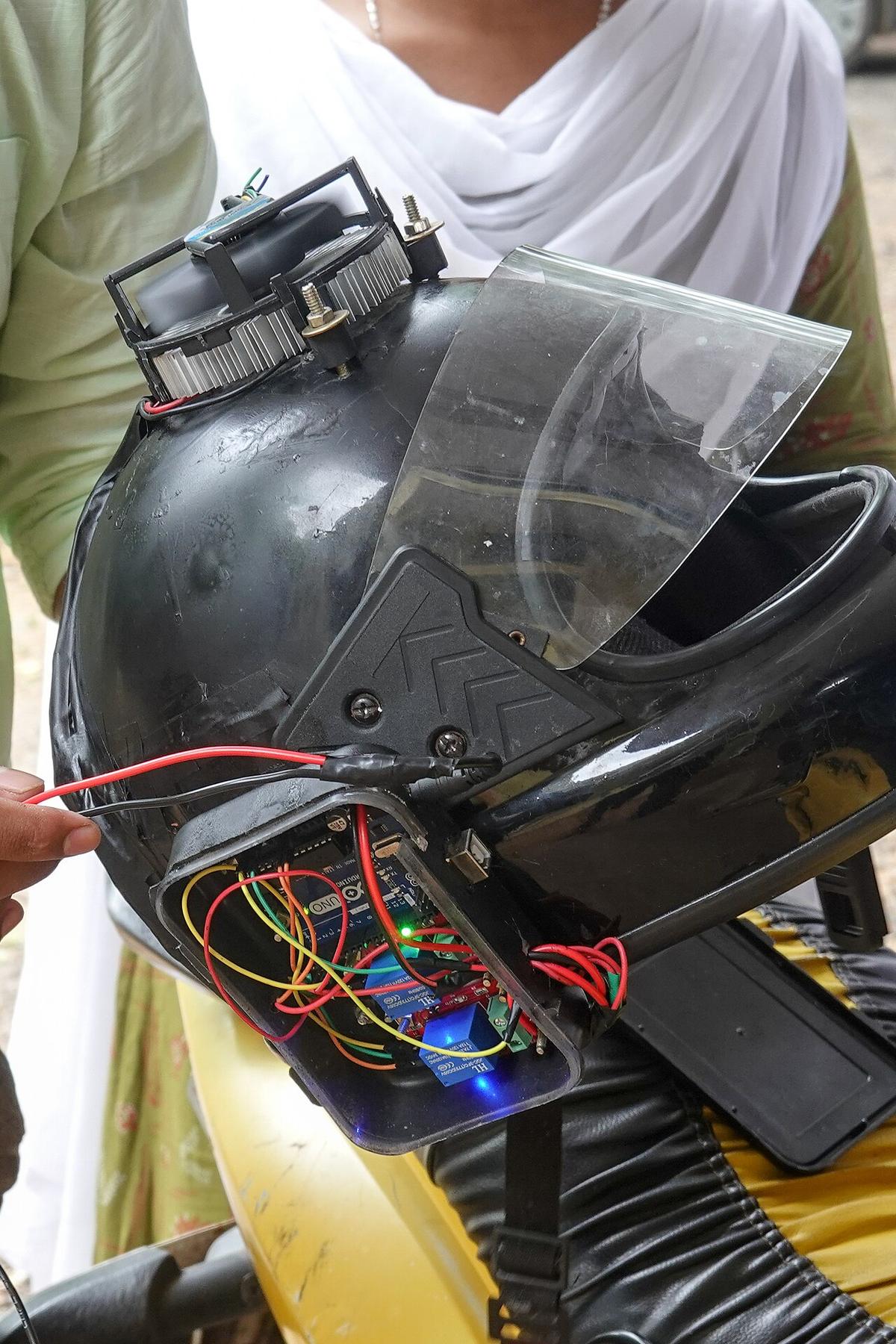
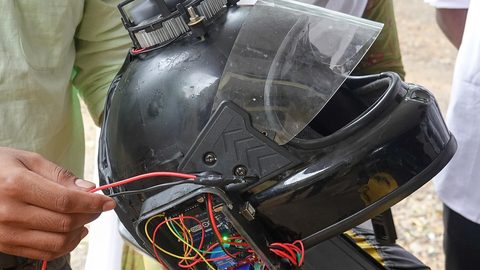
What Arai Corsair-X claims, what owners report, and the one trade-off that decides whether it is the right machine. This Photo was taken by Timothy A. Gonsalves. Feel free to use my photos, but please me..., CC BY-SA 4.0 via Wikimedia Commons
Arai Corsair-X
What Arai Corsair-X claims, what owners report, and the one trade-off that decides whether it is the right machine. This Photo was taken by Timothy A. Gonsalves. Feel free to use my photos, but please me..., CC BY-SA 4.0 via Wikimedia Commons
- Bell Qualifier What Bell Qualifier claims, what owners report, and the one trade-off that decides whether it is the right machine.
- Shoei RF-1400 What Shoei RF-1400 claims, what owners report, and the one trade-off that decides whether it is the right machine.
Other Helmets models
Read next
- Arai Corsair-X What Arai Corsair-X claims, what owners report, and the one trade-off that decides whether it is the right machine.
- Bell Qualifier What Bell Qualifier claims, what owners report, and the one trade-off that decides whether it is the right machine.
- Shoei RF-1400 What Shoei RF-1400 claims, what owners report, and the one trade-off that decides whether it is the right machine.
-
 NTA-8776 E-Scooter Helmet Standard: What It Tests and Why It Matters
NTA-8776 is the only helmet standard written for e-scooter and speed pedelec speeds, testing a larger head area and higher impact energy than EN 1078.
NTA-8776 E-Scooter Helmet Standard: What It Tests and Why It Matters
NTA-8776 is the only helmet standard written for e-scooter and speed pedelec speeds, testing a larger head area and higher impact energy than EN 1078.
-
 Open-face helmets
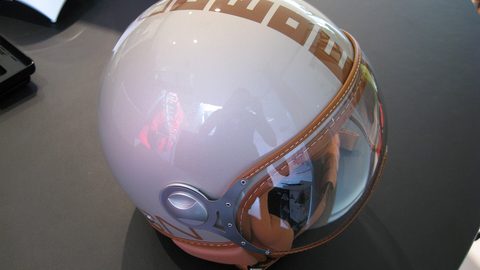
Every model reviewed against the same specifications, with the manufacturer's claim and the owner-reported figure kept apart.
Open-face helmets
Every model reviewed against the same specifications, with the manufacturer's claim and the owner-reported figure kept apart.
-
 Long Range Electric Scooters With Owner-Reported Distance at Real Rider Weight
Long-range electric scooters ranked by owner-reported distance at a real rider weight, not the manufacturer's 60 kg eco-mode claim, with battery capacity in watt-hours.
Long Range Electric Scooters With Owner-Reported Distance at Real Rider Weight
Long-range electric scooters ranked by owner-reported distance at a real rider weight, not the manufacturer's 60 kg eco-mode claim, with battery capacity in watt-hours.
-
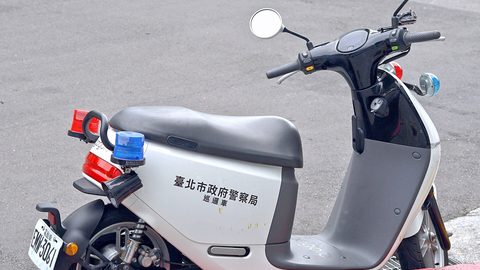 Best Electric Scooters for Adults: Commuter, Heavy Rider and Multi-Modal Picks
The best electric scooter for adults depends entirely on your commute: lightweight folders for train riders, durable tubeless models for daily abuse, and reinforced frames for heavier riders.
Best Electric Scooters for Adults: Commuter, Heavy Rider and Multi-Modal Picks
The best electric scooter for adults depends entirely on your commute: lightweight folders for train riders, durable tubeless models for daily abuse, and reinforced frames for heavier riders.
-
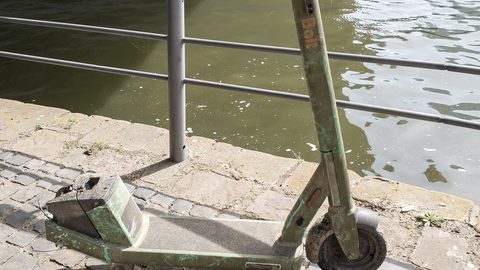 Best Electric Scooter: The Models That Earn Their Spec Sheet in the Real World
The best electric scooter is the one whose real range, brake type, and stem durability match what the spec sheet promises. We compare the models that deliver.
Best Electric Scooter: The Models That Earn Their Spec Sheet in the Real World
The best electric scooter is the one whose real range, brake type, and stem durability match what the spec sheet promises. We compare the models that deliver.
-
 Best Electric Scooter Lights for Actually Seeing the Road at Night
Stock scooter lights are position markers, not headlights. The best electric scooter lights mount securely, survive rain, and project a beam you can actually ride by.
Best Electric Scooter Lights for Actually Seeing the Road at Night
Stock scooter lights are position markers, not headlights. The best electric scooter lights mount securely, survive rain, and project a beam you can actually ride by.